
The Republican Party’s powerful alliance with Israel — repeatedly reaffirmed during President Donald Trump’s second term — is rooted in conservative Christianity’s rise as a political force more than half a century ago.
The Reverend Billy Graham’s relationship with President Richard Nixon helped bring evangelical politics into the White House. Graham later regretted his political entanglement, particularly after Watergate, but the opening remained. In the late 1970s, Jerry Falwell’s Moral Majority mobilised conservative evangelicals into a potent Republican constituency that Ronald Reagan incorporated into his conservative coalition. Israel became increasingly central to that identity, with many evangelicals viewing support for the Jewish state through a biblical rather than purely strategic lens. Leaders such as televangelist John Hagee and Christians United for Israel later built an institutional network that translated religious conviction into political pressure. What began as evangelical access to Republican presidents became a durable political infrastructure.
For Christian Zionists, this alliance is about more than religious affinity. Many view Israel as central to biblical prophecy, including end-times interpretations and the anticipated return of Jesus Christ. These beliefs elevated support for Israel from a foreign-policy preference to a religious commitment. As evangelical voters became a core Republican constituency, politicians had strong electoral incentives to embrace that commitment, bringing theology, party loyalty and strategic interests into closer alignment.
Advertisement
The political heirs
Today’s Republican leaders inherited that system.
Mike Johnson of Louisiana, the speaker of the US House of Representatives, embodies its contemporary influence. He has invoked biblical passages to portray the relationship between the US and Israel as more than a conventional strategic partnership. His speakership gives him considerable influence over legislation, congressional spending and debates over US military assistance to Israel.
Senator Ted Cruz of Texas has repeatedly framed his support for Israel in explicitly Christian terms. Senator Tom Cotton of Arkansas represents a more nationalist, hawkish version of the alliance. His effort to replace “West Bank” with “Judea and Samaria” in federal terminology illustrates how biblical language can enter government policy.
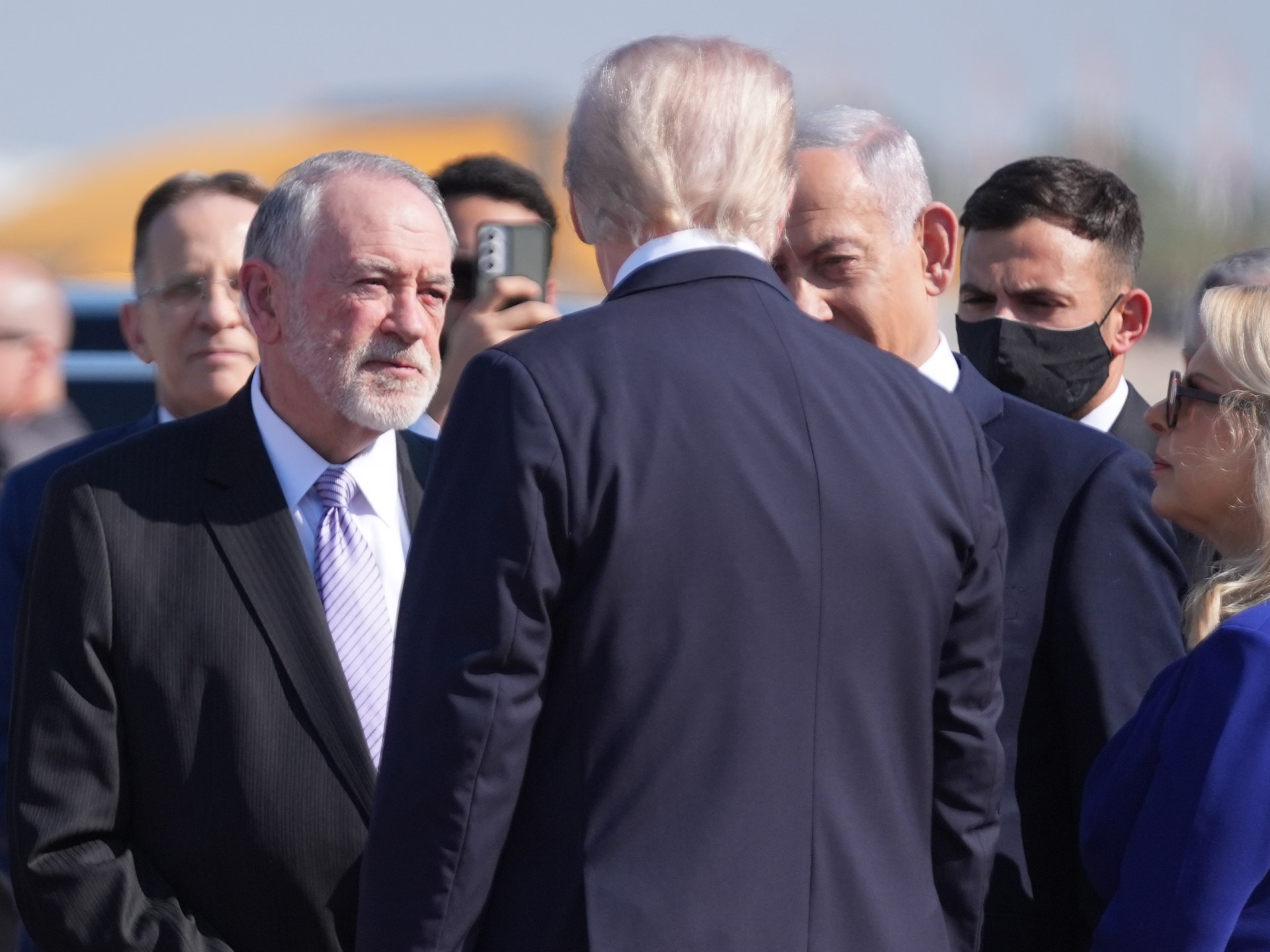
Former Arkansas Governor Mike Huckabee, now Trump’s ambassador to Israel, represents the same intersection of evangelical Christianity and Republican politics. His defence of Israeli settlements and rejection of conventional territorial terminology reflect a worldview in which biblical claims carry substantial political weight.
These figures did not create the alliance; they are its current custodians. Their influence extends beyond rhetoric. Congressional votes on military assistance, diplomatic protection and sanctions translate political commitments into policy. Christian Zionist organisations sustain that influence through church networks, lobbying, grassroots mobilisation and direct engagement with elected officials, keeping their priorities prominent even when other Republicans question overseas commitments.
Trump and the America First complication
President Donald Trump strengthened the evangelical alliance with Israel while introducing a competing force into Republican foreign policy: America First.
His administration’s recognition of Jerusalem as Israel’s capital and relocation of the US embassy fulfilled a longstanding Christian Zionist priority. Yet Trump’s coalition also includes voters sceptical of foreign entanglements, overseas military interventions and extensive foreign assistance. This creates a tension within the Republican consensus.
For Christian Zionists, support for Israel can constitute a biblical obligation. For some America First Republicans, the question is whether that commitment advances a clearly defined American interest. The positions overlap but are not identical.
The tension sharpens when support for Israel risks a wider war, additional deployments or prolonged US involvement in the Middle East. The Iran war has exposed precisely this contradiction, forcing Republicans to confront the point at which support for Israel collides with America First opposition to prolonged military involvement abroad. Religious conservatives may regard biblical commitments as decisive while more isolationist Republicans question the financial costs, potential American casualties and responsibilities Washington assumes on behalf of other countries.
Advertisement
Trump has sought to accommodate both constituencies, but their competing priorities have become increasingly difficult to reconcile.
The generational crack
A more consequential challenge may be emerging among younger Republicans.
A Pew Research Center March survey found that Republicans overall viewed Israel more favourably than unfavourably, by 58 percent to 41 percent. Among Republicans aged 18 to 49, however, 57 percent held unfavourable views. Older Republicans remained substantially more favourable. A separate Pew survey in May found that 42 percent of Republican-leaning Americans aged 18 to 29 viewed Israelis favourably, compared with 83 percent of those aged 65 and older. Although the surveys measured different populations and questions, both revealed a pronounced generational divide.
These findings do not mean younger Republicans have abandoned Israel or oppose the US-Israel relationship. They do suggest that the constituency underpinning the alliance is becoming less uniform.
The reasons extend beyond ideology. Younger Americans encounter the conflict through social media, reporting on Gaza and images of civilian suffering. Some question whether religiously grounded foreign-policy commitments serve American interests. Others support Israel while opposing particular Israeli government policies. Unfavourable views of Israel should not automatically be equated with hostility towards Israelis or rejection of the bilateral relationship.
Nevertheless, a generation increasingly divided over Israel may prove less receptive to appeals treating support for the country as an unquestionable test of conservative identity.
A changing Republican inheritance
Israel has developed into more than a foreign-policy priority. For millions of conservatives, support for Israel has been part of the Republican Party’s religious and moral identity.
That legacy remains powerful, but its foundations are shifting. Younger Republicans came of age during the wars in Iraq and Afghanistan, Trump’s nationalism, scepticism towards foreign intervention and Israel’s war on Gaza. Their questions increasingly concern not only theology but also national interests: What does US support for Israel accomplish, what does it cost and when should religious conviction yield to strategic considerations?
Such questions may reshape the coalition without immediately dismantling it. Evangelical organisations retain substantial resources, access to political leaders and the capacity to mobilise voters. Their congressional allies hold positions of considerable influence, and changing public opinion does not automatically translate into new party platforms or congressional votes.
Yet the growing divide between older evangelical voters and younger Republicans presents a longer-term challenge. Christian Zionism succeeded so thoroughly that its premises became Republican orthodoxy. But an alliance sustained by religious conviction, institutional influence and partisan loyalty becomes harder to preserve when a new generation questions those underlying assumptions.
Advertisement
For decades, support for Israel could be presented simultaneously as foreign policy and faith. Increasingly, younger Republicans may demand a different justification, one grounded in demonstrable US interests rather than religious obligation alone. Whether Republican support for Israel can survive that shift may become a defining test of the party’s evolving identity.
The views expressed in this article are the author’s own and do not necessarily reflect Al Jazeera’s editorial stance.
Disclaimer : This story is auto aggregated by a computer programme and has not been created or edited by DOWNTHENEWS. Publisher: aljazeera.com




