

There’s a particular kind of luck in Hindi cinema that has nothing to do with a hit song or a box office number. It’s the luck of being cast right, of a director looking at an actor everyone thinks they’ve figured out and deciding to use him differently. Twenty-five years ago, Farhan Akhtar had that instinct about Saif Ali Khan. Saif, by his own admission, nearly talked himself out of it.
By 2001, Saif had spent close to a decade being Bollywood’s reliable second lead and baby-face hero. Pleasant, well-dressed, entirely disposable, the “chocolate hero” tag wasn’t a back-handed compliment, but it wasn’t a career epithet either. It was a holding pattern. Then came Sameer from DCH. He was chaotic, needy, hopelessly unlucky in love, and very funny about it and something clicked that none of his ’90s filmography had managed to. It was nothing like the Saif Ali Khan from Main Khiladi Tu Anari, Yeh Dillagi and Hum Saath Saath Hain.
The Dance That Did the Talking
Ask anyone to name the moment Dil Chahta Hai announces what Saif can do, and it isn’t a dialogue. It’s Woh Ladki Hai Kahan, the cult song where Sameer spins his imagination in a theatre with Sonali Kulkarni, dancing like yesteryear heroes, doing a bit that’s part slapstick, part genuine ache. It’s a song built entirely on physical comic timing, and Saif treats it like an actor’s showcase rather than a filler track. That’s the thing about star-making moments, they rarely look like career strategy in the moment. They look like an actor being fully, unselfconsciously present in a scene that could have been thrown away. Farhan Akhtar handed him the opening; Saif’s commitment to looking foolish, to being the butt of his own joke without ever losing the audience’s affection, is what turned it into an entry point to a different phase of his career. Especially iconic was Sameer getting conned by the girlfriend, tied up in his hotel room in Goa, needing a rescue by his besties. It was a FRIENDS redux Bollywood ishtyle.
It’s easy to forget now, but Sameer could have been a thankless part. The comic-relief friend orbiting Aamir Khan’s Akash and Akshaye Khanna’s Sid, the two “serious” arcs of the film. Saif has spoken about almost passing on the role for exactly that reason, worried he had too little to do in the second half. What he actually walked away with was harder to quantify than screen time: proof, on record, that he could hold his own inside an ensemble without needing the film’s emotional weight to rest on him. That distinction mattered more than anyone realised at the time.
From Ensemble Player to Leading Man
What Dil Chahta Hai did wasn’t make Saif a star overnight. It did something more useful, it gave casting directors and producers a new file to put him in. Not the hero of a formula romance, but an actor who could be funny and wounded in the same breath, who was comfortable playing off other actors rather than carrying a frame alone.
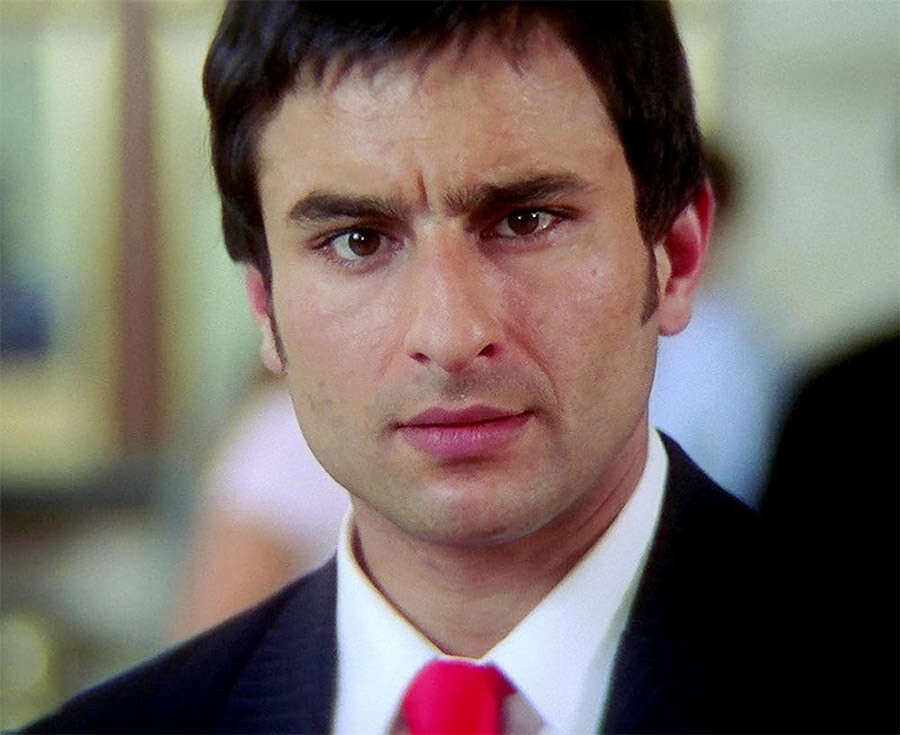
You can trace a direct line from Sameer to Rohit in Kal Ho Naa Ho (2003), another performance built on being the best friend (matching SRK’s charisma and allure, pound for pound) rather than the object of desire, and one that won him another Filmfare trophy, for Best Actor in a Supporting Role. It’s a strange kind of tribute to Dil Chahta Hai that Saif’s next big win came for essentially refining the same skill: making warmth and humour do dramatic work.
Hum Tum (2004) is where the dividend really showed up. As Karan Kapoor, the commitment-phobic cartoonist opposite Rani Mukerji, Saif got a more conventional male lead and the film rewarded him with a National Film Award for Best Actor and a Filmfare for Best Actor in a Comic Role. It’s not a coincidence that his first true solo stardom arrived through a rom-com built on exactly the register Dil Chahta Hai had unlocked, charm laced with self-deprecation, timing over swagger.
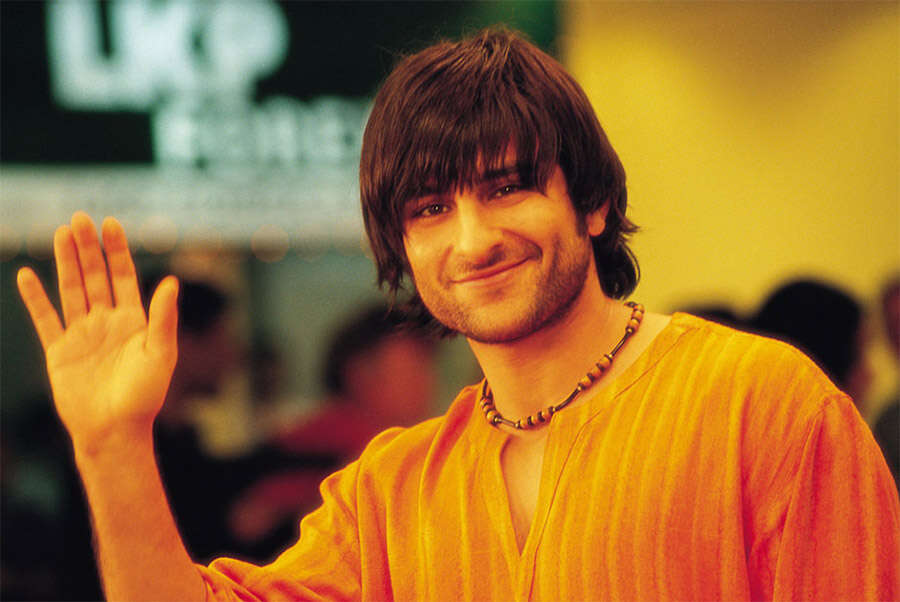
Then he went and did the opposite. Omkara (2006) is the film that proves Dil Chahta Hai wasn’t a genre lock it was a talent reveal. Playing Langda Tyagi, Vishal Bhardwaj’s Uttar Pradesh update of Iago, Saif buried the chocolate boy so completely that the performance won him the Filmfare Award for Best Performance in a Negative Role, in what turned out to be the category’s final year. Nobody watching Sameer sulk his way through a break-up in 2001 would have predicted this… A coiled, menacing, entirely unglamorous piece of screen villainy. That’s the real inheritance of Dil Chahta Hai. Not a type, but the industry’s willingness to see Saif as an actor rather than a fixed screen persona.
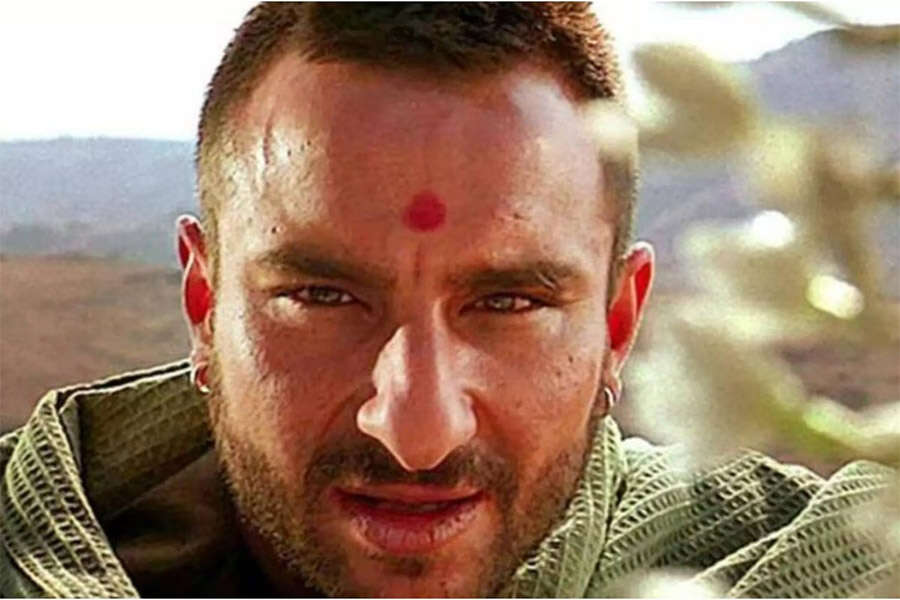
The half-decade in between is where we saw him test that range with real intent. Ek Hasina Thi (2004) cast him as a manipulative con man opposite Urmila Matondkar, trading entirely on the audience’s goodwill toward him and then curdling it, which only works if the audience has affection to spare in the first place. Being Cyrus (2006), the off-beat Homi Adajania film, is a hard swerve into arthouse-adjacent territory that a pre-2001 Saif would never have been offered, let alone taken. Parineeta (2005) put him back in classic leading-man mode, but the film’s real pleasure is in the triangle. Saif’s Shekhar, Vidya Balan’s Lalita, and Sanjay Dutt’s Girish, three actors continually recalibrating against each other. It’s a film that only works if its lead is generous enough to let scenes belong to his co-stars, and that generosity, that ease with sharing space rather than dominating it is Sameer’s DNA showing up again, four years and several genres later.
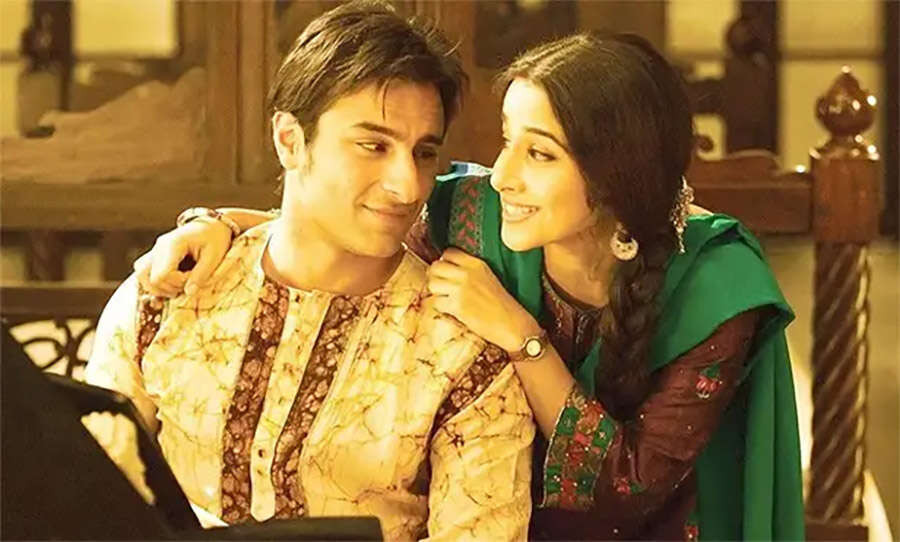
By the time Love Aaj Kal arrived in 2009, Saif wasn’t just playing romantic leads, he was producing them, shaping the kind of modern, emotionally messy love story that Dil Chahta Hai had helped establish as commercially viable. It’s a tidy bookend to the decade. The actor who once nearly passed on a supporting role now steering an entire film’s tone and casting from the producer’s chair.
Where the Page Turns
2001 to 2009 is the Dil Chahta Hai decade. The run in which nearly every big swing Saif took, comic or dramatic, drew credibility from that first ensemble performance. What comes after is a different actor making a different case for himself. Agent Vinod (2012), Go Goa Gone (2013), Sacred Games (2018), and Tanhaji (2020) belong to a Saif interested in genre, ambiguity, and reinvention on harder terms. Spy thriller, zombie comedy, prestige streaming villainy, historical actioner. That’s a separate essay. But none of it happens without the first one. Dil Chahta Hai didn’t just launch Saif Ali Khan’s best decade, it’s the reason he got to keep having new ones.
Twenty-five years on, the film is remembered, correctly, as a landmark for what it said about friendship and Bombay’s urban youth. For Saif specifically, it’s simpler than that. It’s the movie that stopped people from seeing him as a type, and allowed him to be the actor he was meant to be.
ALso Read: 20 Years of Omkara: Revisiting Powerful Dialogues That Made Saif Ali Khan’s Langda Tyagi Impactful
Disclaimer : This story is auto aggregated by a computer programme and has not been created or edited by DOWNTHENEWS. Publisher: filmfare.com






