
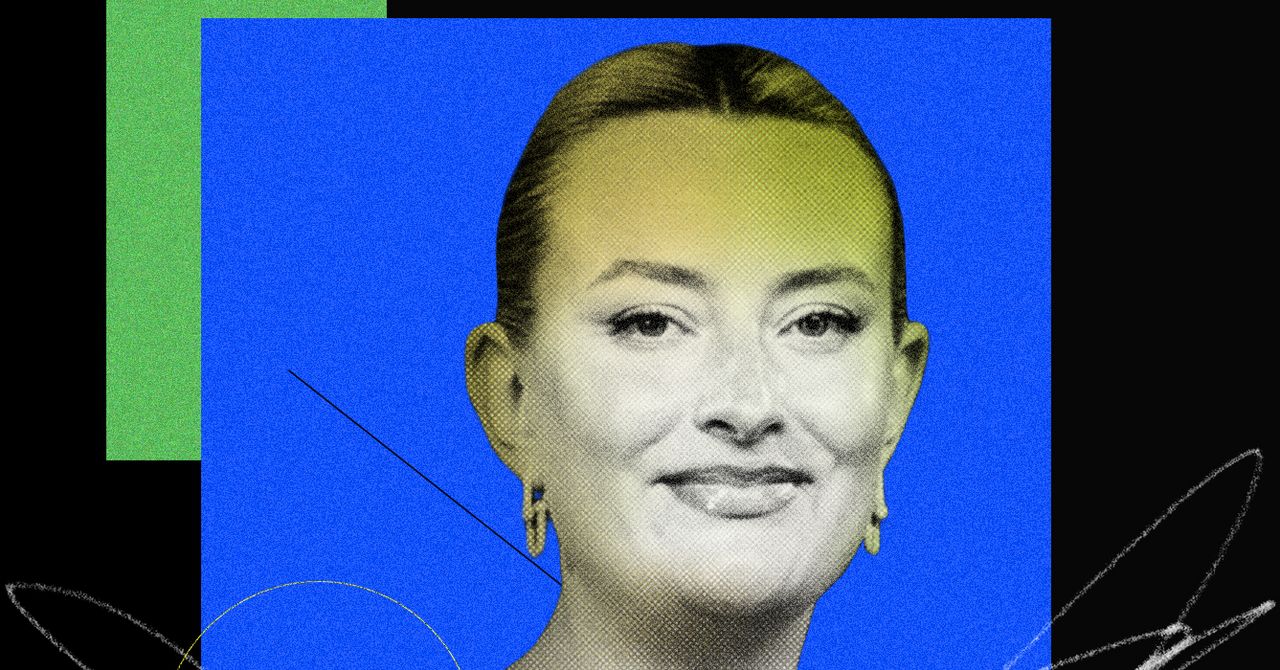
For someone whose on-camera persona could hardly care less, the real Amelia Dimoldenberg cares a shocking amount. About pretty much everything, it turns out, that touches her work as director and host of YouTube sensation Chicken Shop Date, red-carpet celebrity inquisitor, and creative engine behind a raft of in-development TV and film projects.
Edits on each of the awkward, uproariously funny Chicken Shop Date episodes? She does them. In-depth prep before greeting everyone from Hudson Williams to Ethan Hawke at the Oscars? She does that too. IP? She owns it—with great pride. The online algorithms whose whims dictate who sees what, and how much of it? Dimoldenberg may not control those, but she’s done a damn good job of conquering them. All through the meticulous control she wields over every other aspect of her projects, her process, and where both are taking Dimoldenberg next.
I first encountered Dimoldenberg years ago on TikTok, where short clips of her Chicken Shop interviews—she’s made everyone from Billie Eilish to Paul Mescal squirm under the inhospitable lighting of a humble British chicken joint—routinely find millions of eyeballs. So it was a delight to sit down with the very sharp, very funny Dimoldenberg at WIRED’s New York studio, where we talked about being prepared (she is, very), when creators will get the kind of credit their peers in traditional entertainment do (in her view, death needs to be involved), and why everyone assumes her YouTube show is a podcast (it is, she repeats emphatically, not a podcast).
I could have kept going, but Dimoldenberg had a red carpet—The Devil Wears Prada 2 premiere, to be specific—to get glam for. We started our conversation discussing another high-fashion event: the Oscars, which Dimoldenberg recently joined as the Academy’s Social Media Ambassador and Red Carpet Correspondent for the third year running. More specifically, we began by talking about a clip our producers played of Dimoldenberg’s interviews, many of them remarking on just how hot and sweaty things got. Which is why, if you’re reading this instead of listening to it, we start off by talking about pee. Enjoy!
This interview has been edited for length and clarity.
KATIE DRUMMOND: Welcome to the Big Interview, Amelia.
AMELIA DIMOLDENBERG: Thank you for having me. Sorry, that clip you played before we started talking, I was like, “Wow, that is real boots-on-the-ground journalism right there.”
How did it feel to hear yourself talking about butts, sweat, and pee?
Well, it’s interesting, because that is definitely part of the genre of my interviews. However, there’s so much more to them than that.
That’s obviously just one slice of it. That’s, I guess, a bit more playful. I mean, they’re all playful in a way, but yeah, I was cringing a bit.
I’m sorry, I didn’t pick that clip. I’m going to blame the producers. How do you get ready for those interviews? This was your third time doing the Oscars red carpet, which is, and I’ve been a journalist for a very long time, an intimidating environment.
I spend probably two months thinking about it. Researching every single nominee; watching all of the movies. I write with my sister, Zoe, so we work with our writing partner to prepare questions for every nominee that the Academy would like us to interview. I think it’s really important to prepare individual questions for each person, because I think that’s how you get a more interesting nuanced interview from someone.
I love thinking of questions for each person and thinking of ways in which you can speak about their films and their work in a way that is playful and unexpected but shows the level of research that I try and do.
I love watching celebrity interviews. I always have. I’ve loved being a consumer of pop culture since I was very young. It’s a fun job for me to do the prep, but it definitely reminds me of when I was studying for my exams at school, just cramming.
This year was my third year doing it, and I had more time than ever. So I felt really confident. I felt really good. I also loved my outfit. I think all of those things really do make a difference because, as you say, it’s an intimidating, intimidating environment.
How do you think about your role on that red carpet? I’m curious about this in the context of the work that you do overall, this sort of “creator journalism.” There’s a distinction there that I think is becoming blurrier and blurrier. I don’t have strongly held views about it. I talk to the WIRED staff all the time, and I hope they don’t mind me saying this on the podcast, but they serve as talent more frequently now than they used to, and they need to be on camera. They need to be making that direct connection to their audience.
But for you, when you’re on the red carpet or you’re sitting down in a chicken shop, how do you self-identify?
I feel like I am in the business of making entertainment. I think that’s a distinction from journalism in a way. You know, I studied journalism. I have a degree in journalism, but I always feel like I’ve been more drawn to making something within the entertainment space.
A lot of the creators who are working the red carpets now, I think that’s their approach too. It’s not necessarily that they’re trying to get a scoop, for example, but they’re trying to make something that is entertaining, and people really connect with those interviews.
Obviously some are stronger than others. The first time I did the red carpet was maybe five years ago now, for the GQ Man of the Year Awards. I remember at the time it being such an exciting moment because nontraditional talent hadn’t taken those roles.
It’s always been important for me to make sure I stand out in a crowded space. I’m interested in creating a moment, something that people can connect to that stands out online because there’s so much content now.
It’s interesting because you bring the academic training of a journalist and certainly the obsessive need to prepare or over-prepare. You sound like a bit of an obsessive person, and I say that as the highest compliment.
I don’t think I could go into anything that I do without preparing. Sometimes I feel like maybe it’s unnecessary, because I think it comes from a little bit of a lack of confidence in myself that I feel the need to be so prepared for something.
But at the same time, it just makes me feel comfortable, because then I know I can just feel good about it. Even if it didn’t go well, I can say, well, at least I did the best I could beforehand. I’ve definitely been interviewed by people before who don’t have any notes, and it’s just completely off the dome. I’ve always been so impressed by that level of being able to honestly memorize …
Maybe they’re just winging it. Maybe they didn’t memorize anything.
And obviously that can work sometimes and can be a disaster other times.
Well, yeah. For this podcast, our producer had to beat out of me the idea that I needed to spend an entire Friday researching someone before I interview them. She was like, “You don’t have time. You have to stop doing this. This is out of control.” Not to make it about being a woman, but I think there is something to that, this sense of imposter syndrome and a lack of confidence and that you need to over-prepare. With all love and respect to the men in my life, maybe a man could go in with 15 minutes of prep and just wing it. I cannot do that.
I agree. But are they getting a better interview? I don’t know.
I don’t know that they are, Amelia.
I want to talk more about many, many things. But when we were getting ready for the show, not that I was getting ready too much, I didn’t get ready that much. Because I’m not allowed to over-prepare.
No, you’re not allowed. Friday you were off the clock, you were having drinks with the girls.
I wish. The Oscars will be airing on YouTube for the first time in 2029. When I saw that, my first thought was, what’s taking them so long? Three more years to put it on YouTube?
There’s a lot of admin involved. It’s a lot of red tape.
Still, a sign of the times. What else would you like to see an award show like the Oscars do to meet this moment? You’ve talked about how four or five years ago, it was ludicrous to think that there would be a quote “nontraditional” person on the red carpet. But what else?
That’s a good question. There’s still a long way to go in terms of awarding or taking online content seriously. You know? This year with the Golden Globes, they had a podcast category.
How wild.
I think that was a really interesting move, and I think that there’s a long way to go as well with other award shows taking shows like Chicken Shop Date [seriously]. Like, why can’t we win certain awards? Well, Chicken Shop is not going to win an Oscar.
But what could you win that you couldn’t submit yourself for now?
Well, an Emmy. I tried to submit for the Emmys and there was a clause because I didn’t have an American production company, because it was a British production company. But I’ve figured it out now.
I’m hoping to be eligible next year for the Emmys, but still it’s in a specific category. I don’t even think it would be within the main awards that they would be giving out. I think it’s the short-form category.
But yeah, there’s so many incredible online series and podcasts or content. People could say, “Oh, it’s just an award show, who cares?” But actually, people do care. There’s so much out there that people do, as humans, like to be told what is good and what is not.
With the Oscars specifically, just broadening out the types of films and artists, and creative people that can be eligible for awards. I think that would be amazing.
Have you told them this?
No, I haven’t. But I will.
Maybe you just did. I’m curious for your point of view on this idea of online creators. If you think about the size of the quote-unquote “creator economy,” it’s like $250 billion a year, right?
For many people, the only thing they watch is TikTok or YouTube. People like you are celebrities to those many, many millions of people. It is a thing, and yet somehow, from where I sit at least, it still doesn’t seem like it is received with the same level of respect and deference or credibility as Hollywood acting or something more traditional. Why do you think that is? Is that something you have experienced and how have you experienced that change since 2014 when you launched the show?
I think it’s one of those things where it’s like the changing of the guard. There’s a lot of people in positions of power that grew up watching television, and that is kind of the be-all and end-all of what they deem to be legitimate in terms of a successful career in entertainment. So I think that as people die things will change.
Oh yes, as they die.
It’s always been important to me to bridge the gap between the online world and traditional media, because I’ve always seen the value in people taking traditional media seriously. It’s been a real need of mine to make sure that I straddle both in a way. So taking opportunities within traditional media when they seem beneficial, but then also making sure that I’m really planting myself on YouTube, and on TikTok, and doing all those things.
I think you need to be super strategic about things and understand there are different audiences for both spheres. You can speak to both of them and there’s a way to speak to both of them, as well. So I’ve always tried to do that.
There’s been different people throughout the history of online culture that have paved the way for being taken more seriously. People like Emma Chamberlain, for example. I think she’s been someone who has really kind of crossed over. Then even people like MrBeast, or people who get to that level of fame within internet culture. I also think these people are all entrepreneurs and they are all business-minded creators.
But also, with Chicken Shop Date, I honestly see that as a show on YouTube. I’m not vlogging, I’m not doing something that’s more native to the online space. I’m doing something traditional media has done for decades, but I am interpreting it for the YouTube audience.
It’s interesting, this idea of transcending from online culture and the creator world into maybe more traditional or or more conventionally respected entertainment. I think at some point that line has to go away, right? Because YouTube and TikTok are, at this point, conventional entertainment. But maybe we are just waiting for some people to die.
I also think I’m from a generation where I grew up watching television and appointment viewing.
Yeah.
I’m 32. Obviously, 20-year-olds, they won’t have that at all. They will only have grown up watching TikTok, having a streamer, where they can just watch whatever they want. I do think it’s a generational shift. I’m someone who still values the traditional space, but at the end of the day, I also think that movies will stand the test of time. People are always going to want to watch movies, and watching a movie and making a movie is different to making a TikTok video.
I don’t think these new platforms, social media platforms, coming up means that they’re going to take over that space necessarily. I just think that people need to understand that they are different.
I was talking to a friend the other day and they were talking about their favorite podcast now being on Netflix, and they just said, “I don’t want to watch it on Netflix.” And it’s like, well, you just have to press a button. And they’re like, “I’m not going to do it.”
Where did they want to watch the podcast?
On YouTube.
I see. OK.
It’s interesting that an audience for whom pressing a different button is such an effort that you really see the format living in a certain ecosystem. That is fascinating to me.
Your show has been running on YouTube now for, what, 12 years?
Yeah.
Have you ever given any consideration to taking it off YouTube?
I have had offers to take it off YouTube.
I bet you have.
For like … much money. And I’ve said no because, again, I just believe and think that that is what will happen. The audience will be like, why is it on another platform?
I don’t want to press the button.
I think that’s what I love about YouTube is that it’s very democratic, you just have to have access to the internet to be able to watch it.
And my audience really likes consuming it there. I think it’s very difficult to change the behavior of an audience with a show that they already know. I’m trying to work with streamers, but on separate projects that I feel like would work for the platform itself.
I’m developing a TV series for example, and I feel like people love watching TV series on streamers, and I think that would make sense. Who knows, maybe podcasting will find an audience on streamers, but it might just take a few years.
People are going to have to really think about pressing that button.
Or maybe it will just only work with new podcasts. I honestly think it is maybe something to do with that.
What have you had to learn about strategy since 2014 when you decided to launch the show?
I think the main thing that I’ve learned is how important it is and how thankful and happy I am that I own my own copyright, that I own the IP to my show.
Tell me about that. When did you make that decision?
The show started in a youth club. It started as a column in a youth-run publication from when I was 17. It was called The Cut.
Then, when I was in my first year of university, I went to Central Saint Martins, and studied fashion journalism. I thought, “Oh, this would be great if this was filmed because it’s funny and awkward. And if only I knew someone with a camera to help me film it.” Finally I met someone, started making them on YouTube, and then it got to a point after making maybe five episodes where I just couldn’t ask people for favors anymore. You know, everyone was doing it for free. I was a student. I was even persuading the shops, the shops weren’t even closing.
Oh, no. There were people eating chicken around you.
We’d have to keep pausing intermittently when people were ordering stuff because I didn’t have enough budget to shut the shop. I didn’t even know that you could do that. I just didn’t know anything about production. It got to a point where I honestly didn’t have any means to make an episode anymore. So I thought, OK, how am I going to do this?
I spoke to a record label, and they were going to help me do it, and I would maybe have to do a set amount of their artists on the show, and then I was allowed to do other ones. But they wanted to buy the rights from me. The deal was really terrible actually. Luckily, that’s when I got a manager for the first time.
They looked over the contract, and said, “You cannot sign this.” So thank you to them. Then I tried to get funding through a media company, and again, they were like, “We want the copyright.” And they wanted to buy it for a ridiculous amount of money.
How much money?
£500 to buy the copyright.
No! Can you imagine if you had signed that?
I know, and something just in me, I don’t even know, I wasn’t getting any other advice; something in me just knew I cannot do that.
No.
So I then ended up getting a brand deal, because I also came up at the time when being an influencer was beginning. Brands were understanding that they can go directly to the person. They can cut out the middleman, they can cut out the agency. They don’t have to buy this big billboard. The billboard is now on someone’s phone. So I got a brand deal and the brand deal paid for me to be able to never think about funding it again.
More than £500.
More than £500, yeah. Not to say that set me up for the rest of my life, but it just meant that I could make episodes. And then I was making money on AdSense, and it just became this returning investment. Now I fund the episodes with the money that I make from Google AdSense.
What can you tell me about the YouTube of it all, the algorithm of it all? There’s the YouTube piece of it, there’s the TikTok piece of it. There’s always so much conversation around these algorithms and what they expose us to. When TikTok was acquired in the United States recently, there was all of this consternation around “will the algorithm change and what will it surface and what won’t it.” How do you navigate the whims of the algorithm?
Another great question. We are all at the mercy of the algorithm.
Originally I was just making videos for my friends. If they found this funny, then I was like, great, I’m going to post it. That was my barometer of whether I should upload something.
I’ve always wanted to make comedy, and I think that comedy always cuts through in a way. Especially on the internet, it’s just the home of funny things. I think when you’re making comedy online, I think you’re already kind of set up for success in a way because it’s just something that people like to consume.
But I also think that the way that our episodes have been made—now I’m comparing them to podcasts … Like, I actually hate when people come up to me on the street and say, “I love your podcast.” I’m like, “It’s not a podcast!”
Well, I can imagine you would hate that because it’s actually not a podcast.
No offense to podcasts. We love them. But it’s interesting because I think that before I’d always been making something that people view as a video podcast, you know, before video podcasts were a thing.
Really? Oh, I guess because everyone’s on video.
Everything is videoed and it’s somewhat like two people sat opposite each other, right? Yeah. So, it kind of looks similar. You were even saying that you first found out about Chicken Shop Date via TikTok. If people are just looking at these clips, they honestly might think it’s a podcast.
That’s a good point.
Just to say, my point is that we were always editing the show in clip format because of the B-roll we have that everyone really loves.
You are a notoriously ruthless editor.
Yes. I love the edit. We also have a social media strategy from the beginning that I built. Now I have my social media manager, Ashley, who runs that for me. She will think, OK, which clip are we going to lead with? Then, how many are we going to post over the course of a week and what additional content can we have? So our videos have naturally kind of suited the algorithm by accident in a way because we were already doing clips.
But I don’t ever go into making something thinking, how can we feed the algorithm? I just think, how can we get an amazing interview? Going back to what I said about how I research something. How can I use what I know already from what I’ve consumed with this person and how can I create something that hasn’t been seen before with them playing to their strengths.
But, obviously, when I was starting the videos got hundreds of views and I would be like, “oh God.” I spent seven years growing the show until it became known in America. That’s like a long time.
Really long.
A long time to be working on something before you are like, “Yeah, OK, this is the amount of eyeballs I’ve always thought it should get.” And now I’m there, but it took years. But I also was growing the show as all of these things we’ve been talking about are growing, too.
Like the media landscape changing, people being more aware of people consuming content, TikTok being invented, all of these different things. So I’ve just grown with the times.
Well, it’s a very, very good show, but I guess you’re right that you had very, very good timing.
Yeah. Now everyone’s doing it.
And now everyone thinks that you have a podcast.
Oh my God. Podcast.
You have a very disarming persona. Your persona on the show is off-putting, right? That’s by design, but you do disarm them and you get great material out of that.
Mm-hmm.
Why do you think you’re able to disarm these celebrities to the extent that you are? Is it research? Is it something else?
It’s kind of changed in my mind. Originally when I started it, it was because I just thought it was funnier to play this character that was sarcastic and kind of flipped between being totally desperate to being totally uninterested. That pairing is just ultimately funny. It catches people off-guard.
But that was me playing up my natural personality at school. When I was at school, I was much more sarcastic and deadpan. I definitely think that was a shield, you know, a shield to boys that were mean.
Boys at school sucked.
It worked, they didn’t come near me to the point where I was like “Dammit, but I do actually want you to like me, or be interested in me.” But I think it was just a self-defense mechanism that just ended up being funny.
But you combine your ability to disarm your guests, and that demeanor, with this ruthless approach to editing. I read that you take, say, 40 minutes or an hour of material and cut it down to eight or 10 minutes. Is that right? That’s a rigorous edit. Do you ever get to a place where the guest on the other side of the table is not happy with what you put together?
Not that I’ve heard of, but we don’t give approvals. I’ve never had it that people have been upset with an edit because I’m always trying to edit the person to be more charming than they actually are.
I’m doing them a favor. I like that because that’s what I want. I want people to watch the episodes and to fall in love with this person. It’s a dating show. It can be awkward and that awkwardness is funny, but that’s also part of life and dating. I think that’s what people connect with.
You’ve actually created a summer school, essentially, that’s called Dimz Inc. Academy. What’s the idea there?
I’ve always wanted to create a space for young people to learn more about the creative industries and be able to actually get their ideas out there and meet like-minded people, because that is the journey that I had with creating the show.
I wouldn’t be where I am today if I didn’t go to this magazine club after school from when I was 16. We were all allowed to pitch ideas. It was kind of probably like being at Condé Nast, but everyone’s miniature. I got so much out of that and I’ve always wanted to create that kind of space, and use what I’ve learned to do that. Last year we did a one-week program for young people who wouldn’t necessarily have access to the creative industries from a really diverse range of backgrounds. They had one week to create a pilot of an online format that they came up with themselves.
They had five days to go from ideating to shooting it to then showcasing it and making a marketing plan around it—it was just incredible. This year, with the help of Adobe who are supporting the program, we’re extending it to four weeks over summer.
You talked a minute ago about growing out of that persona that you had developed many years ago. I’m curious about what that means for you in your career, and where you see yourself going next.
I have always been someone who’s very interested in doing so many different things, and I think I’ve always felt like it was really important for me to define myself beyond Chicken Shop Date and beyond that persona and make sure that I am seen doing other things and able to talk freely like this.
I’m someone who’s more of a human being, who takes their work seriously, and is thoughtful and all those things. Again, back to the idea of storytelling—it just seems like such a corny word, but it’s the only word I can think of—that is something that has always been my interest.
With Chicken Shop Date, I always feel like I’ve been telling the story of the girl who wants to fall in love and is unlucky in love and keeps going on these dates and maybe one day she’ll get a second date. I think that’s what has really pushed me through having the show for so long, is because I’ve really understood that narrative and I’ve really loved developing other scripted projects that I’ve been doing for numerous years now.
But you know, those things take so long and it’s been incredible to be able to work within the online space and be able to have an idea and not have to wait to be commissioned. I think that’s probably the best thing about the democratization of the internet is it’s allowed for so many more ideas to become realities and bypass all of the gatekeepers. Now you’re only got gatekeepers in the algorithm.
I’m developing a TV series with the BBC, which has been an ongoing project for many years that I’m so excited about. Then I have a movie in development as well with Amazon MGM and Ryan Pictures. That’s kind of like my own romcom.
You play the lead, right?
Yeah. I’m going to be playing myself. It’s like the Chicken Shop Date movie.
Do you find love at the end?
Well, you have to watch and find out.
I hope so.
I hope so, too. I mean, it’s a rom-com, so…
It’d be a terrible rom-com if you didn’t.
I mean, if it’s not happening in real life, you better make it happen in the movie. Then, I directed a music video earlier this year and I loved that experience. It was for an amazing artist called Maisie Peters. I obviously direct Chicken Shop Date and I always have, but it’s very different when you are really turning your hand to directing something with a narrative.
I just love the experience of being part of a team so much, collaborating with different heads of department and understanding how many parts are involved in creating something. So I can’t wait to direct more. I would love to do that.
Well, on that note, I would love to end with a little game.
Oh, great.
It’s called Control, Alt, Delete. I want to know, what’s a piece of technology you would love to control? What’s one you would love to alt, so alter or change? And what would you love to delete? What would you love to eliminate from planet Earth if you could?
Technology I’d like to control?
Yeah.
I’m really bad at quickfire questions. There’s so many technologies in the world.
It’s very open-ended. Someone once answered this question, it was a man, but he said—sorry, I feel like I’m coming off as very anti-men. I love men.
We all love men.
We love men. He said, “the weather.” And I was like, “Well…”
That’s not technology. That’s mother nature.
I know. But it was a very God complex answer.
Oh, right. I mean, I always wanted to work on the Tube. Like to be in the control room of the Tube. So I would say the technology of trains. I just think it would be so fun.
All the starts and stops…
Yeah. I definitely am someone who is a control freak. So, like, for your job to be in a control room? Perfect. What was the next one?
Alt, alter or change.
I’d like to alter the way some cooking appliances are made because I can’t cook and I would like them to be easier. Like, you know, Spy Kids, you just put something in, like a little packet in the microwave, and then it pops and it creates the food.
OK. There’s a lot of alteration happening in that answer, but I will accept it.
What’s the next one?
Delete.
I thought it was going to be, like, create your own invention. No, because maybe I just did that. Well, Spy Kids did that and I’m just like owning it.
Delete. AI. I’m joking.
Many people would like to delete AI.
There’s so many positives to AI, actually.
Do you have one for me?
Isn’t it curing cancer? Yeah, there you go.
Depends who you ask.
It depends who you ask. OK. Um, delete. Probably the Facetune app, because I do think it’s probably very damaging to people.
In all seriousness, who is it really helping?
Me sometimes, honestly. [Laughs]
I just think, even when I’m using it, “God, like what is going on? This is so depressing and dark and the fact that so many people are just so comfortable [with it] now.” It’s so normalized to like completely alter your face in this way. Then it obviously translates into actually getting real-life surgery.
Looksmaxxing.
Looksmaxxing is out. Being hot is a state of mind.
How to Listen
You can always listen to this week’s podcast through the audio player on this page, but if you want to subscribe for free to get every episode, here’s how:
If you’re on an iPhone or iPad, open the app called Podcasts, or just tap this link. You can also download an app like Overcast or Pocket Casts and search for “uncanny valley.” We’re on Spotify too.
Disclaimer : This story is auto aggregated by a computer programme and has not been created or edited by DOWNTHENEWS. Publisher: wired.com






