Keir Starmer has formally apologised for the British state’s role in past forced adoptions after decades of campaigning by mothers and children affected.
The prime minister said “the shame is ours” and that he was “deeply and profoundly sorry” for what had happened, as he announced extra funding to help people access their adoption records and reconnect with biological families.
About 185,000 birth mothers and children in England and Wales were affected by forced adoptions between 1949 and 1976, the result of stigma about pregnancy outside marriage at the time.
Speaking in the House of Commons while affected mothers and adult adoptees looked on from the public gallery, Starmer said: “The shame was never yours. The shame is ours. You should not have had to fight so hard for this day to come.
“Today, finally, I do say on behalf of the state and the nations involved: we see you, we hear you and we are truly sorry.”
Starmer said the harm of forced adoptions has been “compounded by the actions and failures of the state”.
“The state did not prevent harm from continuing. The state bears responsibility for the systems it funded and legitimised, which enabled these practices to occur. The state did not do enough to protect mothers, children and families from harm,” he said.
“For this systemic failure, I am truly sorry.”
The Movement for an Adoption Apology said the apology “had come too late for a significant number of people” but that it was “a positive step for the hundreds of thousands of mothers still living with loss, whose suffering has at last been acknowledged”.
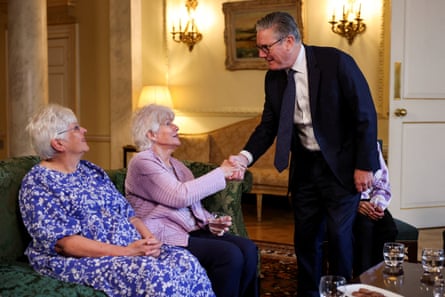
Thousands of women were coerced into giving their children up for adoption while cut off from their families, made to feel ashamed and subjected to “harsh and isolated” conditions, exploitation and abuse.
Many adoptees grew up believing they had been unwanted by their birth family, and were denied access to their records and medical history.
The Adult Adoptee Movement said the apology marked “a fundamental correction of the narrative on historic adoption practices”.
“This apology is for the adoptees who were taken at their most vulnerable and sent to strangers,” it said. “For those who lost their wider family, medical history, culture, language or nationality … the measure of this apology will not be the words spoken today, but the actions taken tomorrow.”
The government said an apology alone was “not enough” and that £4m would be used to help people access their adoption records, reconnect with family members and create testimonial projects to document the long-term effect on people’s lives.
Starmer said the government would create a national online resource to help people locate adoption records but warned some information “may not be retrievable”.
It has also committed to improving access to mental health support, and creating a lived experience reference group to review progress of its commitments.
The Reform UK MP Sarah Pochin later spoke publicly for the first time about her mother being forced to put a baby up for adoption by the church, saying it was a secret she carried “to her grave”.
“I only found out after her death. I tried to find my sibling, but drew a blank. I had to pay privately to find him, and we’ve now been united,” said a visibly upset Pochin in the Commons.
The education secretary, Bridget Phillipson, said: “The pain carried by mothers, adopted children and their families who suffered this appalling injustice is unimaginable. Today, on behalf of the British state, we say with one voice: this was wrong, and we are sorry. An apology cannot undo what happened, but it can be the start of real change, alongside providing the practical action, care and support that people need.”
Adoption UK’s chief executive, Emily Frith, said the apology “acknowledges a profound injustice that should never have happened”.
She added: “But words alone are not enough. While today’s investment in improved support is welcome, it is limited in scope and time. An apology should not be the end of this story. It must be the beginning of justice, accountability and lasting change.”
She called on the government to create a “comprehensive programme of redress” including “trauma-informed, lifelong support” for those affected.
Campaigners have been calling on the government to formally apologise for decades – the Church of England and the head of the Catholic church in England and Wales have issued apologies, as have the Welsh and Scottish governments.
In Northern Ireland, work is under way to set up a statutory public inquiry and financial redress scheme relating to mother and baby institutions.
A 2022 report by the UK parliament’s joint committee on human rights recommended a formal state apology and said “the government bears ultimate responsibility for the pain and suffering caused by public institutions and state employees that railroaded mothers into unwanted adoptions”.
But the Conservative government at the time declined to apologise, saying the “state did not actively support these practices” and instead said it was sorry “on behalf of society”.
Starmer’s government said it understood some people’s experiences fell outside the period from 1949 to 1976, when more rigorous consent procedures were introduced, and that it was “deeply upsetting to hear examples where coercive practices continued”.
Disclaimer : This story is auto aggregated by a computer programme and has not been created or edited by DOWNTHENEWS. Publisher: theguardian.com