The mighty Siang River in Arunachal Pradesh is becoming the centrepiece of a complicated geopolitical and domestic dilemma. On one side is an increasingly assertive China, building what could become the world’s largest hydropower project on the Yarlung Tsangpo in Tibet, just before the river enters India. On the other is India’s ambitious response: the proposed 11,200 MW Siang Upper Multipurpose Project (SUMP) in Arunachal Pradesh. And caught in the middle of this strategic contest are the indigenous communities whose lives, livelihoods, history and cultural identity are inextricably intertwined with the river.
This is no ordinary debate over a hydroelectric project. It is about India’s strategic interests in the eastern Himalayas. China’s intentions cannot be viewed in isolation from its larger territorial ambitions. Beijing has consistently maintained that Arunachal Pradesh is part of what it calls South Tibet or Zangnan. It has repeatedly issued lists of purportedly standardised Chinese names for places within Arunachal Pradesh, including a significant exercise in May 2025 covering 27 locations. India’s rejection of those claims has been unequivocal.
The latest development on the Yarlung Tsangpo is particularly significant. China formally began construction of its massive hydropower project in July 2025 at the river’s Great Bend in Medog County. The project is expected to comprise five cascade power stations and generate approximately 300 billion units of electricity annually. While Beijing maintains that the project is intended to meet its energy requirements and promote clean power, downstream countries have legitimate reasons to worry about its implications.
For India, the concern goes beyond the possibility of disruption to water flows. An upstream country controlling a river that sustains millions downstream possesses considerable strategic leverage. Questions about sudden releases of water, seasonal variations in discharge, sediment movement, ecological disruption and the availability of hydrological data cannot be wished away.
There is another compelling reason why India cannot afford to remain passive in the matter of the Brahmaputra’s waters. India and China have no comprehensive, legally binding water-sharing treaty governing the utilisation of the Brahmaputra. Their cooperation has instead rested on limited memorandums of understanding, primarily concerning the exchange of hydrological information during the flood season. Even this arrangement has suffered interruptions. The Brahmaputra data-sharing MoU expired on June 5, 2023, and hydrological data sharing was suspended from that month.
Hence, India must demonstrate that it is an active and responsible riparian nation with legitimate interests in the utilisation and management of the river’s waters. Developing its own hydropower and water-storage infrastructure is not simply an exercise in generating electricity. It is also about establishing India’s capacity to harness its share of the river’s resources, strengthen its water security and protect its downstream interests.
The proposed 11,200 MW SUMP is thus envisaged not merely as a power-generation facility but also as a possible instrument for water storage, flood moderation and managing the consequences of China’s upstream interventions. Arunachal Pradesh chief minister Pema Khandu has argued that around 65 per cent of the Siang’s water originates in China and that India cannot afford to remain unprepared for developments upstream.
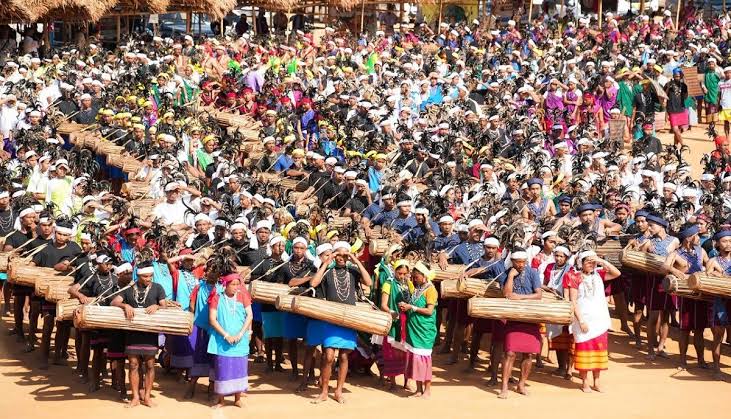
But there is another side to this story. For the indigenous Adi people, the Siang is not simply a river whose waters can be harnessed to generate electricity. It is Aane Siang — Mother Siang. It is woven into their collective memory, traditional belief systems, agriculture, folklore and identity. To speak of submerging ancestral villages, agricultural fields and sacred spaces is, therefore, to speak of something much deeper than the displacement of households.
The opposition led by organisations such as the Siang Indigenous Farmers’ Forum and sections of the Adi Bane Kebang is rooted in these anxieties. The fear is that a project of this magnitude could submerge villages, destroy livelihoods, disrupt established social structures and permanently alter the cultural landscape of the valley.
The Adi community has its own traditional institutions of decision-making and these institutions are not ornamental remnants of a bygone era. They are an important expression of community authority and collective consent. Therefore, the people who stand to lose their homes, land and cultural inheritance must have a meaningful place at the negotiating table.
This is where the government’s handling of the project becomes critical. There is a welcome acknowledgement by Mr Khandu that the concerns of the people must be heard. In his open letter of November 3, he addressed the protesters as his Adi brothers and assured them that their voices, homes, land and Aane Siang would remain central to the government’s considerations. He also clarified that the government was presently pursuing the pre-feasibility report and that no final decision had been taken on the dam construction.
That assurance must translate into a credible process, not remain a political statement issued in the midst of mounting protests. The distinction between a pre-feasibility survey and the actual construction of a dam must be made absolutely clear. The government may argue that it needs the survey to establish the project’s technical and economic viability. But local residents fear that once the machinery of a mega-project is set in motion, the survey will become an irreversible first step towards construction.
It would be too simplistic to assume that the protests are the handiwork of politically motivated elements or are opposition to development per se. Equally, violence, vandalism and the destruction of public property cannot be justified.
What is needed is an institutionalised dialogue involving the state government, the Centre, NHPC, independent environmental and geological experts, and representatives of all affected communities. The pre-feasibility report should be made accessible to the public. There must be independent assessments of seismic vulnerability, downstream ecological consequences, the extent of submergence, rehabilitation requirements and the project’s cumulative impact on the Brahmaputra basin. The government must be prepared to consider alternatives if the studies reveal unacceptable social or environmental costs.
There is also a larger strategic lesson for India. China cannot be allowed to dictate the terms of India’s development priorities through unilateral actions on a transboundary river. Beijing’s dam-building programme, its refusal to accept India’s territorial position in Arunachal Pradesh and its periodic attempts to rename places in the state are all reminders that the challenge is multidimensional.
India’s response must combine diplomatic firmness, credible water-security planning, border infrastructure and the strengthening of its own frontier communities. Arunachal Pradesh is not merely a geographical buffer against China. Its people are stakeholders in India’s sovereignty and security. Their confidence in the Indian state and willingness to participate in national development are strategic assets in their own right.
The government must understand that national security and indigenous rights are not competing propositions. They can and must reinforce each other.
Disclaimer : This story is auto aggregated by a computer programme and has not been created or edited by DOWNTHENEWS. Publisher: deccanchronicle.com