In this special Traveller series, Trips of a Lifetime, our writers name the one trip, of the many they’ve done, that stands out in their memory above all others.

From the remote Galapagos to the Andes, our intrepid global writers have spilled what they consider to be the planet’s greatest marvels.
Before I left for Namibia, people kept asking how well I knew my travelling companion. “You’re going to be in the car for hours,” they’d say. “Days, even.” I’d smile and nod, not mentioning that my “companion” was, in fact, a man I’d never met – my Namibian guide, Nestor – or that carsickness and I have history.
It turned out to be a fair question. Similar in size to NSW, but home to just over two million people, Namibia unfolds in vast, unbroken distances. The journey isn’t part of the experience, it is the experience.
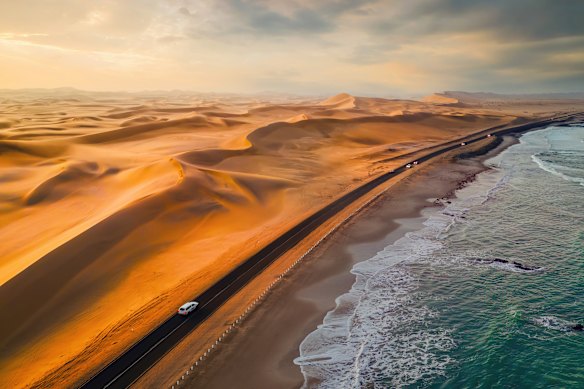
And so, Nestor and I drove. At first, I did what I always do in cars and counted things: kilometres, hours, the number of remaining snacks. I attempted polite conversation, I checked my phone, I played music and podcasts. Somewhere along the way, though, time started to unspool and my usually chaotic thoughts along with it. Then the adventure really began.
On the Skeleton Coast, fog rolled in from the Atlantic, softening the edges of everything. Shipwrecks lay scattered along the shore, rusted and half-swallowed by sand, and seals barked in great, unruly colonies by the crashing sea. At one point, I wandered off for what I imagined would be a reflective solo walk, only to realise I was being followed by a jackal.
Sign up for the Traveller Deals newsletter
Get exclusive travel deals delivered straight to your inbox. Sign up now.
At Sossusvlei, we set out before dawn, just Nestor and I climbing one of the world’s tallest sand dunes in silence. A soft mist wrapped the towering apricot curves. By the time we reached the top, the rising sun was spilling light into the white pan far below, revealing the skeletal remains of petrified ancient trees.

Later, in a Himba settlement, I sat with a group of tribeswomen as they mixed ochre and butterfat into otjize paste, smoothing it over their skin as a kind of natural sunscreen. Children drifted in and out of the earthen huts, goats wandered past, and the women laughed and chatted together with a deep, unselfconscious ease. By most conventional measures, they owned very little. Yet, there was an undeniable richness to be found in their connection to each other and the earth. Sitting with them, I found myself recalibrating my own ideas of what a good life might look like, and what “enough” might really mean.
It was during those long hours in the car that this realisation came into focus. By the end of the trip, I wasn’t just tolerating the time on the road, I was cherishing it: the feeling of having nowhere to be but exactly where I was.
THE DETAILS
Bench Africa’s 11-day Highlights of Namibia itinerary includes Sossusvlei, the Skeleton Coast and Himba communities. From $10,650 a person. See benchafrica.com
A toss of a coin to decide our fate: a strenuous jungle hike to a mountaintop view, or a slothful morning on a tropical beach? The lazy option wins and, after a few leisurely strokes on a stand up paddleboard, we alight at a biblical Eden, a postcard crescent of golden sand lapped by balmy, azure waters and fanned by sinuous coconut palms.
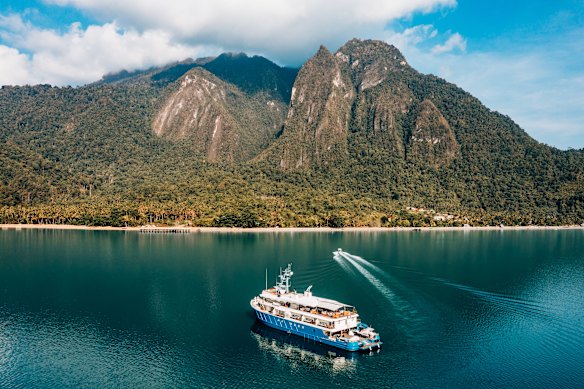
Anticipating our every whim, a crew member from the Kudanil Explorer – a former oil exploration vessel refitted to accommodate just 16 passengers in ultimate, barefoot luxury – has motored ahead, setting up a makeshift beach bar, before shaking up an icy daiquiri, delivered with aplomb as we sprawl on loungers strategically placed on the dappled shore. It’s 10am and I’m day-drinking in paradise. And I don’t feel the slightest bit guilty.
The 164-foot (50-metre) Kudanil Explorer plies the remote waters of Indonesia, from the delicate pink beaches of Komodo, to the nutmeg-infused Maluku Islands and the underwater jewel box of the Raja Ampat archipelago, celebrated as the most biodiverse marine environment on the planet. Our 10-day journey from Sorong, on the western tip of West Papua, through the southern reaches of Raja Ampat and along the Fak Fak peninsula to the fjord-like landscape of Triton Bay, has opened my eyes to an Indonesia I didn’t know existed, a far cry from Bali resort experiences, or the chaotic pulse of Jakarta.
This is one of the last uncharted pockets on Earth, a landscape so breathtakingly beautiful, so unaffected by an invasive human touch that it doesn’t seem real. That such mythical scenery still exists reduces me to teary-eyed wonder, with every moment of this incredible sojourn a revelation of nature at its most unspoilt. Off the island of Misool, I snorkel above the champagne bubbles of fellow passengers as they scuba dive into the riotous underwater gardens of the Coral Triangle, home to 1500 types of fish and 76 per cent of the world’s known coral species; while a kayak excursion through a patchwork of karst islands that puncture the emerald depths redefines serenity.

But it is in Triton Bay that this aqueous wonderland leaves its most indelible impression. Alongside wooden fishing platforms, or “bagans”, whale sharks have made a home, opportunistically feeding on submerged nets of bait fish. A close encounter with these giants of the sea is assured, and as one of the speckled monsters silently approaches, tail fin swishing languidly, I discover that it is indeed possible to squeal into a snorkel, dodging its massive bulk only to discover another gaping maw in my path of escape. Truly the thrill of a lifetime.
THE DETAILS
The Kudanil Explorer’s next Papua and Raja Ampat charter departs in December 2027, from $37,300 a night for up to 16 guests and three children. See kudanil.com
In 2001, shortly after September 11, I decided it would be a good time to travel in the Middle East. I was right. The tourists were gone, the locals friendly and tourism businesses anxious to make ends meet. I walked into five-star hotels, offered $50 for rooms and was welcomed. Then I walked onto a river-cruise ship and scored a rock-bottom fare to sail between Luxor and Aswan.
It was an odd ship, half-full of Germans and Swiss, who strained my schoolboy German, dressed as mummies for raucous parties and munched through platefuls of stodgy food. But that cruise along the Nile River blew my mind.
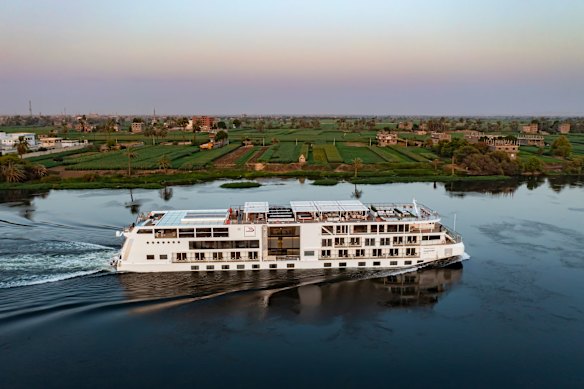
Lots of countries claim to be unique, but few are. Egypt is. You won’t see monuments like it anywhere else. And where else can you see a mighty river flowing through desert and casting up fertile agricultural land frothing with palm trees, and alive with birds?
The Nile at sunset from the deck of a river-cruise ship is a magnificent sight. Back then, German-quality beer to accompany it was a welcome bonus. Another thing that sets Egypt apart is that few other destinations have been so exploited. Egypt’s cultural legacy has been ransacked to decorate foreign museums. Television documentaries spin fantasies about pharaohs’ curses and pyramid-building aliens.
But explore ancient Egypt for yourself. It isn’t a child’s history lesson or silly mummy movie. It’s a highly influential early culture of astonishing scale and sophistication. Everything is staggering, from the size of its monuments, to the brooding presence of its statues.
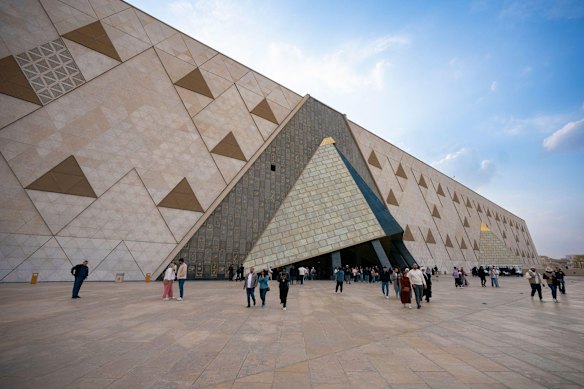
Then there’s everything that came after. Cairo in particular is a magnificent showcase of Islamic-era mosques, bazaars and a crowning citadel that, if it weren’t for the ancient competition of the nearby pyramids, would be far better known.
Modern Egypt is mud villages, cacophonous towns, vast engineering and urban projects. Its people are full of energy. Touts are annoying to some, but I found them a source of amusing conversation and friendly spirit.
Twenty-five years on, I’ve still never been anywhere better.
THE DETAILS
A river cruise remains the easiest way to see Egypt, and a multitude of cruise companies operate on the Nile. Cruises typically run between Luxor and Aswan with an added land tour to Cairo and the pyramids. Viking’s 12-day Pharaohs & Pyramids voyage costs from $11,195 a person, with multiple departures in 2027. See vikingrivercruises.com.au
Some trips are all about the destination. Others are more about who you travel with. Often, the most memorable adventures combine the two.
In 2008, my brother and I rafted a section of the Colorado River through the Grand Canyon. The full 450-kilometre descent from top to bottom takes about 18 days, but we only had time to do a lower stretch – the 61 kilometres from Whitmore Wash to Diamond Creek.
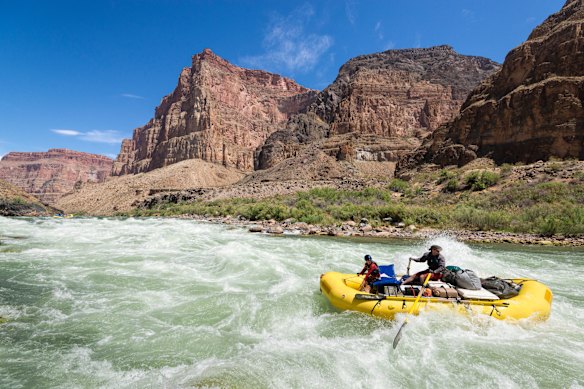
Although it’s tamer than some of the upstream segments, the smaller rapids allowed us to tackle most of it in a two-man inflatable kayak, known as a ducky.
What’s the difference between navigating a grade three rapid in a six-metre, half-tonne raft and a two-metre, hand-inflated ducky?
As one guide put it, “In the raft it’ll be interesting. In the ducky it’ll be King Kong.”
Every day was an exhilarating rollercoaster of white-knuckle rapids interspersed with serene drifts downstream. At dusk, we’d pull into a sandy beach and set up camp. While we relaxed around a campfire with a cold beer, the guides conjured up three-course feasts from the depths of the rafts. Tents were provided but most of us slept on cushioned mats under the stars.
Trying to convey the conversation-stopping majesty of the Grand Canyon is a challenge. Carved by the Colorado River over the last six million years, it’s a 446-kilometre-long chasm through the Arizona desert that in places yawns to 29 kilometres wide and more than 1800 metres deep.
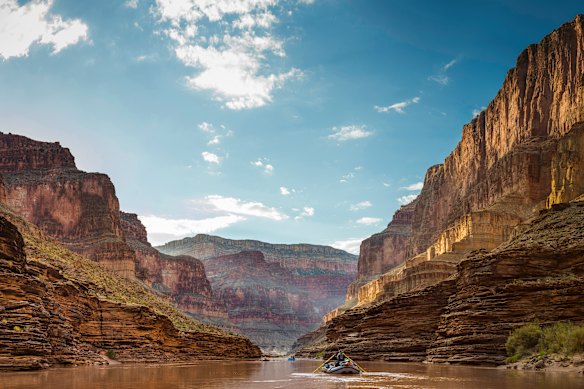
Whether you’re perched on the rim looking down or lying on the riverbank gazing up, it’s impossible not to feel humbled by the sheer scale of it.
What’s less obvious is that it represents an almost unparalleled snapshot of a geological timeline, one that stretches from 1.8-billion-year-old grey Vishnu schist, through kaleidoscopic bands of shale and sandstone, to cream-coloured Kaibab limestone that’s a mere 250 million years old. It’s a place that expands your mental horizons, often prompting seminal shifts in priorities and perspectives.
On the final day of the trip, as we approached the take-out ramp, the river narrowed, and we found ourselves flanked by a natural amphitheatre of soaring rust-red escarpments. As we drifted silently downstream, one of the guides stood up and sang a slow, haunting rendition of Amazing Grace, her voice echoing off the canyon walls. Eighteen years on, we still reminisce about it.
THE DETAILS
OARS’ rafting trips through the Grand Canyon, from five-day, family-friendly journeys to 18-day, full-canyon descents, cost from $5160. Trips operate between April and October and often book up months in advance. See oars.com
There’s something about overcoming adversity which sticks with you for life. There’s something, too, in confronting the anxiety you experience when you’ve made a bold – and odd – decision to do something you probably shouldn’t have. But then you go and do it anyway … and survive. The sense of relief which follows? Well, that’s the best travel memory. Ever.
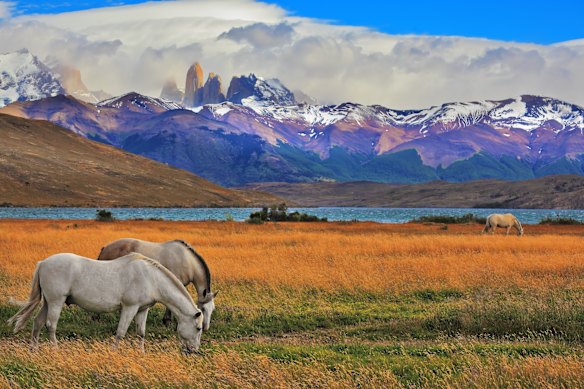
Whatever it is, taking a five-day horse ride through the Patagonian Andes is the most memorable trip of my life. I didn’t think of myself as a horserider before. Nor did I, after. But we ride across the top of Argentinian mountains, some so steep – and with no margin for error – that occasionally my guide tells me to let go of the reins so my horse, Pork Chop, can take over the steering (in case I confuse the poor creature by pulling him in the wrong direction).
Pork Chop and I traverse 12,000 hectares of privately owned Estancia, beside a 400,000-hectare national park, alongside the Andes Mountains. I spend up to eight hours in the saddle, then sleep in log cabins beside huge, glassy glacial lakes, eating Asado barbecue prepared on coals in an open-fire and drinking bottles of local malbec in the long twilight of Argentinian summer days.
The outside world is never as far away. One evening I stay at a local gaucho’s isolated property and the outside world completely disappears. Two lambs shadow me wherever I go; there is no electricity, but our showers are bearable, courtesy of a wood-burning hot water system. Our light comes from kerosene and candles, while water is available only if the gaucho’s wife fires up the generator by pedalling a bike for 40 minutes each day.

And while there is pain – all over – from my hours in the saddle, I look forward to every ride. Sometimes we cross gin-clear rivers where our horses sink to their bellies. Other times we pass across mountain ridges so high we’re eyeball-to-eyeball with the world’s largest flying bird, the Andean Condor. Though the true magic for me comes during the canter: sprinting across glacial valleys with the sound of Pork Chop’s hooves thundering in my ears. If only I could bottle that high.
THE DETAILS
The Classic Safari Company has five- and seven-day horse-riding safaris from $9990 a person in November and December 2026. See classicsafaricompany.com.au
When people say that a place is “just like the Galapagos”, I smile quietly to myself, knowing there is no other place like it. The “Enchanted Islands” are where marine iguanas shrink their own bones to survive food shortages and vampire finches drink the blood of other seabirds. It’s where blue-footed boobies shuffle-dance like dads at a wedding, yet dive into water with the precision of a torpedo. Described by Charles Darwin as “a little world within itself”, it is a little world now coded within my own DNA.
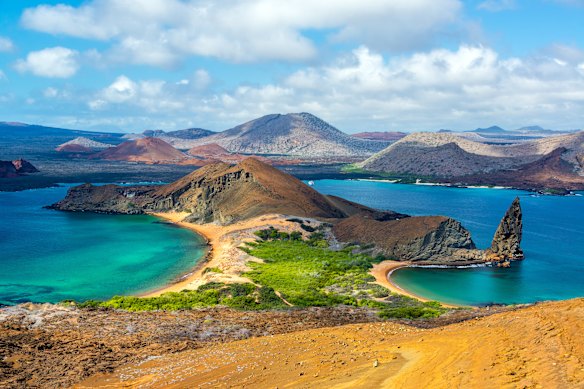
From a shy kid, more interested in collecting and classifying insects than playing with dolls, to a university student studying biology, the Galapagos called like a siren. Over time, the islands became a kind of Shangri-La in my mind. I wondered, could any place live up to such a long-held dream?
Yes, it could. Almost 15 years later, an expedition cruise to the Galapagos Islands still rates as the best trip of my life. Even writing about it now gives me goosebumps.
It takes three flights to reach the Galapagos Archipelago’s San Cristobal Island from Australia, via Santiago, Chile, and Guayaquil, Ecuador. Unlike Darwin’s cramped conditions aboard the HMS Beagle, we cruised through the islands in relative luxury aboard Lindblad Expeditions’ 96-passenger National Geographic Endeavour.
Over 10 days we snorkelled with Galapagos penguins (seriously surprising on the equator), kayaked alongside sea turtles (too busy mating to notice us) and hiked to a colony of waved albatross (found nowhere else). Sea-lion pups nibbled at my flippers and a Galapagos finch settled on my hiking boots.
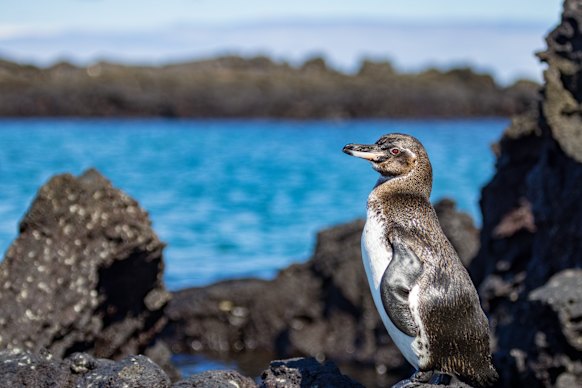
We visited eight islands (Darwin only managed four), made 15 Zodiac landings and geared up for seven snorkelling excursions. Each day changed me in some way. I became braver, swimming deeper and further than ever before. I stood in awe of the freshly formed, volcanic moonscape of Bartolome Island, pondering the cycle of life and my place in it. I vowed to stay endlessly curious and to question, like Darwin did, current ideologies and beliefs.
But it was the conversations with onboard scientists and local naturalists that opened my eyes to the value of well-managed tourism and the key role it has in protecting such pristine environments. Years from now, when the details of other trips have slipped away, this is the one that will remain.
THE DETAILS
Lindblad Expeditions’ 10-day ‘Exploring Galapagos’ cruise costs from $8791a person, twin share including all meals, alcohol, excursions, transfers, exploration tools and Wi-Fi. See expeditions.com
Five cruises of a lifetime
By Brian Johnston
Antarctica
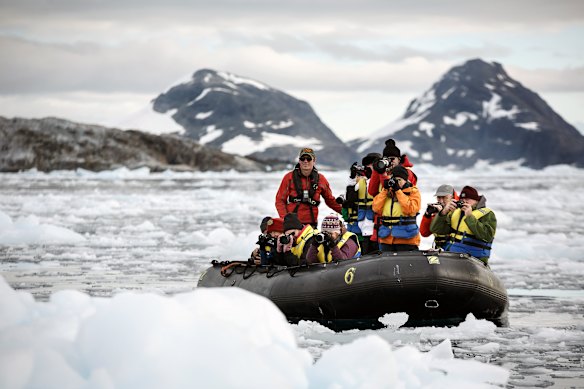
Distance and expense make this a one-off for most, but the experience is worth it. Glaciers and icebergs glitter, and the wildlife is endearing and astonishing in number. For the ultimate expedition, take in South Georgia too. See aurora-expeditions.com
Mississippi, US
This mighty, muddy river slurps past southern plantations and historic antebellum towns and is dense in European- and African-influenced culture. Best of all, though, are its connections to music history in cities such as New Orleans (jazz and blues), Nashville (country) and Memphis (rock and roll). See vikingrivercruises.com.au
French Polynesia
Jagged volcanic islands rise from peacock-hued lagoons filled with coral gardens, stingrays and trumpet-fish in one of the world’s most gorgeous destinations. Everything is so colour-saturated it seems artificial. Cocktails at sunset on the deck? Nothing better. See ponant.com
Danube, Eastern Europe
A cruise through Hungary, Croatia, Serbia, Bulgaria and Romania gives you a refreshingly different look at Europe. The scenery is in parts grand (mighty gorges, jagged mountains) and attractions range from historical towns and forts to the burgeoning sophistication of cities such as Belgrade and Bucharest. See aptouring.com
Alaska, US
This standard cruise destination is anything but standard. Huge snow peaks line the horizon, glaciers nibble at the coast, and outsized wildlife includes whales, bears, moose and eagles. The greener Inside Passage is a pretty contrast. Russian and gold-rush history provide unexpected dollops of cultural interest. See rssc.com
Disclaimer : This story is auto aggregated by a computer programme and has not been created or edited by DOWNTHENEWS. Publisher: www.smh.com.au