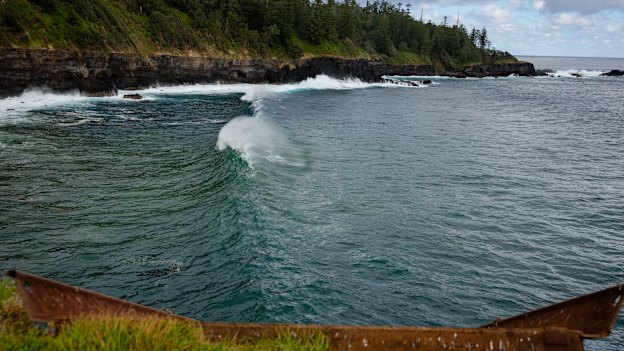
At Norfolk Island Airport the signs say “welcome to paradise”. The super-sized tiger sharks that live here must surely agree.
In the pristine waters around this South Pacific outcrop, 1400 kilometres from the Australian mainland, the tiger sharks grow fat on juicy mutton birds and beef offal. They roam freely across thousands of kilometres from New Zealand to New Caledonia, with the occasional jaunt to the Great Barrier Reef. And left unmolested by humans, they grow to a ripe old age.
And that’s even before a proposal by the federal government to expand the area of marine sanctuary around Norfolk and Lord Howe islands.
The result is that Norfolk’s tiger sharks are among the biggest in the world. The median length of a Norfolk tiger was 4 metres, in a Flinders University study of 35 tagged sharks. The largest female was 4.5 metres while the largest male was 4.1 metres.
By contrast, the largest female shark in a 2022 East Coast study of 66 sharks was about 3.8 metres, and the largest male was 3.3 metres.
Professor Charlie Huveneers at Flinders University, an ecologist specialising in shark research, says the Norfolk Island tiger sharks are extremely large. Since his paper in Marine Environmental Research last year, scientists have also studied large tiger sharks in the Maldives, but Huveneers says the Norfolk population is remarkable for having so many in a small area, without the influence of wildlife tour operators using food-based attractants.
“The primary reasons for these tiger sharks being so large is likely because they are old individuals which had the opportunity to grow to these large sizes,” Huveneers says. “These sharks would have also needed the right nutrition to grow and their time around Norfolk Island likely facilitated the consumption of nutritious prey.”
What was that prey? The reason many Norfolk Island locals point to is the offal chute at Headstone Bay. There are free-range cattle all over the island, but nowhere to dispose of the carcasses without poisoning the groundwater, given the island is just eight square kilometres. The skin and offcuts often get dumped down a chute into the ocean and the tiger sharks devour the beef from underneath.
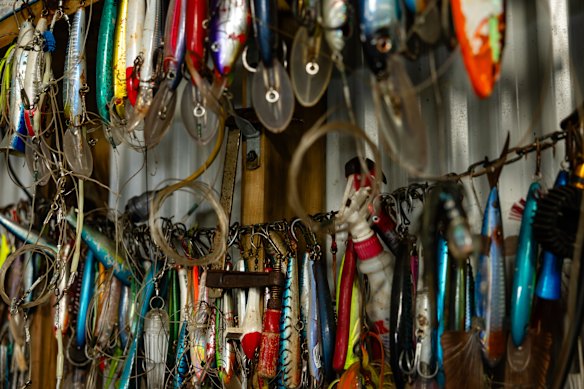
Tien Dat Do, 28, a nurse who moved from Vietnam to Norfolk Island about nine months ago, goes rock fishing four or five times a week. Headstone is his favourite fishing spot on the island, and he sees the chute used at least weekly.
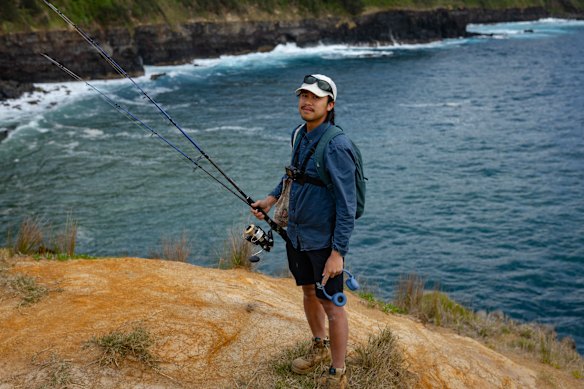
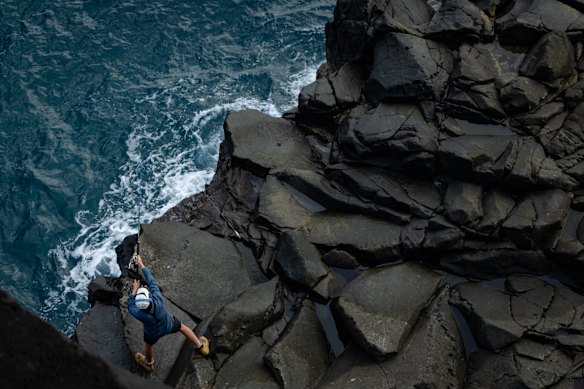
Do has seen the remains of up to four cows dumped into the water, and the tiger sharks demolish it all within half an hour to an hour.
“They smash from the bottom and when they finish the bottom, they keep going until there’s nothing left,” Do says.
Huveneers and the team used biochemical tracers from the muscle of tiger sharks to find out what they ate. Only about 5 per cent of their diet was identified as organic waste from livestock. Seabirds, including wedge-tailed shearwaters known colloquially as mutton birds, made up 70 per cent of their diet. Twenty per cent consisted of turtles, sea snakes and fish.
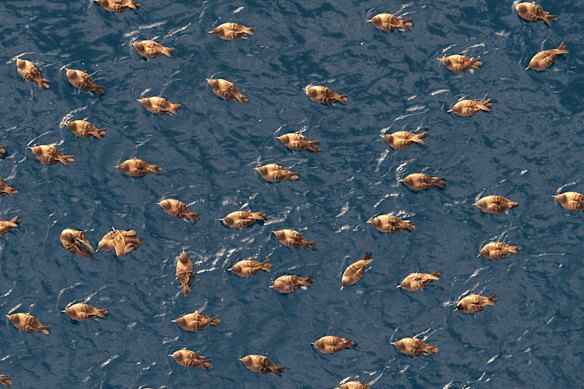
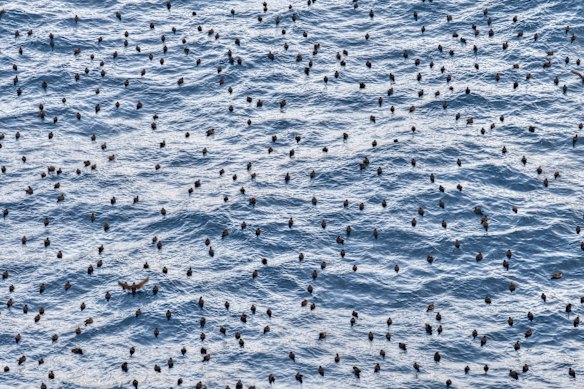
The tiger sharks like to hang out in Headstone Bay regardless of the organic waste disposal, acoustic underwater monitoring found. Huveneers says this could be because it is where the largest shearwater colonies are found on Norfolk Island, with the offal being incidental.
The researchers also found that dusky and Galapagos whaler sharks visited Norfolk Island’s fishing piers at various times of day, especially in the afternoons when fishers clean their catch along the piers and throw the scraps into the water. There are also white sharks around Norfolk Island, but not studied by the Flinders team.
The tiger sharks are around Norfolk mostly between October and April, satellite tracking found, while dusky and Galapagos whalers remain there year round. Tracking found that nearly nine out of 10 tiger sharks across multiple seasons returned to Norfolk Island at least once.
One intrepid individual tiger shark swam between New Caledonia, the Great Barrier Reef, Norfolk Island, the Chesterfield Islands, and New Zealand, at least 17,000 km in 468 days.
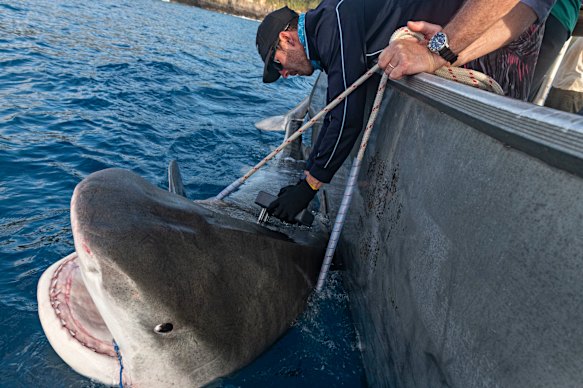
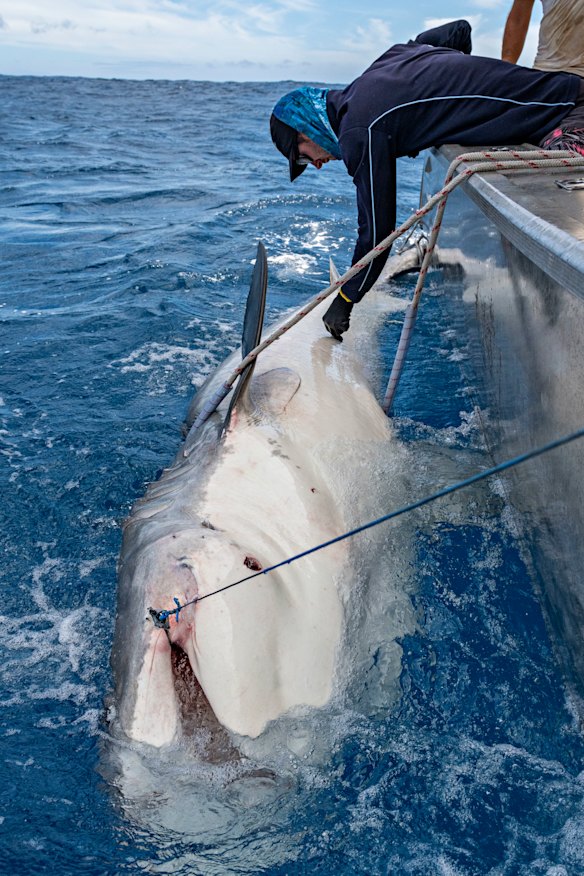
Luke Fitzpatrick, 30, takes tourists out fishing in his charter boat, but uses a more resilient aluminium boat to do the shark tagging with Huveneers and the scientists.
“We catch them and they get them up to the side of the boat and then they put a couple of ropes and hoses around them so it doesn’t hurt them and then they put the tags in their fins,” Fitzpatrick says.
“They’ve got a tape measure that goes from its head to its fins, one person each end. They’re pretty cool creatures, the big ones.”
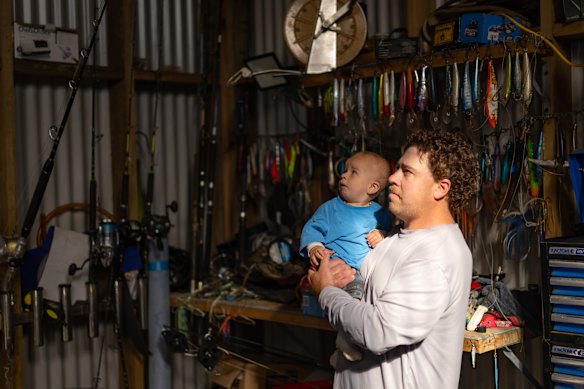
It does not surprise Fitzpatrick or anyone else on Norfolk Island that their sharks are bigger than anywhere else in the world. It seems everyone who grew up there has their “you’re gonna need a bigger boat”, or Jaws, moment.
For fisher Scotty Greenwood, 37, of Greenwoods Fishing Adventures, it was about a decade ago when he was out with a friend on a 14-foot plastic boat.
“We were just drifting, and a great white hit the boat like a seal,” Greenwood says. “It hit the back of the boat, nearly tipped us out. It still had enough momentum after glancing off the boat that it was airborne beside the boat. We thought it’s going to be hurt and take off.
“No, it landed, turned around on a dime, came back and hit the boat again. At this point, we were terrified and just got out of there.”
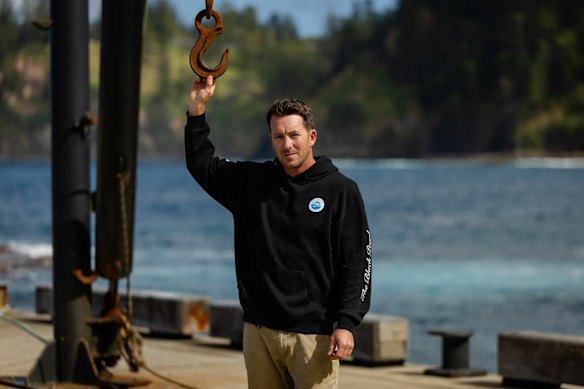
He later found out that male great white sharks hit the females in that manner to turn them upside down and mate with them.
By contrast, Greenwood says Norfolk’s tiger sharks are “quite placid and predictable”. Despite the size and number of sharks, there has never been a shark fatality recorded on Norfolk Island.
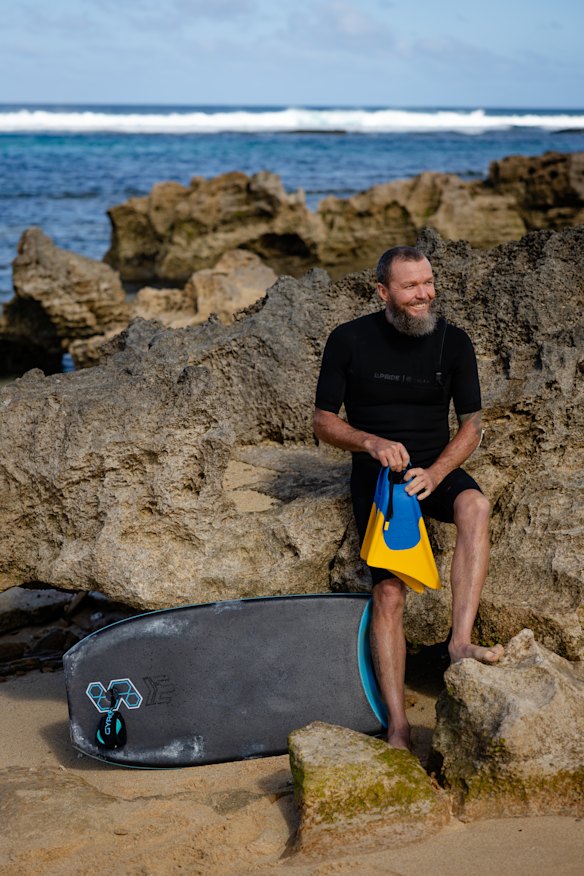
Spearfishing guide Jamie Ryves, 44, agrees. Unlike in places where they do cage diving for tourists, such as Hawaii, the Norfolk Island tiger sharks are “actually very timid”, he says. Diving with them is all about getting your body language right.
“You’ve really got to keep your body streamlined and be very slow and dive away from them and let them come into you to even get close to them,” Ryves says. “I don’t really feel threatened being in the water with them.”
Caitlin Fitzsimmons and Audrey Richardson travelled to Norfolk Island as guests of the Australian Museum for a separate story.
Get to the heart of what’s happening with climate change and the environment. Sign up for our fortnightly Environment newsletter.
Disclaimer : This story is auto aggregated by a computer programme and has not been created or edited by DOWNTHENEWS. Publisher: www.smh.com.au