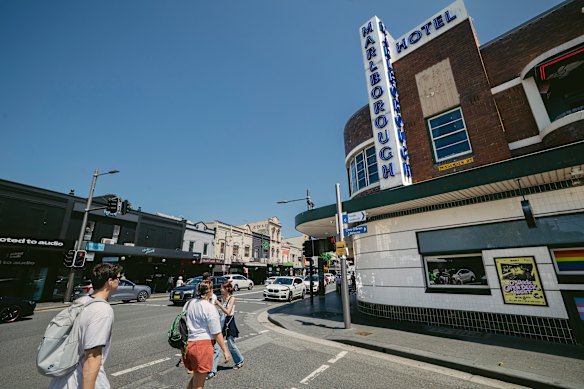

The state’s liquor watchdog has rejected a NSW Police push to force a popular Newtown pub to introduce biometric facial recognition cameras and strict capacity limits on the dance floor, ruling the measures would be difficult to enforce and represent a disproportionate intrusion on patrons.
The Marlborough Hotel, a live music and nightlife institution on King Street, will not be required to install AI-driven surveillance technology or impose dance floor restrictions as part of measures police said were designed to address a string of alleged compliance failures and alcohol-related incidents over the past five years.
The police application to the Independent Liquor & Gaming Authority (ILGA) detailed 93 alleged serious incidents at the venue between 2020 and 2025, including assaults, sexual touching, drink spiking, and resisting police.
Police argued that repeated engagement with hotel operators had failed to deliver lasting improvements, and noted the venue accounted for almost one in seven alcohol-related incidents recorded across the broader King Street precinct over five years.
However, the proposal sparked resistance from venue operators, privacy advocates, and City of Sydney councillors, who signed a submission to ILGA opposing the police measures they argued would threaten the viability of a venue that has traded since 1860 and attracts up to 4000 patrons a week.
The submission raised concerns over the collection of biometric information from “large numbers of law-abiding patrons”, warning it could deter members of the LGBTQ community from attending and create an “atmosphere of institutional surveillance rather than social enjoyment”.
Deputy Lord Mayor Jess Miller warned the proposed conditions would have not only devastated “the Marly”, but “completely undermined” the NSW government’s vibrancy reforms, which aim to rebuild Sydney’s nightlife after years of venue closures prompted by former lockout laws.
In its original application, police sought a density cap of one person per square metre across the dance floor – a proposal the ILGA rejected, finding there was limited evidence to support it and that it would be “impractical to enforce”.
Lawyers representing the venue argued in a submission the cap would have slashed dance floor capacity from 200 to 70, made live gigs economically unviable and triggered the termination of 15 casual staff.
The submission also argued police had overstated the number of incidents and current risks at the venue. It said the hotel had security measures in place including 75 CCTV cameras, body-worn cameras for security staff and an entry fee policy that refuses an average of 1800 people each year to help reduce intoxication.
While rejecting facial recognition and capacity caps, ILGA disciplinary matters committee chair Jeff Loy found that some additional safeguards sought by police were justified during high-risk periods of trade to moderate intoxication among patrons, given ongoing safety concerns raised by police.
This includes a post-midnight ban on shots, drinks containing more than 50 per cent spirits, and a strict two-drink purchase limit per patron.
Newtown Greens MP Jenny Leong welcomed the decision, saying questions remained over how the biometric information would have been collected, stored and monitored.
“We need a vibrant, welcoming nightlife, and there’s nothing more likely to dampen the party than having Big Brother tech watching over you on a dance floor.”
The decision comes as the use of facial recognition technology gains a foothold inside major retailers to curb antisocial behaviour as well as inside NSW gaming lounges under harm minimisation reforms introduced by the NSW government.
NSW Police in a statement said it accepted the ILGA decision and “will continue to monitor” the venue.
Start the day with a summary of the day’s most important and interesting stories, analysis and insights. Sign up for our Morning Edition newsletter.
 David Barwell is an urban affairs reporter for The Sydney Morning Herald.Connect via email.
From our partners
Disclaimer : This story is auto aggregated by a computer programme and has not been created or edited by DOWNTHENEWS. Publisher: www.smh.com.au