In Sydney’s growth suburbs councils struggle to provide parks, libraries and pools. And there’s a good reason why.
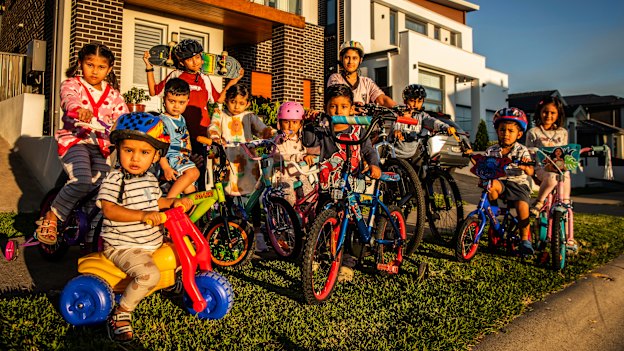
When children in Austral, a once semi-rural suburb in Sydney’s south-west, finish school in the afternoon, you’ll find them kicking a ball on a concrete footpath or around a busy road.
They don’t play in parks or playgrounds because, in this suburb of 15,841 people, there’s simply not enough green space.
It’s not because there weren’t plans for more parks. Liverpool City Council wanted every resident to be within walking distance of a green space. But as the population in Austral continues to grow, many of the promised parks remain in the planning stage. In August 2025, one of only two playgrounds in the suburb was removed, with plans to replace it with upgraded equipment by April 2026. That hasn’t happened and the site remains fenced off until at least December.
“The kids want to play,” said local Prayas Aryal. “If they can’t play, they get cranky … they’re riding on the roads, they’re playing on the roads.”
“If something [were to] happen, who is going to take the responsibility?”

When it comes to establishing a new suburb, one of the most important components is often the most overlooked: community infrastructure. Residents who live in greenfield suburbs on the fringe of Sydney, like Austral, often have to wait years to access community facilities or are forced to travel longer distances to the next closest suburb for parks, libraries and pools.
The responsibility of delivering community infrastructure falls on local councils, who largely rely on developer contributions to fund projects. But as land values soar and funding is restricted, councils are struggling to find the money to buy the land and build the facilities needed.
A spokesperson for Liverpool City Council told the Herald it has plans to deliver 13 parks in total for Austral: eight are awaiting finalisation or commencement of a concept design, three new parks are scheduled for completion between “now and March 2027” and the two existing parks are undergoing upgrades.
“In partnership with the NSW government and developers, work is well under way to deliver the infrastructure needed to support residents now and into the future,” they said.

“Council is pushing forward to deliver these projects; however, timelines will be shaped by approvals, resourcing, weather and site conditions.”
But Aryal’s not so confident: “It’s too late. [The parks are] supposed to be there.”
Suburbs are behind before they begin
A pattern emerges when looking across new suburbs and assessing access to community services. Families have to travel longer distances to get to facilities that the rest of Sydney barely has to think about.
A family living in Wilton, in the south-west growth area, could be driving up to 20 minutes, and for about 15 kilometres, to get to the pool in neighbouring Wollondilly.
And if the Wollondilly Leisure Centre is full or closed, the next closest pool could be either the Mount Annan Leisure Centre or the Gordon Fetterplace Aquatic Centre in Bradbury, both just under half an hour away.
Access to swimming spots is essential with temperatures in greenfield areas 8 to 10 degrees hotter than the rest of the city.
A combination of global warming, the lack of sea breeze, lower percentage of canopy cover and the proliferation of dark surfaces (roofs or roads) has resulted in higher temperatures, with some areas in January recording temperatures that felt like it was more than 50 degrees.
It’s the same story for libraries, where that same family in Wilton would have to drive about 15 minutes, or 11 kilometres, for their nearest library. Children’s activities, holiday or community events all become difficult to access.
These shortages add up to a different experience to the rest of the city. There’s more time spent on the road, more thought put into where people can go on hot days or during school holidays, and more money spent on fuel.
“It’s not just an inconvenience,” said Professor Emma Power, a housing expert at Western Sydney University. “It’s something that actually reshapes the daily life of families. It creates a time burden, with families having to squeeze these things in or potentially missing out.”
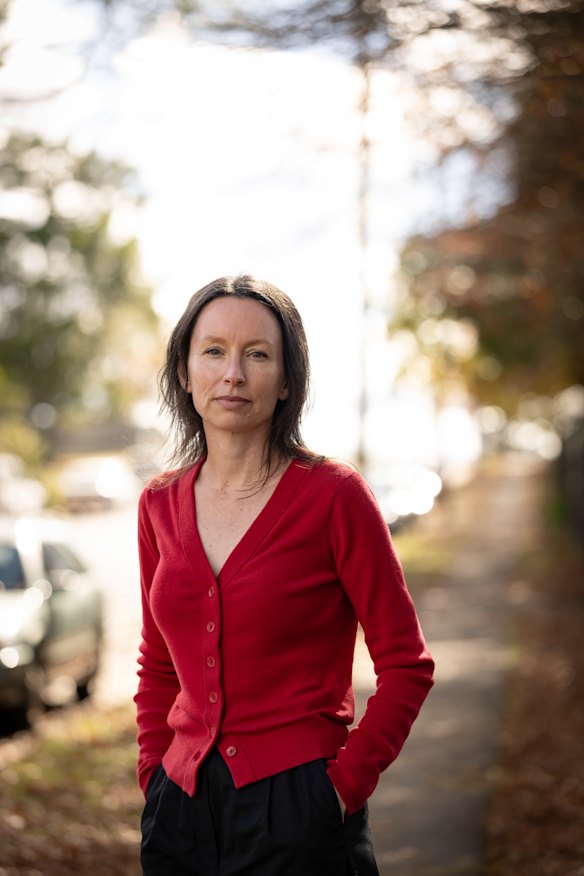
Power emphasised the importance of these facilities as places of community or “social connection”. Without convenient access to these services, families and their children will be “pushed into their private homes”.
“It takes a village to raise a child,” she said. “And without these services, we are separating people from their local community.
“You’re talking about a gap in the care infrastructures that actually enable people to meet their basic needs and to care within communities.”
And this infrastructure gap can have lasting consequences. A 2025 report from Royal Life Saving Australia showed that without a pool, children were at greater risk of drowning. It also showed having access to a pool improved the physical and mental health of the community.
“Public pools are essential community infrastructure, supporting health, social connection, and vital swimming and water safety skills,” RJ Houston, general manager capability and industry at Royal Life Saving Society Australia, said.
“Yet many communities, particularly in fast-growing and disadvantaged areas, still lack adequate access to safe places to swim.”
Meanwhile, a report from the State Library of NSW delivered in March showed public libraries improved mental health and life satisfaction, providing a “safe third space” that also acted as “tech hubs” to improve digital literacy among students and seniors.
Access to greenspaces has also been proven to have far-reaching impacts on children, including improving their cognitive function and attention capacity.
Who’s to blame?
Local councils, largely responsible for providing amenities, are struggling to afford to build them, as they attempt to circumvent a system intended to provide housing before anything else.
“Every western Sydney mayor is frustrated at that,” said Brad Bunting, the president of the Western Sydney Regional Organisation of Councils and mayor of Blacktown City Council.
“We get asked all the time, ‘When’s my next cricket pitch being built?’”

Developer contributions should be funding these facilities, but that conveyor belt of funding is restricted to cover only “essential works”, which includes land for facilities, but not for any construction.
The Department of Planning classifies facilities such as pools, libraries and community centres as “non-essential”.
“There will come a time in the future where we’re going to look back and say, ‘How did we allow this absolutely ridiculous thing to happen?’” Blacktown Council’s chief executive, Kerry Robinson, said.
Compounding the problem is skyrocketing land values, mixed with the built-in lag in collecting developer contributions, which means councils are often collecting money based on outdated land value, and immediately priced out when they attempt to spend the cash.
The result is mountains of unused funding and communities waiting for something to change.
Disclaimer : This story is auto aggregated by a computer programme and has not been created or edited by DOWNTHENEWS. Publisher: www.smh.com.au