
Carolyn Beasley
Many factors can prevent a keen traveller from visiting Antarctica. It’s not a trip for the budget-constrained, nor the time-poor. But if the fear of crossing the Drake Passage, that treacherous stretch of ocean between South America and the Antarctic Peninsula, is scuttling your dream trip, please read on.
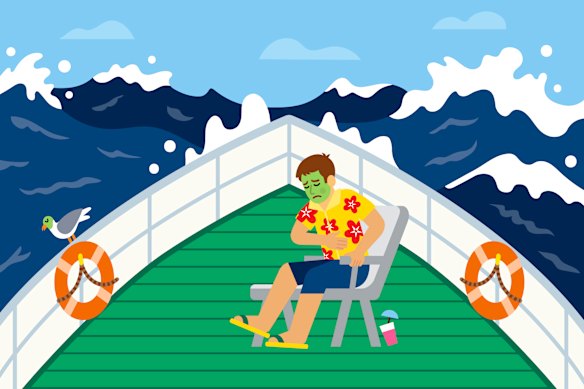
I first visited Antarctica in March 2020 (a trip that had an awkward ending, due to the emerging pandemic). I was nervous about crossing the Drake, and although I was hoping for the smooth “Drake Lake” there were moments of the “Drake Shake”, with waves six-to-eight metres high.
But Antarctica is extraordinary and, six years later, I find myself with another opportunity. There’s no hesitation. After all, the ship was built for these conditions and I’m armed with serious seasickness drugs.
Captain Bram Olof van Spriel of HX Expeditions has traversed the Drake Passage more than 100 times. He says the often-discussed wave height is only one determinant of how rough your passage will be. Wave direction and the interval between waves are just as important and, according to van Spriel, about 90 per cent of crossings are “quite smooth”. The best chance of encountering the Drake Lake conditions are crossings from December to February.
HX Expeditions uses route optimisation software that factors in the weather forecast to plan the smoothest route. It may be indirect and take up to 48 hours but working with the weather, rather than against it, improves passenger comfort.
Sign up for the Traveller newsletter
The latest travel news, tips and inspiration delivered to your inbox. Sign up now.
Importantly, not all ships are created equal. This ship, the MS Roald Amundsen, and sister ship, the MS Fridtjof Nansen, were launched in 2019 and 2020 respectively. Both were designed for polar expeditions with an ice-strengthened hull.
Many modern ships use stabilisers, flexible “wings” that project out from the hull underwater. On this ship the stabilisers are 3.7 metres long, reducing the sideways roll by up to 85 per cent. On top of that, this ship is heavy, weighing in at 21,000 tonnes, also decreasing bumpiness.
The ship’s Australian doctor Dr Mahmood Ahmad says seasickness results from a mismatch between what your eyes see and what your balance nerve registers. For some people, staring at the horizon helps relieve nausea, but for many, lying down with your eyes closed will let your body slowly adjust.
Even if you think you don’t get seasick it’s best to come prepared. Herbal medications or wristbands that target a pressure point work for some. Other passengers swear by a medicated patch behind the ear.
Personally, I prefer tablets from the pharmacy, like Travacalm. For back-up you might talk to your doctor about prescribed anti-nausea drugs – Dr Ahmad also prescribes these in the medical centre: it’s a tablet placed under the tongue and absorbed quickly by the blood vessels. You should also speak to your GP about any possible interactions with other medications.
One hot tip from the doctor and the captain: avoid Googling stories of the Drake Passage. Inevitably you’ll hear the scariest, most exaggerated stories, and the fear of the Drake Passage can exacerbate seasickness.
The good news is that Dr Ahmad rarely treats people for seasickness on the return journey. After conquering the crossing to Antarctica, and honing their seasickness strategies, people usually find their sea legs. So if all the other factors align, don’t let the Drake spoil your fun. Antarctica is absolutely worth it.
The writer travelled as a guest of HX Expeditions.
From our partners
Disclaimer : This story is auto aggregated by a computer programme and has not been created or edited by DOWNTHENEWS. Publisher: www.smh.com.au




