
It’s easy to notice things like cycle lanes, bakeries on every corner and the sheer number of public clocks when you first arrive in Germany. But which everyday features are conspicuous by their absence?
Moving to Germany – or even just visiting for a short time – quickly reveals a country with its own very particular ways of doing things.
Some of these differences are obvious. Others only become apparent after a while, when you suddenly realise that something you’re used to taking for granted simply isn’t there.
So what items or sights are most conspicuous by their absence in Germany?
Open shops on Sundays
Perhaps the biggest surprise for newcomers is how quiet Sundays can feel.
Unlike in many countries, where supermarkets and shopping centres operate seven days a week, Germany largely shuts down retail on Sundays.
If you run out of milk, you may need to wait until Monday – unless you fancy paying petrol station prices or heading to a train station shop.
Rooted in a long-standing legal principle that protects Sunday as a day of rest, the result is a weekly pause that can feel either frustrating or refreshingly calm, depending on your perspective.
READ ALSO: REVEALED – Where to buy groceries on a Sunday in Germany
Tap water at restaurants
In many parts of the world, sitting down at a restaurant automatically comes with a glass of water. In Germany, that’s far from guaranteed.
While tap water (Leitungswasser) is safe to drink and widely consumed at home, restaurants typically expect customers to order bottled drinks – often sparkling water (Sprudelwasser).
If you do ask for tap water, the waiter or waitress will probably fulfil your request but not always graciously – and in some places you may even be charged.
Free public toilets and drinking fountains
Another absence that quickly makes itself known? Free public loos.
While they do exist, especially in certain public buildings, most toilets in train stations, service areas and shopping centres come with a small fee, often between 50 cents and one euro. In some cases, you’ll receive a voucher to spend in an adjacent shop.
It’s part of a broader approach in which facilities are treated as services rather than free amenities – and it can catch newcomers out if you’re not carrying coins.
READ ALSO: The rules and etiquette for using Germany’s public toilets
Linked to this is something you might only notice on a hot day: the lack of public drinking fountains.
In many cities around the world, free drinking water is available in parks and public squares. This has historically been rare in Germany, though some cities including Berlin have started installing fountains in recent years.
Ticket barriers on public transport
Arriving at a train or underground station in Germany can feel oddly liberating.
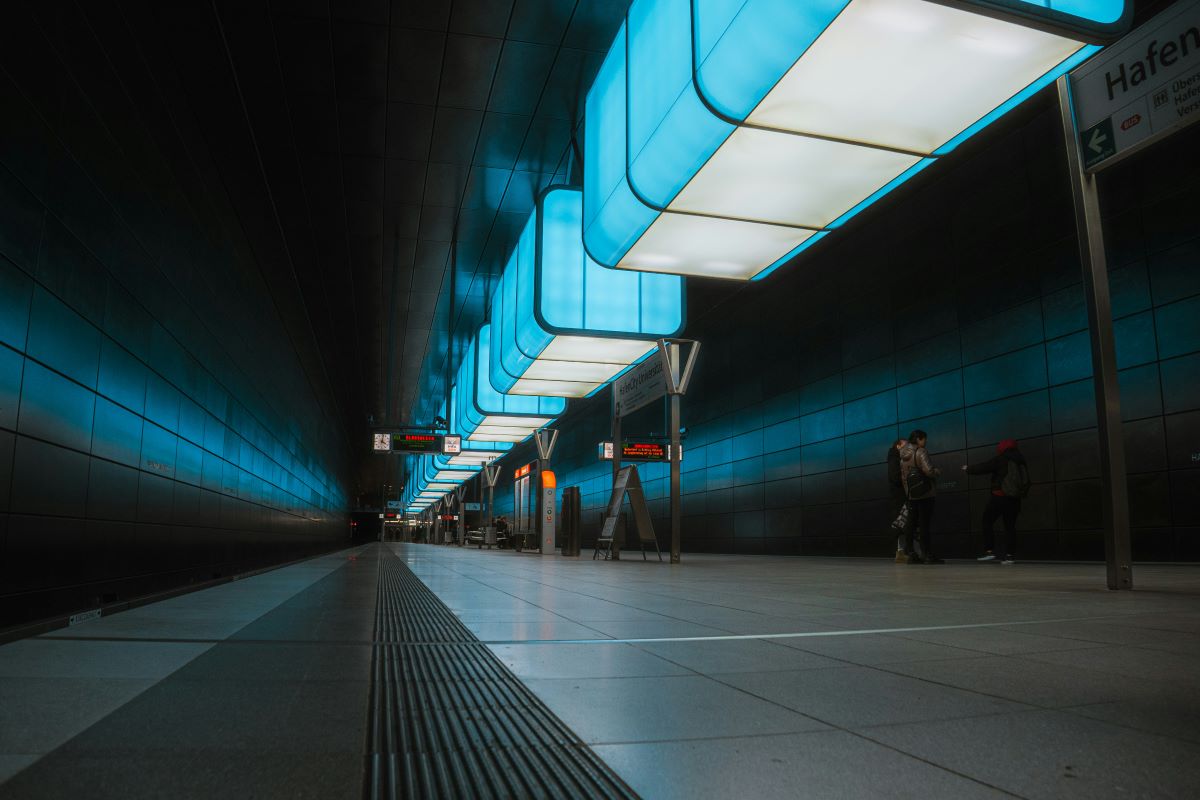
There are no ticket gates, barriers or turnstiles separating you from the platform. Instead, the system operates largely on trust: you simply buy a ticket and board.
But don’t confuse this with an invitation to ride for free. The system may feel informal, but it’s generally taken very seriously – and enforced by ticket inspectors carrying out random checks.
Look, no ticket barriers – at an underground station in Hamburg. Photo by Jack White on Unsplash
READ ALSO: Is Germany planning to decriminalise fare-dodging?
Overhead cables
Take a walk through a residential neighbourhood and you might notice another absence: overhead wires.
In many countries, power lines criss-cross streets on poles above ground. In German towns and cities, they’re far less visible, with much of the infrastructure running underground instead.
The effect is subtle but noticeable, contributing to the orderly, uncluttered look of many residential areas.
Speed limits
Germany’s Autobahn is famous – or infamous – for something it doesn’t have: a blanket speed limit.
While many stretches are regulated and temporary limits are common, there are still sections where drivers can basically travel as fast as their cars will carry them.
For drivers used to strict limits elsewhere, it’s a striking difference – and one that continues to define Germany’s motoring culture.
Kitchens and light fittings
If you move into a rented flat, the biggest surprise may be waiting behind the front door.
In Germany, it’s not unusual for rental properties to come without a fitted kitchen. That means no cabinets, no appliances. Nothing, in fact, beyond a few exposed pipes poking through a hole in the wall.
And the surprises don’t stop there.
Alongside the missing kitchen, you may also find bare wires hanging from the ceiling where light fixtures would normally be.
In many German rentals, fittings are considered the tenant’s responsibility, so previous occupants take them when they leave.
READ ALSO: Six confusing things about renting a flat in Germany
External air conditioning units
During the summer months, you might also start wondering why there are so few air conditioning units.
In contrast to many countries where external AC units are a standard feature of residential buildings, they’re relatively rare in Germany. Instead, people rely on thick shutters and arguably quite fussy ventilation routines.
With warmer summers becoming more common, this is slowly changing – but the sight of dozens of AC units fixed to the exterior walls of blocks of flats remains far less widespread than elsewhere.
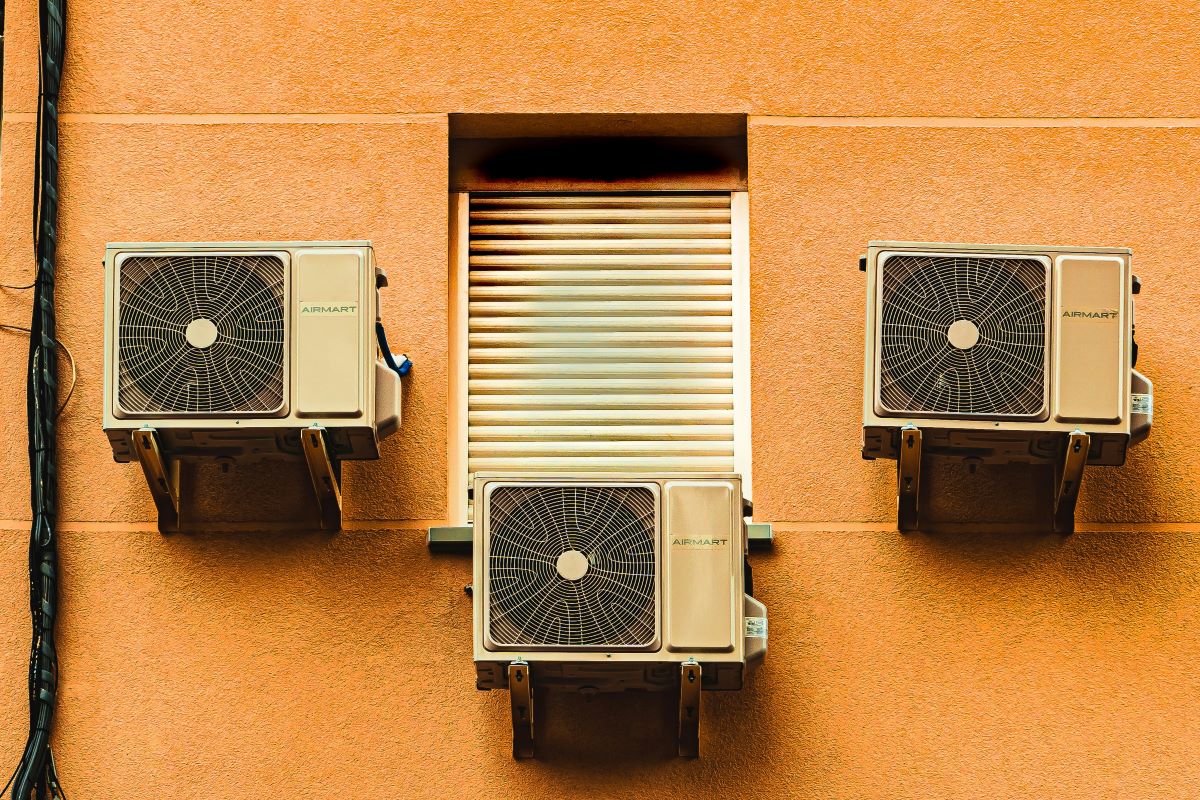
A common sight in other countries, visitors to Germany will rarely see AC units on the sides of apartment buildings here. Photo by Jose Antonio Gallego Vázquez on Unsplash
‘Flour’ and measuring cups
Anyone used to popping to their local shop for a packet of ‘flour’ could be in for a surprise in Germany, where the idea of a single, do‑everything flour is largely absent.
Instead, the federal republic more typically offers a range of numbered types: 405, 550, 1050 and beyond.
Lower numbers such as 405 are softer and more refined, making them suitable for cakes and pastries, while higher numbers like 1050 are darker and denser, better suited to breads.
This emphasis on precision carries over into how ingredients are measured.
Rather than using cups or simple volume measurements, German recipes usually rely on weight, given in grams. As a result, you won’t often see the kind of basic measuring cups common elsewhere.
Instead, kitchen measuring jugs here tend to feature multiple scales – for flour, sugar, liquids and more – all on the same container.
The system works well once you’re used to it, but can feel surprisingly complicated at first glance.
READ ALSO: What happened when I ate like the German government advises?
Clear instructions
One final absence that can catch newcomers off guard involves official requests for payment – for example for a parking ticket, a tax bill or an administrative fee.
Often, these letters incorporate multiple warnings about what will happen if you don’t pay but no obvious instructions on how to hand over your money.
Instead, you have to piece the various bits of information together as if doing a jigsaw, tracking down an account number at the bottom of the page, for example, a recipient name from the top, and the payment reference number (Verwendungszweck) from multiple points in between.
It’s one of those moments where Germany’s preference for rigid systems over user-friendly instructions becomes particularly noticeable and – for newcomers – can easily add a layer of unnecessary extra stress to transactions that are already unwelcome.
What else have you noticed is hard to find in Germany? Let us know in the comments below.
Disclaimer : This story is auto aggregated by a computer programme and has not been created or edited by DOWNTHENEWS. Publisher: thelocal.de



