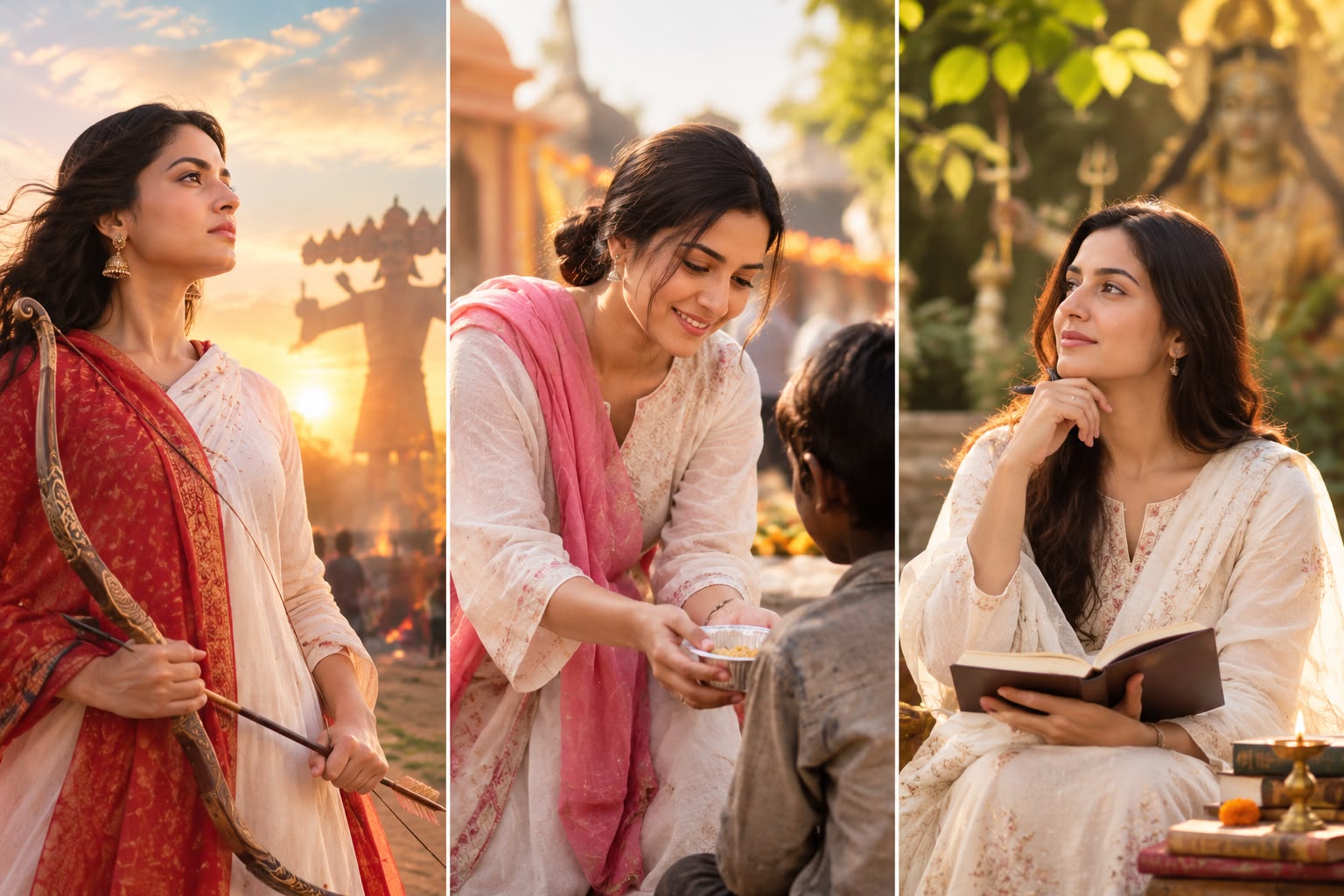
Dussehra, also known as Vijayadashami, is a celebration of Lord Rama’s victory over Ravana and the triumph of dharma over adharma. When Ravana is burnt, it is a reminder for people to be righteous, wise and self-disciplined. The festival is not just a time for celebration; it’s also a time for contemplation on a core question: what do we have to do in ourselves to win?
Spiritually Dussehra provides an opportunity to explore the impact of the ego and become aware of thoughts, emotions, and actions through the eyes of Himalayan Siddha Akshar. It’s deeper message is to acknowledge inner tendencies, develop positive traits, and let wisdom help in day-to-day decisions.
Ravana: When Knowledge Exists Without Self-Mastery
Ravana is remembered as a powerful ruler, learned scholar and a devoted worshipper of Lord Shiva. An important lesson in his story: Knowledge and abilities are only useful when they are used with humility, discipline and good judgment.
Even if a person has lots of education, a good job, or power, he/she can still work on developing skills in emotional management and recognizing various points of view. The right use of knowledge is the key to wisdom. It is when people are able to be patient when criticized, respectful when they disagree, and assertive when they exercise authority that self-mastery is seen. The lesson from the story of Ravana is that the best thing to be done is not to control others but to control one’s thoughts, desires and actions.
Understanding Ego: The Difference Between Identity and Consciousness
In spiritual philosophy, the sense of individual identity by feelings of “I” and “mine” is called ahamkara. Identity enables people to better understand their roles and responsibilities. But over-attachment to the identity can affect decision making and actions.
Conflict can feel like personal conflict, patience may be needed to take feedback and when someone is successful, comparison may be drawn. From a Yogic point of view, consciousness means being aware of the thoughts, feelings, and impulses.
The Science of Self-Mastery: Creating Space Between Stimulus and Response.
Self-mastery starts with being able to pause in between the experience and the response. Emotional reactions can be affected by common responses to criticism, disappointment, and disagreement. Space for a considered decision is created by observing the situation before responding.
This is supported by attention, emotional awareness and self-regulation. For some, mindfulness and meditation allow them to see the thoughts and feelings in their mind, though these are unique to each person.
The Ten Heads of Ravana: A Symbolic Map of the Inner Battle
The ten heads of Ravana have been interpreted in various ways in different spiritual beliefs. One popular interpretation relates them to human tendencies which affect judgement and self-mastery. These comprise desire, anger, greed, attachment, pride, jealousy and other imbalances within.
This symbolism invites people to reflect on their behavior more so than only the outward appearance of Ravana. Every tendency is a chance to be aware and to make a good decision.
It is important to identify a habit in order to understand its impact. Dussehra is a reminder that personal change is a worthy process, which starts with the honesty, awareness and effort.
Each Tendency Can Be Examined in Everyday Life.
When personal wishes outweigh sound judgement, desire can affect decisions. Words, used without thought, can cause conflict in relationships. Greed brings with it a desire to keep on acquiring, and attachment to a way of life can make it difficult to accept changes in life.
For some it’s pride that stops them from taking the advice of other people and for some it’s jealousy that makes the other’s success a comparison. These experiences allow patience, humility and understanding to be developed.
If a person sees anger, they can learn to pause before responding. Jealousy is a state of mind that can allow someone to feel happy about another’s achievements whilst still trying to achieve their own. An individual who is prone to pride may be more likely to take in constructive criticism and feedback.
The key is to be aware of these patterns and act in a conscious way. The fire of Ravana can be a personal initiative to change habits, develop character and make choices based on wisdom.
Lord Rama: The Principle of Dharma in Action.
Ravana can be seen as power under the control of the ego and Lord Rama as action under the control of dharma. Dharma refers to righteousness, responsibility, integrity and conduct in accordance with moral values.
Living dharma is about being honest, accepting responsibility, treating others with respect and honour and doing what is promised, what is right and with sincerity. It also includes thinking about the effects of personal decisions on others.
To be honest, to be fair, to assist someone in need, and to be accountable are some very real ways to display righteousness. These events slowly form character and build connections.
Development of spirit is expressed in their daily lives, as well as in religious practices and the reading of religious scriptures. When knowledge is used to direct actions towards fairness, compassion, and responsibility, it is lived wisdom. Lord Rama’s example makes people realize that one should be consistent with their values and thoughts and act accordingly.
From Ritual to Realisation: Making Dussehra an Inner Practice.
The celebration of the occasion of Duassehra is more meaningful when the message of Duassehra brings a reflection to an individual. The first step is for them to list one repeated reaction/ habit in their lives that they would like to change. They can learn more about their behavior by observing situations that evoke it.
Meditation is a time of quietness and awareness of thoughts. Reflection is enhanced by conscious breathing and disciplined action facilitates the transformation of awareness into action.
Anyone who wants to train in anger can try to respond after a thought-breath. If you are in a comparison posture, you can concentrate on the positive and your personal growth. If people find it hard to take feedback, they can learn how to listen to feedback with an open mind.
The True Victory of Dussehra.
The deeper message of Dussehra is the transformative power within us. The tale of Lord Rama and Ravana teaches us that the power of knowledge, intelligence and strength can be realized in its truest form when it is balanced by humility, wisdom and dharma.
Spiritually, the concept of self mastery as taught in the Himalayan Siddha Akshar is a process of the knowledge of the Ego, the observation of personal tendencies and an increased awareness of thoughts and actions. This journey is continued day-to-day with choices and responsibilities.
External Ravana can be burnt in a single night and Inner growth comes by regular practice. Pride may yield to humility, hasty responses to thoughtfulness, and self-centered intentions to responsible action.
This Dussehra, may the joyous occasion make us all reflect and identify habits that need to be changed. Make Lord Rama’s values as a guide to make the decisions and introduce self-awareness as a basis for personal growth.
Disclaimer : This story is auto aggregated by a computer programme and has not been created or edited by DOWNTHENEWS. Publisher: deccanchronicle.com