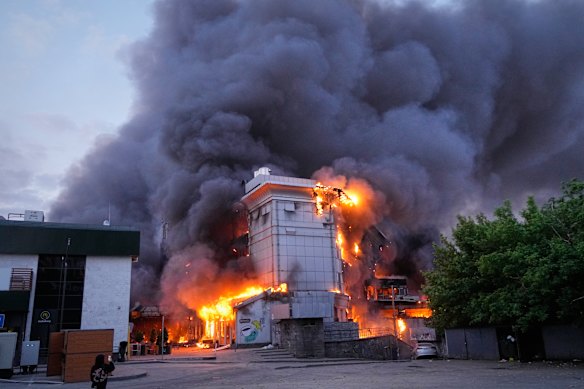
Aspects such as drone technology and diplomacy show how the wars intersect on the battlefield and in global alignments, providing a model for future conflicts.
The trench warfare and heavy artillery on Ukraine’s battlefields in 2022 don’t look much like the war by air and sea that began when the United States and Israel attacked Iran.
But similarities between the two conflicts soon became evident and remain so almost three months later.
In both cases, the country with the more powerful military has been unable to vanquish its adversary.
President Vladimir Putin of Russia expected a quick victory when he launched his “special military operation” more than four years ago. President Donald Trump initially vowed that the “little excursion” against Iran, which started February 28, would last four to five weeks.
“For both Russia and for the United States, there’s a lot of unmet expectations about their military operations,” said Nicole Grajewski, an expert on Iran and Russia and a professor at Sciences Po, the elite social sciences university in Paris, attributing it to “the hubris on both sides”.
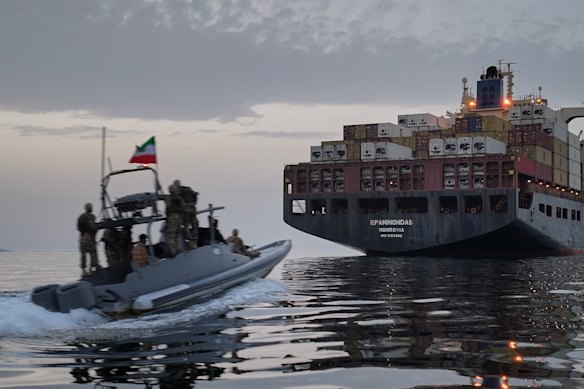
Over the past several days, negotiations have produced progress toward an initial plan for peace between Iran and the US, though with much uncertainty, given the renewed American strikes against Iran on Monday. Whether or not an agreement is reached, the war will have provided lessons, along with the conflict in Ukraine, on the evolution of modern warfare.
Technology reshaping warfare
Asymmetrical tactics have helped both Ukraine and Iran hold off stronger forces with which they could not compete in a conventional military confrontation.
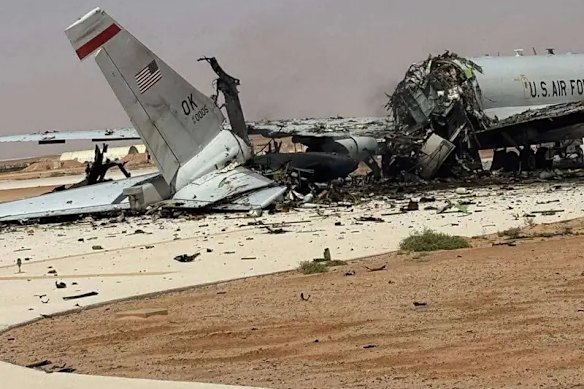
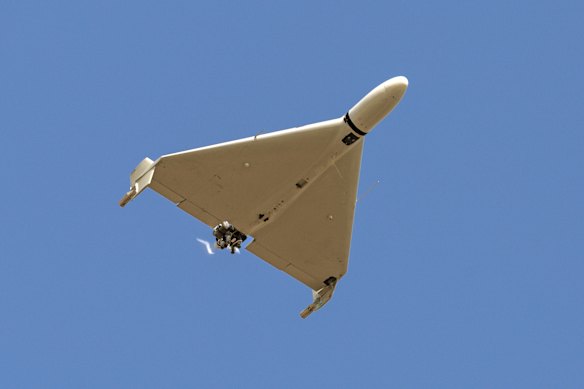
Iran, for instance, struck at the US by attacking its allies. It instilled fear in Persian Gulf states by sending one-way attack drones to hit military bases and energy facilities in countries like Kuwait and Saudi Arabia. It has also used the threat of mines and small armed speedboats to keep a chokehold on the narrow Strait of Hormuz.
Ukraine has assassinated Russian military officials in Moscow and regularly struck oil facilities, the lifeblood of the Russian economy. It has also used sea drones to neutralise Russia’s much bigger Black Sea navy.
Perhaps most indelibly, experts said, the two conflicts demonstrate how innovation and technology are reshaping warfare.
The US has turned to drone-detecting systems loaded with artificial intelligence to protect the Prince Sultan Air Base in Saudi Arabia, according to a person familiar with the agreement. Those systems were developed by Ukraine to defend itself from Russia.
In Lebanon, the militant group Hezbollah is attacking Israeli troops with explosive drones controlled by fibre-optic cables, like those commonly used in the war in Ukraine.
Layered systems of sensors, guided missiles and drones – and, in many cases, AI-enabled technology – that were honed in Ukraine and deployed in the Gulf, “are likely to rapidly proliferate around the world”, said Michael Kofman, a military expert and senior fellow in the Russia and Eurasia Program at the Carnegie Endowment for International Peace.
In both wars, “we see the advent of mass precision on the battlefield,” Kofman said. Already, he said, Hezbollah and combatants in Mali have turned to similarly cheap and easily built technology, showing that such systems “will democratise access to mass precision on the battlefield for middle and small powers”.
Similar strategies
The fighting in the Middle East before the ceasefire took effect in early April featured the kind of drone swarms combined with ballistic missile attacks that officials and experts said debuted in Russia’s invasion of Ukraine.
Iran delivered one-way Shahed attack drones to Russia in 2022, which Moscow used to strike Ukraine. That same model has been launched against Gulf countries by Iran this year, as Russia is returning the favour with some military support to Iran. The extent of that support remains unclear, but according to US officials, it includes shipping drone parts across the Caspian Sea.
Grajewski noted “some co-operation” between Russia and Iran in manipulating global location systems to confuse the opposition’s targeting guidance. Some ships linked to Iran appear to have recently spoofed locator trackers in the Strait of Hormuz – mirroring a long-honed tactic of Russia’s illicit shadow fleet of energy tankers – to evade detection by the US Navy.
Russian anti-jamming equipment was found in an Iranian drone targeting a British base in Cyprus in March. European officials and experts are concerned Moscow will supply weapons if stalled peace talks break down and Iran resumes strikes across the region.
Diplomatic ties
The Iran war has strained some alliances, most notably between the Trump administration and Europe, where many leaders believe the conflict is unnecessary and unlawful.
It has also set off a worldwide scramble for energy supplies, with some countries turning to Russia for illicit, but available, oil and gas. And it has delayed the Russia-Ukraine peace process by diverting the US’ attention to the Middle East.
“I believe they were drinking champagne in the Kremlin when President Trump started the war in Iran,” said Danylo Lubkivsky, director of the Kyiv Security Forum and a former Ukrainian deputy foreign minister.
But the war in Iran has also produced some surprising alliances, most evident in the new partnerships Ukraine has forged with Gulf states.
In April, Ukraine announced new security agreements with Qatar, Saudi Arabia and the United Arab Emirates. Those kinds of ties would have been unlikely several years ago when some of those Gulf states had previously sought to maintain neutral relations with Russia.
Ukraine wants to trade its drone technology and training assistance in return for Middle East diplomatic backing, energy deals and advanced air-defence systems, said Jana Kobzova, co-director of the European Security Program at the European Council on Foreign Relations.
President Volodymyr Zelensky of Ukraine is hoping “to turn this crisis into an opportunity,” she said.
At least, Kobzova said, agreements with oil-rich states that include the sale of drone technology to them could prove lucrative to Ukraine’s burgeoning defence industry.
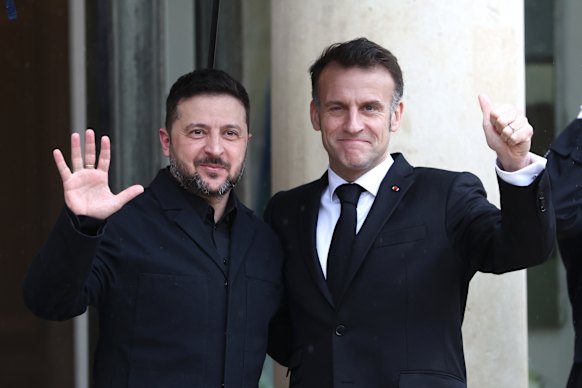
Europe has been a lifeline for Ukraine since the US mostly stopped donating weapons and equipment to Ukraine last year.
European countries have bought weapons from the United States to send to Ukraine, and last month the European Union unlocked a loan of €90 billion ($142 billion) to help Ukraine endure the ongoing war.
But Europe’s ability to continue providing robust support may depend on whether the shortage of fuel and goods caused by the war in Iran drags down European economies, a situation that would worsen if peace is not achieved.
This article originally appeared in The New York Times.
Get a note directly from our foreign correspondents on what’s making headlines around the world. Sign up for our weekly What in the World newsletter.
Disclaimer : This story is auto aggregated by a computer programme and has not been created or edited by DOWNTHENEWS. Publisher: www.smh.com.au