

The sound is deafening.
It’s July 10 and Bell Centre stadium in Montreal is packed, with 20,996 fans on their feet screaming as the Toronto Tempo and Dallas Wings take to the court against a backdrop of indigo strobe lights and rock music.
The crowd shattered the WNBA’s regular-season attendance record for a single game, an extraordinary statistic given Montreal doesn’t even have its own WNBA team.
It didn’t take long for an avalanche of posts on social media.
“Tough day for the ‘No-one watches women’s sports’ crowd,” one user cheekily proclaimed alongside footage of the roaring crowd.
The records didn’t stop there. Last week the WNBA announced the first round of the play-offs was the most-watched yet, with an average of 1.3 million viewers tuning in across the network over 10 days. Meanwhile, an analysis from Sports Business Journal found the WNBA drew a league-high record of 3.79 million fans to games in 2026.
The WNBA’s skyrocketing popularity is the accumulation of what many people in women’s sports spaces have been dreaming about for decades.
The league’s record-breaking attendance, sold-out stadiums, in-demand merchandise, fan activations and superstar players have set the benchmark for what marketing in women’s sports can do.
But what about here in Australia?
Dr Kasey Symons, a lecturer in sports media at Deakin University, says Australia has fallen behind the United States when it comes to creativity and innovation for marketing in women’s sports.
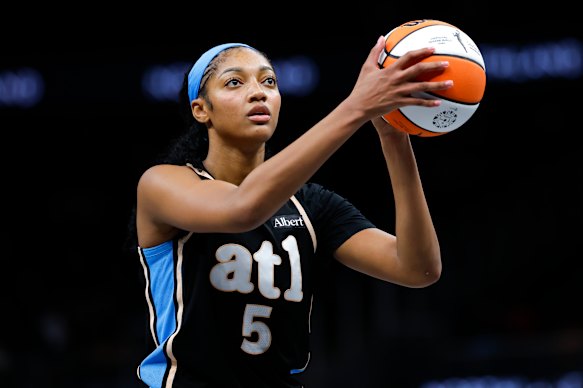
“I want to be generous to where we are in our sporting landscape in terms of resources, revenue, and support, but we are undoubtedly behind,” she said.
“It’s not enough any more just to say, ‘One day we’ll get there’. ‘One day’ is now, and we can take some examples from other sports to see what they’re doing.”
We’ve contacted athletes, player agents, content creators, academics and marketing experts to ask which women’s sports in Australia are thriving in today’s marketing landscape. More importantly – which ones need to catch up?
What’s behind the WNBA’s meteoric growth, and why isn’t the WNBL as popular?
Not many have had a closer look at the WNBA’s expansion than Australia’s most-decorated basketballer, Lauren Jackson. Over more than a decade in the American league, Jackson won two championships, was crowned MVP three times and was a seven-time WNBA All-Star.
Now, as chief strategy and partnerships officer in Australia’s WNBL (in which she also played, winning seven championships), Jackson has the task of trying to emulate domestically some of that success she’s been privy to abroad.
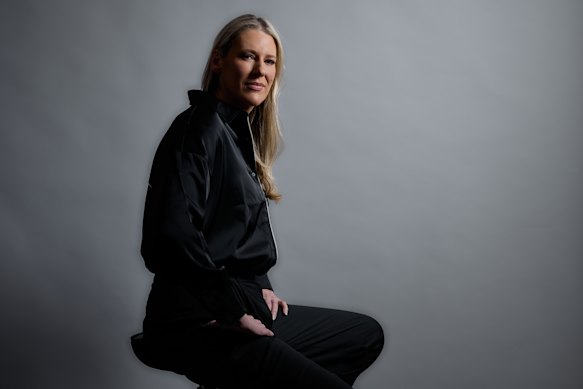
“There are so many moments that are contributing to us being here right now and in a position where we are starting to grow – we are getting eyeballs,” Jackson said of the WNBL.
“We’re able to start making a little bit of noise around the game and the global women’s basketball movement is happening, and it’s real. There’s a lot of investment going into it. For us, it’s about trying to capitalise on that, trying to grow with it, and [to] stay globally relevant.”
Jackson said the way the WNBA is now marketing its players – where individual stars have become household names – has been a big contributor to its success.
“When I first went into the WNBA, they made us not be ourselves, we weren’t being marketed as ourselves, it was more what they thought society wanted to see,” she said. “Whereas, I think what’s happened in the last 10 years or so is that you start to see way more authenticity. The athletes are stepping into their own power, and it’s resonating with society.”
Symons has a theory about why the US has been able to produce these cult-like figures, noting American sporting culture allows “individual personalities to shine and be themselves”.
“I think in Australian sports we still have a bit of that tall-poppy syndrome, where individualism is a bit less celebrated, and we do like athletes to stay more humble.”
Symons also praised the multipurpose marketing campaign implemented by the WNBA for fans across a diverse demographic, highlighting the impact of New York Liberty’s famous mascot, Ellie the Elephant – who has dedicated fan pages and had appeared in Vogue.
The WNBA also attracts investors such as Serena Williams (part-owner of the Tempo), Tom Brady (who has a stake in the Las Vegas Aces), Magic Johnson (part owner of the Los Angeles Sparks) and Karlie Kloss, who is an investor in the group that owns the Liberty.
The WNBL has recently introduced private ownership and Jackson believes will help propel opportunities in, and visibility of, the league.
Why netball is falling behind other sports
Netball remains one of the most interesting women’s sports in this conversation. It attracts a largely female fan base and has mammoth participation numbers in grassroots levels. While total attendance numbers during the Super Netball league have increased this year, the sport is still battling for attention.
Alexa Prinno is a Perth-based presenter and content creator of Your Netball Bestie – a media platform with a combined 120,000 followers.
From a marketing perspective, Prinno believes netball is falling behind other sports and is eager to see more branding, media visibility and sponsorship opportunities to transform netballers into household names.
“I’d say from a fan perspective, yes, I would say netball is behind, from what I’ve seen there’s no denying that,” she told this masthead.
Netball Australia recently announced Priceline Pharmacy as a partner, and Prinno believes the sport should capitalise more on its growing female fanbase.
“Marketing research shows approximately 80 per cent of all household purchasing decisions are made by the women in the household, and yet, for some reason, a lot of big brands still really aim for male-dominated sports,” she said.
“We are looking at females as second-tier decision-makers when they are actually the main decision-makers for purchases. All brands who want to make money should pivot to a predominantly female audience, which is exactly what netball brings.”
Prinno wants Super Netball to draw on inspiration from the WNBA and see more Australian netballers become “the face of the sport”.
“We see other sports really lean into platforming their superstars, and then we kind of associate the superstar face and name with the sport,” she said.
“I don’t know anything about [the] WNBA, but I do know Caitlin Clark, and I’m interested in watching her play because of the branding and the platform that she has.”
Clark is the highest-profile player in the WNBA, and considered one of America’s most marketable athletes.
The battle for eyeballs: How can AFLW, NRLW and cricket improve?
Australians love to tune in for the biggest moments on the international stage, proven in the commercial success of the Matildas, Diamonds and the women’s cricket team.
However, when we look to our domestic leagues – the AFLW, NRLW and the BBL – attention and attendance is generally less.
“We see women’s sports sort of explode in a relatively short period of time and start to professionalise, and so when you factor in the emergence of the WBBL, the NRLW, AFLW, [and] Super Netball, there’s now literally 15-odd leagues competing for the interest of 25 million people,” said senior lecturer in sports management at Deakin University, Dr Hunter Fujak.
So how do those leagues attract and maintain their fan bases?
Former AFLW player Aliesha Newman, who designed the league’s pride ball this year – wants marketing for women’s sports to be a year-long commitment, not just, for example, at the start of an AFLW season, which is much shorter than a men’s campaign.
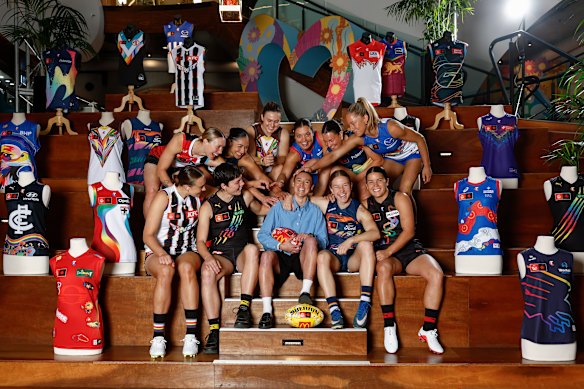
“The promotion for the AFL is non-stop, so I’d love for there to be promotion for AFLW during the whole year, not just leading up to it,” she said.
There’s also the importance of tapping into, and understanding, the audience and, more significantly, what they want to spend their money on.
Newman said AFLW does a great job of integrating the LGBTQ community through Pride Round, but wants to see more opportunities for merchandise and branding.
Why soccer shows you can’t have league growth without talent
Sports agent Bruce Kaider has an impressive client list, which includes basketballers Jackson and Ezi Magbegor (Australia’s highest-paid player in the WNBA) as well as Matildas stars Alanna Kennedy and Mackenzie Arnold.
It means he’s had a perfect view of both the WNBA’s expansion, and the surge in Matildas fans following the 2023 Women’s World Cup in Australia and New Zealand.
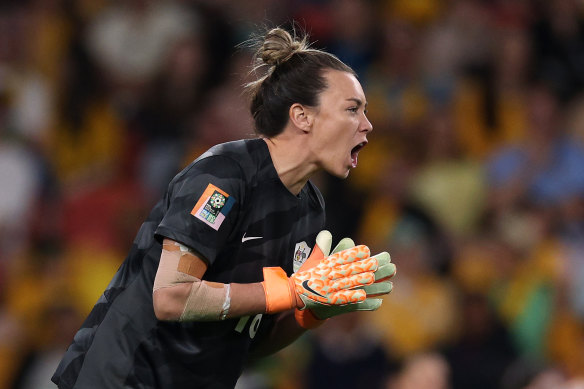
He noted that it’s not just the personalities in the WNBA and the Matildas’ squad that have made them so easy to market, but the standard of the sports they play.
“No matter what happens, you’ve still got to be able to have the best players performing to higher standards, and the competition still needs to be a very, very high level,” Kaider said. “That still becomes a really, really important part of this because, as a sports fan, you want to watch the best.”
With so many of Australia’s best athletes leaving these shores to play overseas in more competitive leagues, it creates talent deficit in domestic competitions. Of the 26 players called up for the Matildas matches in October, only two played in the A-League Women’s competition.
Author of The Matilda Effect, Fiona Crawford, said the professionalisation of international leagues has pulled players – and fans – their way. While some domestic leagues – including the AFLW, NRLW and A-League Women – are still semi-professional and seasons are sometimes half the length of men’s leagues in the same code, the availability of players to media, fans and brands, is far reduced.
She also said being seen as an addition to men’s leagues means they aren’t capitalising on the increasingly successful models being utilised overseas.
“What’s occurring in other sports, [and] teams around the world is they recognise they are playing the same sport and that’s where the similarity with existing men’s sports models start and finish. Instead, these other approaches are reimagining the model to cater for players and fans alike because the content, needs and audience are completely different,” Crawford said.
“I think there’s a lot we can learn from them, not least starting with recognising that women’s sport is a completely different product and investing the time and energy to figure out what that could look like, and then properly backing it.”
News, results and expert analysis from the weekend of sport are sent every Monday. Sign up for our Sport newsletter.
Disclaimer : This story is auto aggregated by a computer programme and has not been created or edited by DOWNTHENEWS. Publisher: www.smh.com.au







