
The final journey
“By mid-June it is over,” Evansis says.
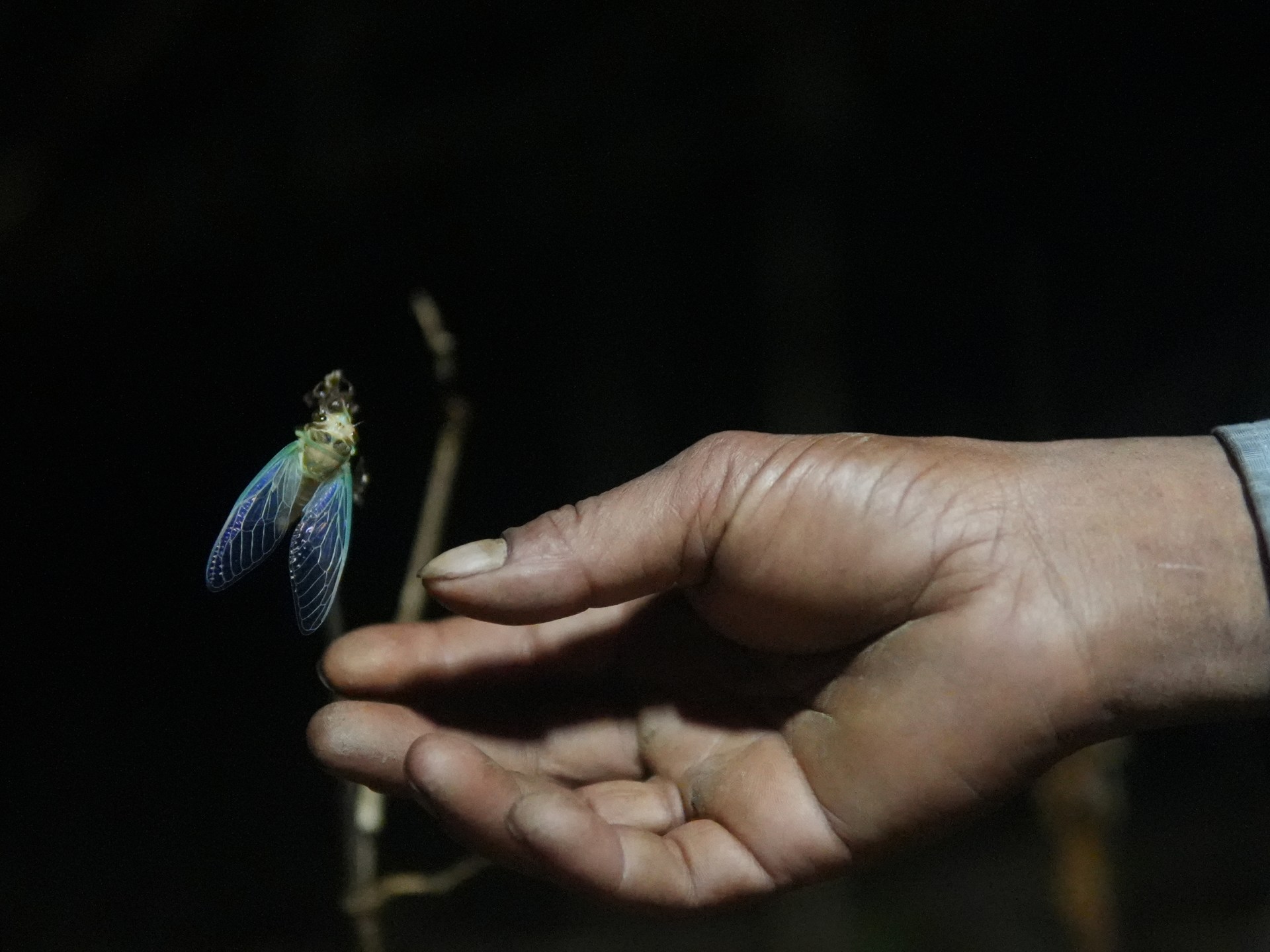
The mature cicadas, dark-shelled and spent, begin flying towards the Umrong River in large numbers and drop into the rapids. The river fills with them. Along the banks, dead cicadas collect against wet stones and bamboo roots, their wings plastered flat by the current.
Locals call it niangtaser suicide. Hajong offers a simpler explanation: Cicadas are naturally drawn to sound and movement, and the fast-moving river may trigger that instinct in their final hours.
For the fish below the surface, it is a feast. For the forest above, closure.
The journey that began four years earlier beneath the ground ends in the same river that separates Livi’s home from the sanctuary.
Not everyone has watched that cycle for as long as Kewstar Majaw.
At 92, he has witnessed more emergences than almost anyone alive in the village. He served in the Indian Army. He loves watching football. And every four years, without fail, he waits for his noisy visitors.
For Kewstar, the passing of the cicadas has become another way of measuring life. World Cups came and went. Governments changed. Forests retreated. But every four years, if the rains arrived on time and the bamboo still held, the forest sang.
As a boy, he would follow his parents into the forest carrying bamboo containers, the sound reaching them before the insects came into view. In those days, the niangtaser was everywhere. Behind houses. In the trees along village paths. Young ones, mature ones – the forest floor was alive with them.
The chorus was so loud, he recalls with a laugh, that people stuffed cotton into their ears to bear it.
The insect did not need to be searched for. It found you.
Kewstar sits quietly for a moment. At his age, he has watched the forest retreat, the bamboo thin, and the chorus fade with each passing emergence. The insect that once appeared on his doorstep now requires a torch and a walk in the dark to be found.
“It was everywhere,” he says softly. “Now you have to go looking for it.”
In a few weeks, the cicadas will disappear beneath the earth once more, keeping time in darkness until the cycle begins again. By the next emergence, another football World Cup will be under way somewhere else in the world.
Whether Saiden’s forests will still sing with them depends on what survives until then.
Disclaimer : This story is auto aggregated by a computer programme and has not been created or edited by DOWNTHENEWS. Publisher: aljazeera.com



