
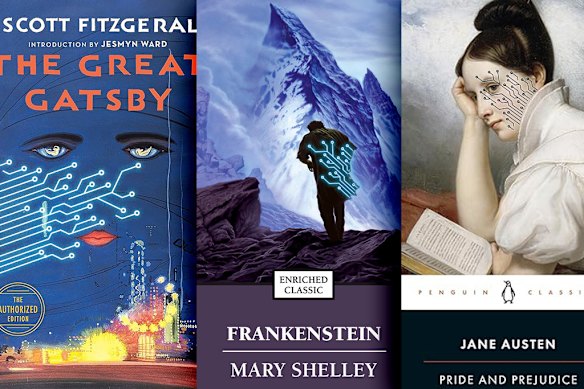
Imagine wandering through the desolate Yorkshire moors of Jane Eyre, or confronting the deadly Count in Bram Stoker’s Dracula. It’s one thing to imagine characters in these settings; it’s another thing entirely to imagine yourself in them.
Thanks to a new AI tool developed by chatbot program Character.ai, however, you can step into your favourite public domain novels with ease. The platform’s latest “Books” feature enables users to literally insert themselves into some of the most beloved works of literature, from Pride and Prejudice to Frankenstein.
Not only can you place yourself within the story, you can also embody existing characters, tinker with storylines, switch up settings and even change endings.
Put simply, you can rewrite the classics.
But should we? Interactive storytelling is nothing new – Netflix has released several “choose your own adventure” films since 2017, and video games have been playing with the concept for decades. These texts exist to be reinterpreted. The same can’t necessarily be said for centuries-old novels.
Should we be concerned about this newfangled AI tool? Culture reporters Nell Geraets and Karl Quinn put it up for debate.
I understand why people are horrified by this – I certainly was after first hearing about it. As a writer, I’ve long considered novels like The Picture of Dorian Gray and Oliver Twist sacred texts – they’re what made me want to write in the first place. The thought of inserting myself into them just for the “fun of it” sounded like sacrilege.
But, upon reflection, I realised this AI tool wasn’t made to tear down worlds we collectively hold so dear. Sure, some people may use it that way, and to them, all I can say is: “Please don’t”. For the most part, however, this could prove a groundbreaking complementary tool.
Let’s face it, not every person has the natural inclination to read, let alone classics. Only a handful of my English class in high school actually read the books we were assigned. The majority got away with what they could surmise from online synopses or rushed conversations before class. An AI tool that allows students to not only read literature, but experiment with it – to actively engage with new ideas on a creative level – could grab the attention of those who blank out as soon as they hear names like Jane Austen or Charles Dickens.
There’s something democratising about allowing people to imbue any text with their own lived experience. I never managed to get through A Clockwork Orange – its use of the slang vocabulary “Nadsat” made it difficult to find a rhythm, so I simply gave up. If I had access to this tool back then, perhaps I could have found a way to make the story more accessible while still exploring its key themes like free will. I understand the novel’s written style is part of its legendary status, but it undeniably silos some potential readers.
This tool could also help people, young and old, explore ethical conundrums, helping them build a moral code within a safe, somewhat controlled environment. We all have those “what if” moments when lost in a book. Imagine replacing the protagonist in, say, Shakespeare’s Hamlet, and having to decide yourself between killing your uncle or becoming complicit in corruption. You could learn a lot about yourself, with no pesky real-world consequences.
And haven’t we seen this kind of thing already? Childhood classics are being turned into slasher films now that they’re falling out of copyright. The classics available on Character.ai belong to the public domain, so they’re technically fair game. If we were able to accept Winnie the Pooh and Mickey Mouse becoming bloodthirsty psychopaths on-screen, surely we can also accept an alternate world where Jay Gatsby isn’t killed in F. Scott Fitzgerald’s masterpiece.
Granted, all this comes with a big asterisk. I still believe everyone should read the original texts, whether that’s before using AI to flex your creative muscles; or after, once you’ve grasped the foundations and are ready for the real deal. This tool shouldn’t be used to erase or permanently change our collective perception of the classics. It should simply be another way to connect with it, no matter who you are.
On hearing that Character.ai has devised a way of inserting readers into the texts of famous novels, my first reaction was outrage. But then I took a closer look. And the outrage dialled up a notch. Look, I’m exaggerating. But only a little.
The company’s “Books” platform is an experiment conducted under the auspices of its “labs” umbrella, “a space dedicated to experimenting with new creative formats before they reach everyone else”. There’s no guarantee this will ever be more than a fun exercise that briefly flickers into life before just as quickly fading away. Then again, it could mark the beginning of the end for literary fiction.
The key premise is that users no longer need to “read” a novel, they can “play” it. Take The Great Gatsby, for instance, one of the 20 out-of-copyright titles sourced from the public domain currently in its library. You might play it as the eponymous millionaire playboy Jay Gatsby, or you might see the story through the eyes of the novel’s narrator, Nick Carraway, or you might take it in a totally different direction, recasting the tale of doomed love and ennui in the Jazz Age into a rom-com set in space. Or some such drivel.
What you won’t do is read it as it was written. Sure, that’s an option, but it’s not the point. Character.ai knows better than F. Scott Fitzgerald. And what it knows, apparently, is that “reading” is passé.
Reading (the traditional way) requires an act of imagination on the part of the reader, to “see” the world created by the author. More than that, it demands empathy. What did these people feel, how did they dress and eat and move, what constraints did they operate within and chafe against?
The role-playing version of “reading” offered by this platform panders to the solipsism of the modern world, a world in which a meal isn’t a meal until it’s captured for Instagram, a sight doesn’t have much value until it’s become the backdrop for a selfie, an historical event or a tragedy doesn’t resonate until we’ve expressed how it made us feel.
It probably says something profound about our shrinking curiosity in the face of information overload, but I’m too depressed to even go there. Instead, I think I’ll just insert an avatar of myself into these thoughts, cast as a role-playing curmudgeon, and see where it takes me.
The Booklist is a weekly newsletter for book lovers from Jason Steger. Get it delivered every Friday.
 Nell Geraets is a Culture reporter at The Age and The Sydney Morning Herald.Connect via X or email.
From our partners
Disclaimer : This story is auto aggregated by a computer programme and has not been created or edited by DOWNTHENEWS. Publisher: www.smh.com.au


