Business is booming in Virginia’s ‘data centre alley’ generating over a billion dollars’ tax revenue. But now local people say enough is enough.
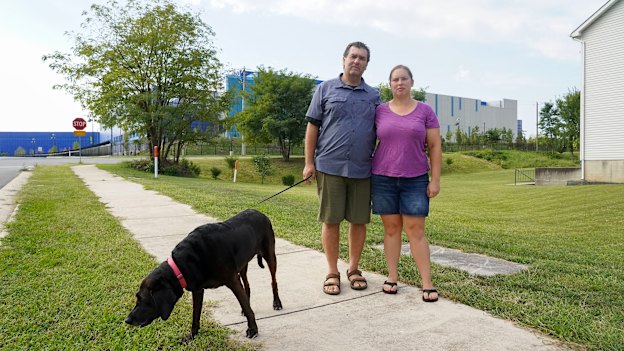
Loudoun County, Virginia: When plans first dropped for a big new data centre next to Lindsay Shaw’s home in Sterling, Virginia, she welcomed it. “It is what it is,” she thought at the time. “We’re in the data centre capital of the world.”
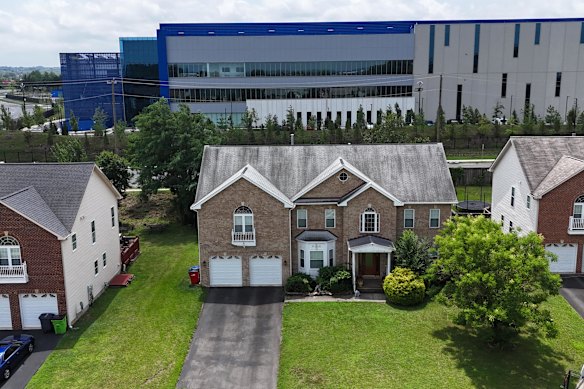
What she didn’t know then was that this facility by Vantage Data Centres would not be connected to the electricity grid, and would be powered by its own gas turbines, at least for now. The resulting noise, which typically involves a high-pitched whistle sound, has become unbearable for many in the neighbourhood.
“It gets so loud some nights you can hear it over the TV in my house,” says Shaw, 38. “You can hear it over the air-conditioners, you can hear it over the lawnmower, you can hear it over anything else.”
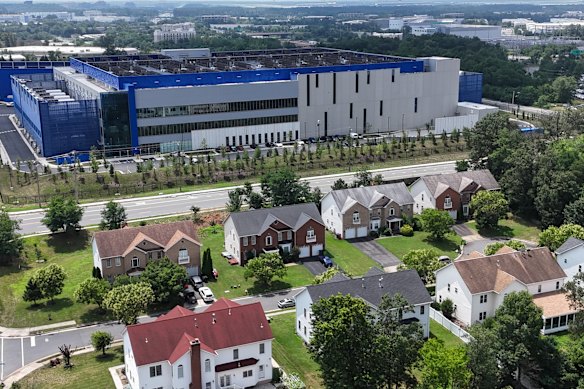
There are about 250 data centres operating or under construction in Loudoun County – the highest concentration anywhere in the world. Most were built between 2019 and 2014, but the spree has continued: in 2025, the county issued permits for more than 10 million square feet of data centre space.
Drive along Waxpool Road or Loudoun County Parkway, and you will see the products of this boom: big boxes of largely windowless buildings with names like Equinix, QTS and H5, and dirt mounds surrounded by cranes. It is estimated that 70 per cent of global traffic passes through or is created in Loudoun County’s “data centre alley”.
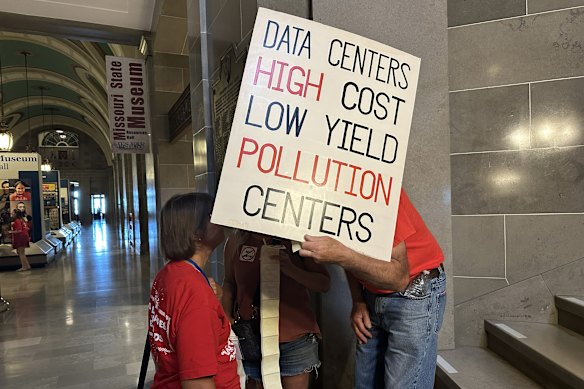
But many of the county’s 450,000 residents – like Americans around the country – have had enough. On Tuesday night, dozens spoke at a public meeting to call for a pause on data centre approvals, which the board of county supervisors ultimately voted to support.
A Loudoun resident for 20 years, Sarah Chen said: “I’ve watched it go from green pastures with livestock to feeling like livestock as our homes and health have been sold out to feed corporate greed.
“We’ve built more than enough data centres in this county. Loudoun is infamous for them. We must have a full stop, and this moratorium is the beginning.”
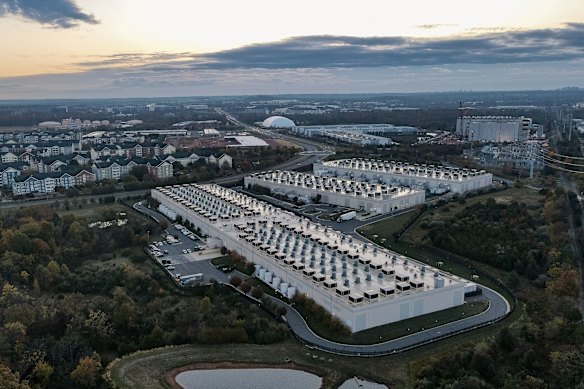
Loudoun County alone has more data centres than Australia. That may change if state and federal governments forge ahead with plans to encourage AI development, while imposing rules and standards on where large AI data centres can be built and the power and water they consume.
Whether Loudoun serves as a road map or a cautionary tale depends on who you talk to.
This area of Virginia, just outside Washington DC, became a data centre powerhouse because of the dense fibre optic network built there in the 1990s, when AOL established a primary gateway in Loudoun County. The board of supervisors also granted by-right planning permission for data centres, allowing them to be built anywhere zoned for office development.
Virginia’s state government maintains several financial incentives for data centres, reducing upfront costs and corporate income tax. County supervisor Juli Briskman says the true catalyst for the boom was the Great Recession of 2008-09, which arose from the US subprime mortgage crisis.
“Communities were struggling with their tax base and tax revenue because of the dip in housing values,” she says. “The great folks at our economic development department realised, ‘Hey, we have this fibre in the ground, we have the infrastructure in place that we could start welcoming this newish industry.’ ”
Economically, there is no doubt this has been a winner for Loudoun County – which is frequently cited as the wealthiest in America. Residents here enjoy very high household incomes, and the data centres raise $US1.2 billion ($1.68 billion) a year in tax revenue and climbing – accounting for 40 per cent of the county’s budget.
That income subsidises increased services while enabling the county to reduce property taxes. It has cut real property taxes every year for the past 10 years, from $1.145 per $100 of assessed value to $0.805, saving homeowners thousands of dollars a year.
“We’ve been able to almost eliminate the car tax, which is a hated tax in Virginia,” Briskman says. “We’ve been fully funding our excellent public school system, which is of course an economic driver.”
She enumerates other benefits: a mental health facility built in two years, a $US22 million cheque to acquire and preserve Oak Hill, the historic estate of former president James Monroe. “There aren’t a lot of jurisdictions in the state where they could do that.”
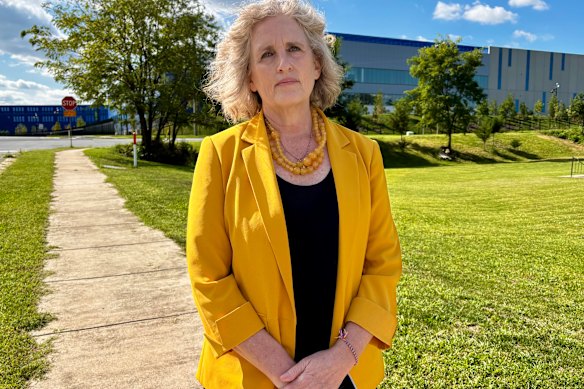
And yet Briskman, a Democrat, is leading the charge to crack down on data centres. “The revenue is wonderful, in large part,” she says. “But that’s just not an argument that’s holding water any more with our communities.”
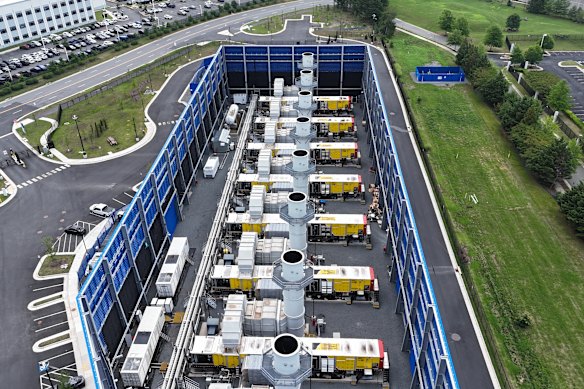
On a sunny weekday morning, Briskman takes this masthead on a walk around the off-grid Vantage data centre in Sterling, powered by its eight gas turbines. A low hum is audible out the front, but it’s when we go to the rear that the turbines’ high-pitched sound grows loud. This section abuts a business centre, not homes.
There is a wall of backup diesel generators, which Lindsay Shaw says were supposed to be for emergencies but end up being used once or twice a month. “When you walk out you can taste the smoke, like walking into a pack of cigarettes,” she says.
Shaw says neighbours’ children have developed respiratory illnesses that they attribute to the generators, and others have dry eye disease. “It’s been extremely negative, living next to it.”
Vantage maintains that noise mitigation measures are in place and that independent assessments confirm the centre complies with sound targets.
Last month, its vice president of public policy, Misty Allen, told a public meeting that the company had made several improvements to reduce noise, including wrapping sound blankets around the exterior, replacing vents with noise-suppressing hoods and attaching a demister and silencer on the exhaust fans.
But the meeting was rattled when Allen revealed the facility is not expected to be connected to the power grid – and taken off the turbines – until 2040.
“It is very much our intention and desire to connect to the Dominion grid as quickly as we possibly can when capacity becomes available,” she said.
Briskman said the 2040 estimate created a problem for residents considering moving away from the area, who would now be unable to get a fair value for their homes.
In a statement, Vantage said it was committed to continuous improvement and being a responsible long-term neighbour. “While the VA2 campus is in full compliance with applicable local noise ordinances, we know that isn’t enough given the concerns the community has expressed,” it said.
“That is why we have been implementing additional noise mitigation measures based on community feedback, many of which have already been completed and are making a difference today.”
Loudoun County had already removed the right for data centres to be built on land zoned for office use without explicit planning approval – a move matched by several Virginia counties. At Tuesday night’s meeting, the board of supervisors agreed to draft a resolution to pause new data centre applications for 12 months. It will go to a final vote next month.
Only one supervisor, Kristen Umstattd, opposed the pause.
“I worry a little bit – maybe I worry a lot – about where we’re going as a board when we seem happy to ignore one area, one industry, that provides good-paying jobs,” said Umstattd, a Democrat who has been in local politics for four decades.
“If we keep saying no – and we’ve begun to say no to these – and we shut down this industry, we’re going to lose the jobs that keep a thousand Loudoun families able to put food on their table. I just cannot get past that.”
Representatives from local chambers of commerce made similar points at the meeting, saying a pause would send the wrong signal to businesses considering investments in Loudoun County. They also agreed Loudoun relied too heavily on data centre revenue and ought to diversify its economy.
These battles are being fought around Virginia and the US. Harford County in Maryland, north of Baltimore, voted in June to permanently ban data centres. Woodford County in Kentucky passed a similar ban last week. Dozens of other counties, from North Carolina to Florida to New Mexico, have enacted temporary moratoriums or freezes on data centre permits.
At a local level, the backlash against data centres – and anxiety about AI more broadly – is largely bipartisan. In Congress, too, many Republicans are joining Democrats in demanding AI regulations and a slowdown.
A University of Massachusetts Amherst poll released last week found just 11 per cent of Americans – one in nine – said they would support the construction of a data centre in their local community.
“The remarkable thing is that we can’t find a constituency that actually wants these data centres,” said Raymond La Raja, a professor of political science and co-director of the poll.
Republicans were more receptive than Democrats, but they also opposed data centres. “Among the strongest MAGA supporters – the group most receptive to data centres – just 25 per cent support them being built nearby, compared with 42 per cent who oppose,” La Raja said.
‘I’m tired of being gaslit by being told it’s NIMBY … We choose to live here, and we deserve a beautiful county where we don’t have to fear future development’.Sophia Chen, Loudoun County resident
President Donald Trump is trying to change that. As the sector’s own leaders sound the alarm on unchecked AI development, he leapt to defend the industry and the data centres that enable it.
“The only reason that communities throughout the USA should not want Data Centers is if they want to end up being backwards and poor,” Trump wrote on Truth Social at the end of August. “If we kill the Golden Goose, you will only have yourselves to blame.”
Days ago, Trump went further, labelling the anxiety a “hoax” perpetrated to advantage China, which he warned would leapfrog the US if development slowed down.
“AI, and Data Centers, will be the Greatest Economic Development Engine in History – Bigger than Oil, Gold, Diamonds, or even the Internet. It will not be stopped by brilliantly run Destructive Forces during the Term of President DONALD J. TRUMP!”
Much of Trump’s thinking on the topic is informed by entrepreneur and investor David Sacks, the president’s former AI tsar who now serves as co-chair of the President’s Council of Advisers on Science and Technology.
Sacks told Politico’s Decoded Summit in Washington on Wednesday that the current panic about AI was being driven by the media and politically vested interests ahead of the midterm election on November 3.
“We already have a lot of laws and regulations that pertain to AI,” he said, referring to rules on cyberattacks, privacy violations and product liability.
“We can have an intelligent conversation about [whether] we need something else on top of that. But it’s hard to have that conversation when you have this fearmongering going on.”
In Loudoun County, however, it is not fear – it’s the reality of life in the world’s data centre capital, as residents clamour for an off-switch.
“I’m tired of being gaslit by being told it’s NIMBY – not in my backyard – to protest data centres or substations or power lines because they’re ugly,” said resident Sophia Chen.
“Don’t tell us looks aren’t important – they are. We choose to live here, and we deserve a beautiful county where we don’t have to fear future development.”
Juli Briskman says governments and communities in Australia contemplating a future with more data centres should not automatically say no, but they ought to be strategic.
“It’s a great source of revenue,” she says. “You just need to be smart about where you put them, about the environmental impacts, about the electrical infrastructure that’s required. You need to have the full picture, which we didn’t always have.”
Get a note directly from our foreign correspondents on what’s making headlines around the world. Sign up for our weekly What in the World newsletter.
Disclaimer : This story is auto aggregated by a computer programme and has not been created or edited by DOWNTHENEWS. Publisher: www.smh.com.au