
In a little over 12 months, Lyft has gone from a company that operated almost exclusively in the United States and Canada to one with a meaningful claim to be a global mobility player.
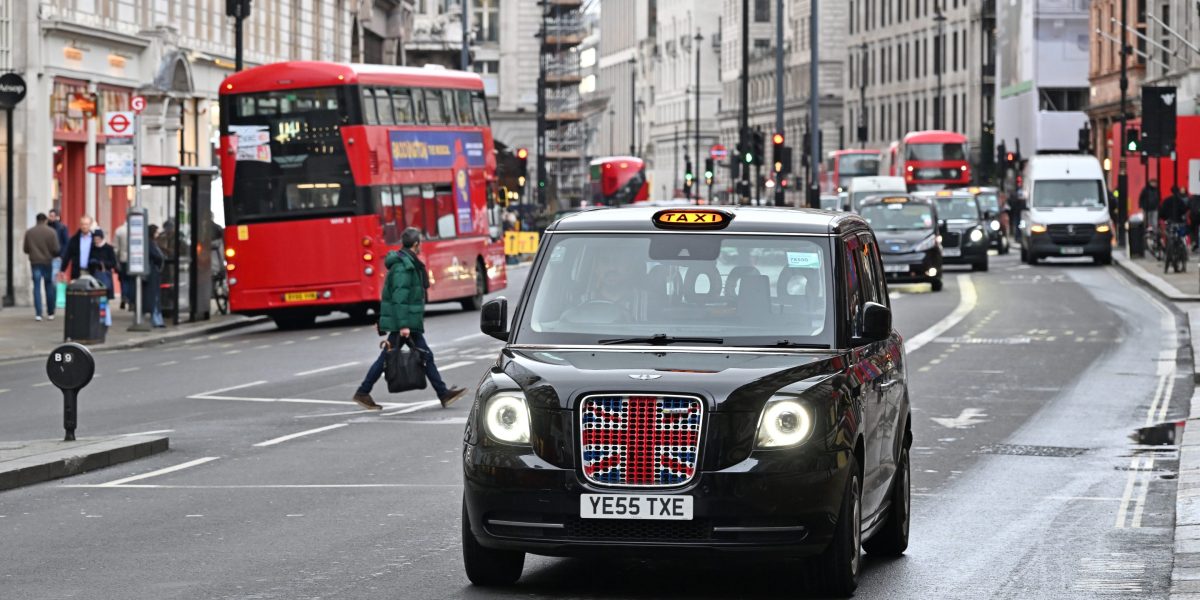
The latest step came Wednesday when the San Francisco company confirmed it had agreed to acquire Gett’s UK business — one of London’s leading black cab apps — in a deal that will position Lyft as the dominant app for the city’s iconic cabs and cap its third major international acquisition in under a year.
The Gett acquisition follows Lyft’s $197 million purchase of Freenow, the pan-European multi-mobility app, completed last July, and its acquisition of TBR Global Chauffeuring, a Scotland-based luxury chauffeur company operating across 120 countries, in October. Together, the three deals have reshaped a company that as recently as early 2025 had never ventured meaningfully beyond North America.
“This is very transformative for the business,” Jeremy Bird, Lyft’s executive vice president of global growth, told Fortune in an interview. “You combine all of these, and it’s a very big deal for us.”
London is the linchpin of Lyft’s European strategy, he added, “in the same way that New York — if you’re going to be a strong company in the U.S., you have to be a strong company in New York — we see it that way in Europe as well.”
Bird explained that Gett’s platform already connects riders to three-quarters of Greater London’s registered black cab drivers, and combining it with Freenow’s existing London black cab business will nearly double Lyft’s total rides in the capital and establish it as the largest app serving the trade.
Lyft is acutely aware of the cultural stakes. London’s black cab drivers are among the most storied — and prideful — in the world, required to pass “The Knowledge,” a famously grueling multi-year exam covering more than 25,000 streets across 113 square miles of the city. It’s so hard to pass, requiring memorization of London’s sprawling, gridless streetscape, that it actually has been scientifically proven to grow London cabbies’ brains. Bird, a self-described Arsenal fan who travels to London regularly, framed the deal as a partnership rather than a disruption.
“We’re not coming in the way others have come into the city with a goal to disrupt,” he said. “We’re coming in with people who have been working side-by-side with [these drivers], providing the demand for their services for years … We want them to be successful. If they’re successful, we’ll be successful.”
Bird — who previously served as Lyft’s chief policy officer and as national field director for Barack Obama’s 2012 presidential reelection campaign — positioned the acquisition strategy as a long-term play on the inevitable digitization of ground transportation globally.
Beyond the cabs, Lyft’s London footprint is becoming strikingly comprehensive. The company already operates bikes through its Urban Solutions division and private-hire vehicles in the capital, and Bird confirmed that autonomous vehicles via a partnership with Baidu are on the horizon. “Kind of the full ecosystem for anybody that wants to get around in the most important market in Europe,” he said.
What also caught Bird’s attention in the Gett deal was the company’s deep enterprise DNA: long-standing B2B relationships with major London corporations. “This is a company that’s been working with the BBC and Transport for London and all of these iconic companies and brands.”
The Gett acquisition is expected to close in the coming weeks, subject to customary conditions. For Lyft, it represents something it has spent the better part of a decade chasing: a credible path to becoming a truly global company, and in one of the world’s most scrutinized cab markets, no less.
Disclaimer : This story is auto aggregated by a computer programme and has not been created or edited by DOWNTHENEWS. Publisher: fortune.com



