

In a year of cinematic revivals, audiences are happy to take the old with the new.
Nobody in 2006 expected The Devil Wears Prada to sprout a sequel. On the contrary, the original film was considered risky. Adapted from a novel by Lauren Weisberger, who based it on her own experience as a personal assistant to Vogue editor Anna Wintour, it was modestly budgeted – an estimated $US35 million ($49 million) – and repeatedly rewritten before David Frankel, who had made only one film before, started shooting. Wintour was glacially furious about it, which meant that most fashionistas refused to get involved. Audiences, however, snapped it up. Worldwide takings were $US326 million, a good return on investment in anyone’s book.
When PA Andy Sachs got herself a proper job at the (fictional) New York Mirror, however, the story was decisively ended. Miranda, aka Meryl Streep, went on to make her most popular film, Mamma Mia. Anne Hathaway, having left behind Andy’s famous blue jumper, would win an Oscar for her role in Les Miserables. Life went on. And yet here we are, a full two decades later, thrilling to the prospect of The Devil Wears Prada 2. Critical fan site MovieWeb rates this the second-most anticipated sequel of the year.
Sequels, remakes and reboots have dominated most studios’ slates since the mid ’90s.
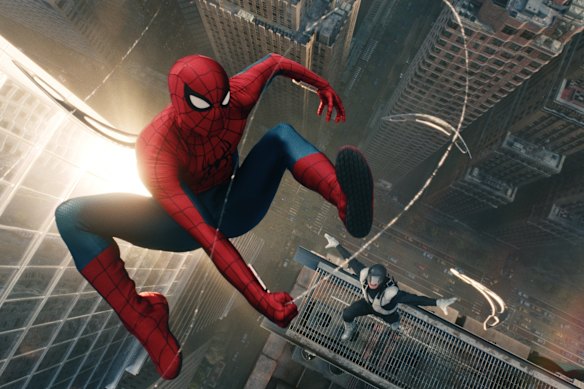
The latest Spider-Man, subtitled Brand New Day, is No.1 on MovieWeb’s list. No surprises there: the Spider-Man franchise is now in its third and most successful rebooting since 2002, with the irresistibly boyish Tom Holland crawling the walls as Spidey. Holland commands an Instagram following of 64 million fans. For Sony, another round of Spidey is as close as anything can be to a safe bet, even with an estimated budget of $US275 million.
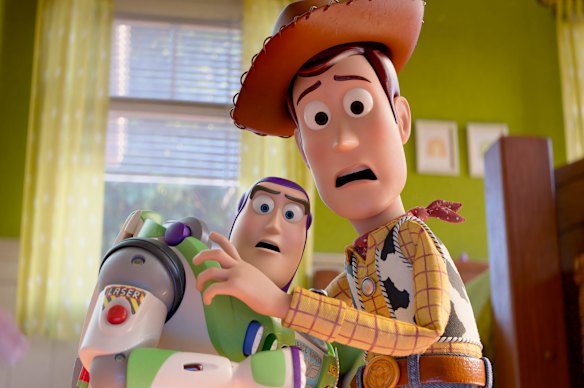
MovieWeb’s No.3 is Toy Story 5. Yep, five. Again, that is hardly surprising. The first Toy Story dates back to 1995, but kids’ films are perennials – every year, a new audience reaches Toy Story age. For parents, seeing Woody and Buzz is a nostalgia trip; their children, meanwhile, have already watched the first four at home about 10 zillion times and are well primed for a new one.
A beloved animation franchise is gold – so much so, in fact, that studios with valuable IP are busy remaking the same films as live action, often copying them scene for scene.
But here’s the thing. Right below Toy Story – the fourth-most anticipated sequel of 2026 – is Practical Magic 2. A remake would be no surprise, but an actual sequel? The original came out in 1998. Twenty-eight years later, Sandra Bullock and Nicole Kidman are still sister witches. Dianne Wiest and Stockard Channing are also back, cauldron-side. They’re the same, just a lot older. Producer Denise Di Novi told Entertainment Weekly that the mature witches story would be “very faithful” to Alice Hoffman’s source books and to the first film. “And we’re going to be true to the chronology of how many years later this is.” Like Prada 2, this is sequel as class reunion.

“There have always been sequels to self-contained stories that didn’t invite them, of course, but the thinking used to be ‘strike while the iron is hot’,” says industry expert Joe Utichi. Back in the ’70s and ’80s, most sequels (with the stellar exception of Godfather II, obviously) were quick follow-ups to capitalise on a recent success, usually with a smaller budget, rookie director and less expensive actors. “The new thinking is to come back when memories of the original have faded, to the point where you can exploit the vague feeling of warmth the original engenders to essentially remake it, but this time with overt callbacks and nods to minor details in the original.”
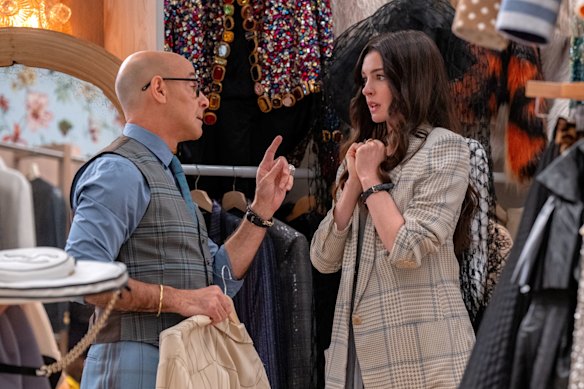
The trailers for The Devil Wears Prada 2 promise exactly this. Stanley Tucci’s Nigel is still telling Andy what to wear, even though she got to grips with designer rags 20 years ago. Emily Blunt is still sneering at Andy’s personal grooming. Miranda is still whispering put-downs. The passage of time, however, puts a different patina on these things.
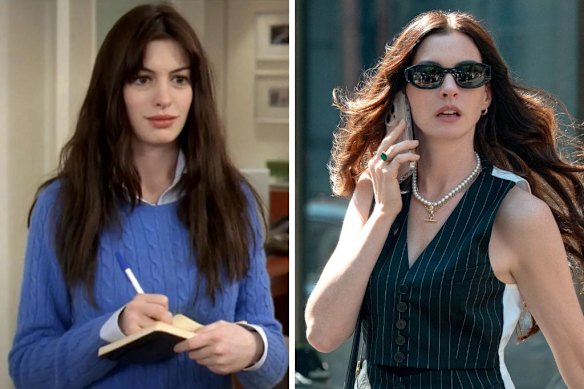
“It’s notable that the new Devil Wears Prada seems to be a lot cosier and more aspirational than the first one,” says BBC film critic Nick Barber. “As suggested by Anna Wintour’s joining in with the marketing and hanging out with the stars, Miranda Priestly has softened from villain to pantomime villain. It’s no longer a caustic satire of toxic bosses in a merciless industry, but a jovial get-together of old friends.”
Nostalgic appeal doesn’t guarantee success. Witness last year’s limp Spinal Tap II: The End Continues, in which the alumni of the beloved 1984 mockumentary about a heavy metal band hit every possible bum note. Warwick Thornton, whose latest film, Wolfram, revisits characters from 2017’s Sweet Country, says a misfiring sequel leaves the original film tarnished as well. “Sequels are usually the death of something beautiful,” Thornton says. “Even though the first one was great … they’re connected, so now that’s crap as well.” Especially, you’d think, if the first film is no more than a fuzzy memory.
Plenty of people are banking on that nostalgic twinge, however. Just last week at CinemaCon, the annual Vegas trade fair for movie exhibitors, Amazon MGM announced the return of Rick Moranis in Spaceballs 2 in 2027, 40 years after the Mel Brooks comedy first mocked what was then the newly dominant genre of space opera. The actors were there, back at post; even Brooks, now 99, was present in a pre-recorded introduction. Who needs this? Are jokes at the expense of the Star Wars franchise still going to land?
Possibly, they will, given that Star Wars is the pre-eminent example of sequel mania. It is almost 50 years since George Lucas first took us to that galaxy far, far away. In the intervening decades, Star Wars has become a veritable Rubik’s Cube of sequels, prequels and sidequels, including 11 live-action films and more than a dozen TV spin-off series. Where it led, others followed. Understandably, studios focus on franchises with the audiences most likely to get off the couch. Hence, the pre-eminence of the Marvel Cinematic Universe, which has so far generated 37 interlocking blockbusters.
The movie industry does, however, shift shape to fit the times. There are some indications that these massively expensive action films are losing traction, with budgets getting tighter. James Cameron’s Avatar (2009) is still the top-grossing film of all time at $US2.92 billion, but its two sequels have been successively less mega-profitable. Avatar 4 and 5 are on track, according to producers, but Disney is said to be heeding industry analysts who say that the day of multiple billion-dollar returns are over. Even Cameron may have to cut costs.
Ticket sales aren’t the only aspect of movie-going affected by home viewing. Arguably, what we want to see is also changing. Streamers, like cable TV before them, initially built their businesses on a solid foundation of reruns. Even the rise of so-called “peak TV”, with its complex long-form storytelling and cinematic production values, hasn’t eclipsed the joys of rewatching beloved old episodes of Friends, the screen equivalent of Milo and a biscuit.
Accordingly, the streamers are responding with their own sequels. Disney’s decades-later revivals of Scrubs and Malcolm in the Middle have both been rapturously received by critics, who enjoy a wallow in the warm bath of memory as much as anybody.
“It is possible to believe contradictory things,” wrote The Guardian’s Rhik Samadder in a review of the new/old Scrubs. “For instance, I believe TV’s reliance on reviving old shows is a risk-averse, creative regression. On the other hand, I love it. I particularly love it when fictional characters have visibly aged … You sense you could talk to them about your sciatica and they’d get it.”
You can’t blame the war in Iran, the rising cost of living or the anxiety of Trumpian times for this hankering; a television show or film of any scale is in the works for at least three years. Cosy crime, whether it be Vera or The Thursday Murder Club, has spread like bindweed over the TV networks over the past decade, a market correction to the grimness of Scandi noir. The nostalgic sequel is really just more of the same, a counterweight to the mainstreaming of horror movies (which, of course, are also squeezed for sequels until they wither on the vine – and yes, I’m looking at you, Scream 7). Those who don’t enjoy escape-room scares may well want to see something comforting that hearkens back to better – or just younger – times. OK, Boomer! These were the wonder years.
Things may change again, however. There are signs that, even in the belly of the beast, there is a burgeoning sense that there is commercial life beyond sequels. At CinemaCon, Warner Bros. CEOs Pam Abdy and Michael De Luca compared their studio’s output last year – 11 movies, including Oscar winners Sinners and One Battle After Another – with an expectation of 14 films this year. “That’s what committing to originality can get you,” Abdy said. De Luca added: “Originality is not risky. Derivative sameness is.”
They are pinning their hopes on a new generation of cinephiles. “We are at a crucial, critical moment in time with this audience,” said Abdy. “The Letterboxd generation is only growing.” Highlights from their slate are a new movie from Anora director Sean Baker and Digger, a new film from Alejandro Iniarritu starring Tom Cruise, but not as we know him. It’s not exactly a revolution in the making, but it sounds optimistic. At least it doesn’t feel like an endless Groundhog Day of old stuff rehashed – although an actual Groundhog Day sequel, let’s be honest, could be a lot of fun. Couldn’t it just? Take me back to Punxsutawney! I’ll just go and make the Milo.
The Devil Wears Prada 2 is in cinemas from April 30.
Must-see movies, interviews and all the latest from the world of film delivered to your inbox. Sign up for our Screening Room newsletter.
Disclaimer : This story is auto aggregated by a computer programme and has not been created or edited by DOWNTHENEWS. Publisher: www.smh.com.au


