
Right-wing culture warriors campaigned for Trump in the 2024 election on the promise that he would “legalize comedy,” a remarkably achievable goal when his audience giggles like a child whenever their favorite comic says their favorite slur.
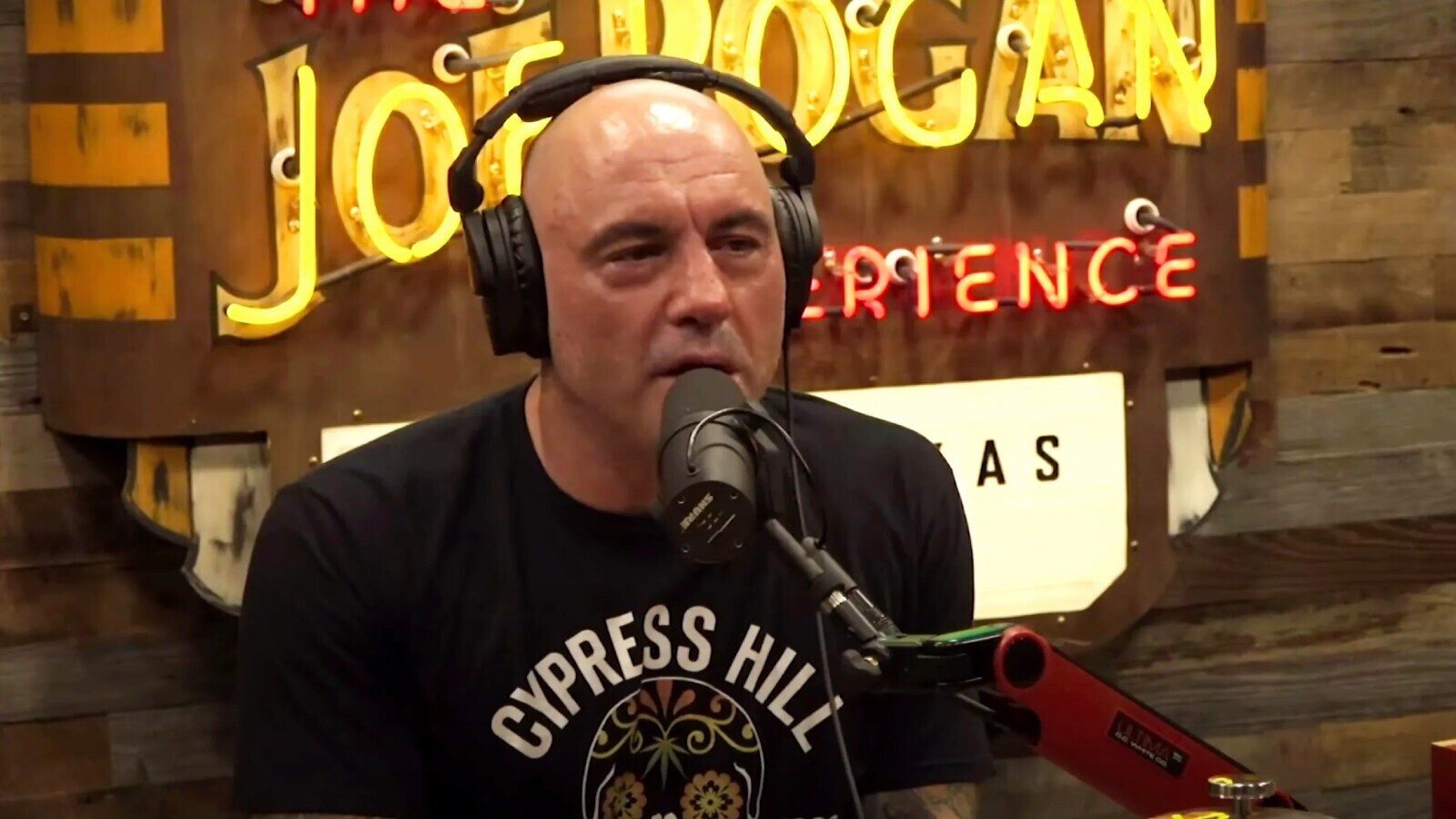
Back on April 10th of this year, Joe Rogan opened an episode of his #1-ranked comedy podcast The Joe Rogan Experience with a celebration of a phenomenon that anyone familiar with the show already knew well. “The word ‘retarded’ is back,” declared Rogan, “And it’s one of the great culture victories.” By that point, the r-word was already one of the most over-utilized put-downs in the limited lexicon of the Manosphere, but, ever since Rogan reveled in the triumph of the slur, it’s only become more popular, even outside comedy circles.
Rogan believed that the r-word renaissance was “probably spurred on by podcasts,” but, now, it’s a common phrase among many of his non-comedian podcast guests, with President Donald Trump famously slinging it at Minnesota governor Tim Walz earlier this month. Even non-right-wing comedians have been exploring the sheer comedic power of a slur demeaning the intellectual disabled – in his coverage of Trump’s r-bomb, The Daily Show host Jon Stewart seemingly played along with the bit, using the word several times in several uninspiring punchlines.
Don’t Miss
In 2025, massively influential figures on every end of the political spectrum used the r-word for comedic effect, which makes us wonder: what other dehumanizing slur will be comedy’s word of the year in 2026?
There’s no use in telling these comics how offensive the r-word is to people with actual intellectual disabilities and to many of their loved ones – the Special Olympics has been trying to teach that lesson for years, and the comedians who use it freely simply don’t care. Of course, there are Rogan-adjacent figures like Shane Gillis who are, themselves, family members of people with intellectual disabilities. Gillis even famously volunteered with the Special Olympics, and he appears unbothered by his peers’ use of the word, occasionally tossing it out himself.
But every time a comic uses the slur in a place where an actual punchline should be, it’s worth drawing attention back to the open letter that decorated Special Olympian Loretta Claiborne wrote to Kid Rock after the singer dropped the r-word on Jesse Watters Primetime back in October of this year.
“People with intellectual disabilities, one of the largest groups of people with disabilities in the world, have suffered generations of discrimination and humiliation,” Claiborne explained, “In the 21st century, we’re still continuing to fight for the simplest form of justice: the recognition of our full humanity, a recognition you undermine when you use the word retard.”
“Language plays a crucial role in that fight,” Claiborne argued, “Words like ‘retarded’ and ‘retard’ have a long, painful history of being used to belittle and dehumanize. When anyone, especially someone in the public eye uses them, it reopens wounds that so many of us have worked so hard to heal.”
Meanwhile, powerful figures like Trump who use the word freely along with their comic friends are working directly against the interests of the intellectually disabled community. Trump’s “One Big Beautiful Bill Act” massively slashed disability benefits across the board, and the President advanced even more heinous and focused actions against the rights of people with intellectual disabilities.
In 2025, Trump signed the executive order “Ending Crime and Disorder on America’s Streets,” which would expand extremely controversial civil commitment laws and empower the government to target people with mental illnesses and disabilities for involuntary institutionalization. The American Bar Association wrote about the effort in their article, “Trump’s Executive Order Rolls Back Decades of Disability Rights.”
They wrote, “The Order raises serious constitutional and civil rights concerns—particularly regarding due process under the Fourteenth Amendment and the rights of individuals with disabilities under the Americans with Disabilities Act (ADA). Its proposed standard for commitment—encompassing not only those who pose a risk to self or others but also those who are merely unable to care for themselves—falls short of established constitutional safeguards.”
“The Order represents a major step backward in civil rights. Safeguarding constitutional protections, implementing the ADA’s integration mandate, and investing in voluntary, community-based supports is the path forward,” the Bar Association concluded, “The ABA Commission on Disability Rights urges the disability community, advocates, policymakers, and the public to reject this approach and defend the hard-won rights of people with disabilities.”
Especially on the Right, politics and comedy are too intertwined to pretend that the rising use of the r-word and the Trump administration’s hostility towards the disabled community aren’t linked. When contacted by CNN for their piece about the return of the slur in 2025, Adrienne Massanari, an associate professor at American University, said that the trend is a symptom of the “apparent death of empathy.”
“This is not just misunderstanding but the mischaracterization and demonization of communities,” Massanari argued, “The use of that kind of language is signaling a shift, a desire to sort of push the envelope.”
As the article pointed out, the r-word originated as a medical term during the late 1900s, a time when involuntary civil commitment was the tragic and inevitable norm for people with intellectual disabilities. Many of those interned to ”lunatic asylums,” as they were sometimes called, were even forcefully sterilized, as the treatment of intellectual disabilities was inextricably linked to the savagery of the eugenics movement.
From there, the r-slur grew into a common insult, a reminder of how the public saw people with intellectual disabilities as sub-human. Now, it’s back and bigger than ever, and the same comics who use it to describe anyone who wore a facemask during the height of the COVID pandemic carry water for the politicians who are trying to bring back the policies of a time when human beings were tortured and imprisoned for the crime of being disabled.
This was never about legalizing comedy, it’s about selfishly punching down at people who don’t deserve it, and it’s not funny.
Disclaimer : This story is auto aggregated by a computer programme and has not been created or edited by DOWNTHENEWS. Publisher: feeds.feedburner.com





