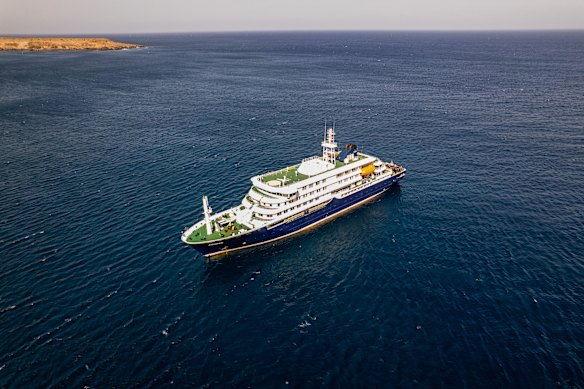

Three people have died and more have fallen ill after a suspected outbreak of the rare hantavirus on a cruise ship in the Atlantic Ocean.
The deaths have conjured memories of COVID-19, when outbreaks turned cruise ships into floating superspreader sites.
What’s the news?
The World Health Organisation has confirmed at least one case of hantavirus has been found on board the M/V Hondius, and the virus is believed to be the cause of death for three passengers. Three more have fallen ill.
One of the patients is in intensive care in a South African hospital, and the WHO is working with authorities to evacuate two other passengers with symptoms.
The ship’s operator said it was “managing a serious medical situation” on a polar expedition vessel off Cape Verde, an island nation in the Atlantic west of Africa, the Associated Press reported.
Hantaviruses are a rare but serious family of viruses which can target the respiratory system or kidneys and blood pressure, depending on the strain. They are most commonly spread from rodents to people.
Are cruise ships high risk?
Cruise ships carry an inherent risk of diseases spreading because they are contained environments which keep a large number of people together in close quarters, said Professor Catherine Bennett, Deakin University’s chair in epidemiology.
“They face the same challenges as hotels … but it’s a bit different when you’ve got people who are together for a longer period in a more contained environment,” Bennett said.
She also likened cruise ships to resorts and yoga camps, where people are interacting closely over an extended period.
But Bennett said there were also more specific risks, such as potentially being stopped from disembarking at foreign ports during outbreaks and rooms sharing common airconditioning.
The risks were highly variable and depended on specific ships’ disease management protocols, she said.
“The challenge with something like this particular virus is, first of all, realising you’ve got an outbreak. There’s always a delay in getting a diagnosis [for the first case]. It’s an unusual disease.”
Larry Gostin, director of the WHO Centre of Global Health Law, said it was unclear what preventative measures the M/V Hondius took.
“This is something that really shouldn’t happen on a properly managed and sanitised ship,” he told Sky News UK.
“It is a very dangerous situation for cruise ship passengers.”
A 2021 study found a person’s risk of contracting contagious diseases on a cruise was higher the longer a voyage was.
Data from the US Centres for Disease Control and Prevention suggests cruise ships have become better at managing outbreaks in the past two decades. From 2006 to 2019, cases of gastroenteritis (the most common illness for travellers) fell from 32.5 per 100,000 travel days to 16.9.
A 2024 Eurosurveillance study found about 7 per cent of passengers on board a cruise ship suffering from an outbreak of gastroenteritis would catch the disease, compared with 2 per cent of the crew.
How do cruise ships control outbreaks?
During the early days of the COVID-19 pandemic in 2020, the Ruby Princess cruise ship made headlines after it docked in Sydney and allowed 2700 passengers, some with flu-like symptoms to disembark.
In the following weeks, more than 633 passengers tested positive for the virus and 28 died, causing concern about the disease management protocols of cruise ships.
But Bennett said some ships she examined during the pandemic were very impressive in how they managed outbreaks.
This includes having passengers on different ventilation systems, serving meals privately or not in centralised dining rooms and swiftly quarantining patients when an outbreak is detected.
Many cruise lines improved their cleaning protocols following the pandemic and some even appointed dedicated public health officers.
Start the day with a summary of the day’s most important and interesting stories, analysis and insights. Sign up for our Morning Edition newsletter.
 Angus Delaney is a reporter at The Age. Email him at angus.delaney@theage.com.au or contact him securely on Signal at angusdelaney.31Connect via email.
From our partners
Disclaimer : This story is auto aggregated by a computer programme and has not been created or edited by DOWNTHENEWS. Publisher: www.smh.com.au