
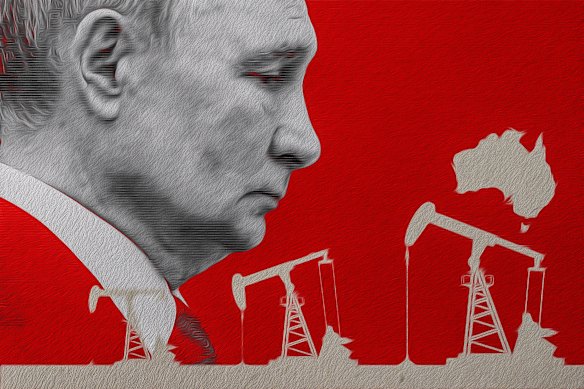

Ukraine has slammed a surprise US decision to suspend sanctions on Russian oil amid a wave of airstrikes on Kyiv and other cities, deepening a rift over the European conflict while US President Donald Trump puts a priority on the war with Iran.
The dispute centres on a policy backflip by Trump’s economic team last week when American allies were expecting the sanctions to be applied within days, only to be surprised when the US extended a temporary ruling that helps Moscow.
Ukrainian President Volodymyr Zelensky said the move would deliver $US10 billion (about $14 billion) in oil sales to Russia to fund its attacks, declaring the waiver would benefit 110 oil tankers currently at sea with cargoes that would escape sanctions.
“The continued easing of sanctions against Russia does not reflect the real situation in the war or in diplomacy and fuels the Russian leadership’s illusion that they can continue the war,” he said on Sunday (Monday, AEST).
“This week alone, the Russians have launched over 2360 attack drones, more than 1320 guided aerial bombs, and nearly 60 missiles of various types at our cities and communities.
“Every dollar paid for Russian oil is money for the war.”
The US decision highlights the pressures on the Trump administration to put downward pressure on the price of oil when a Pew Research Centre survey found last month that 61 per cent of American voters disapproved of the president’s handling of the war in Iran.
Trump imposed sanctions on Russian oil exports last October after growing impatient with Russian President Vladimir Putin over slow progress on a peace deal with Ukraine, while the European Union and United Kingdom also toughened their sanctions.
The combined moves sought to pile more economic pressure on Putin to force him to negotiate a ceasefire or lasting peace agreement with Zelensky.
With the oil price surging after the US and Israel launched strikes on Iran at the end of February, the US Treasury decided on March 6 to allow Russian oil deliveries to Indian refineries and then expanded this on March 12 to allow the delivery of all Russian oil that was at sea at the time.
Treasury Secretary Scott Bessent told reporters in a White House briefing last Wednesday that the temporary waiver – known as a “general licence” – would come to an end.
“We will not be renewing the general licence on Russian oil,” he said. A separate waiver on Iranian oil would also end, he added.
The statement raised expectations that the March 12 decision, which offered temporary relief for 30 days, would not be renewed.
Instead, the US Treasury extended the temporary relief for Russia for another 30 days, with a deadline of May 16.
The policy backflip angered US Democrats on the House of Representatives foreign affairs committee, leading them to say the Trump administration was “throwing Russia lifeline after lifeline” to try to offset the damage from the war with Iran.
Two of the Democrats, Gregory Meeks and Bill Keating, have introduced a bill to try to terminate the waivers.
Democrat senators Jeanne Shaheen, Chuck Schumer, and Elizabeth Warren called the decision a “shameful” reversal by Bessent.
Russian oil shipments have surged in the wake of the war in the Middle East and the US decisions on sanctions, almost doubling export revenue, according to the International Energy Agency.
The IEA estimated that the Russian sales rose from US9.75 billion in February to $US19 billion in March.
Zelensky called for Russian tankers to be stopped.
“The aggressor’s oil exports must decrease, and Ukraine’s long-range sanctions continue to work towards that goal,” he said.
Get a note directly from our foreign correspondents on what’s making headlines around the world. Sign up for our weekly What in the World newsletter.
 David Crowe is Europe correspondent for The Sydney Morning Herald and The Age.Connect via X or email.
From our partners
Disclaimer : This story is auto aggregated by a computer programme and has not been created or edited by DOWNTHENEWS. Publisher: www.smh.com.au






