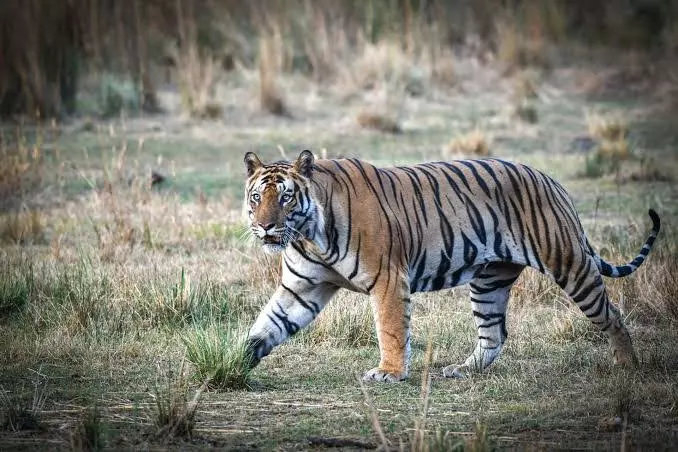
Migrant tigers in and around the Kawal Tiger Reserve are facing a potential threat from poachers after drought conditions attributed to El Nino have left rivulets and streams in the forest almost dry.
Forest officials say the vulnerability of wildlife could increase in the coming months as animals gather around the remaining water bodies, making them easier targets for poachers.
Ironically, the threat became obvious following the death of suspected poacher Boyina Reddy. He got electrocuted after coming into contact with a live wire laid by hunters targeting antelopes and wild boars at Kothamamidipalli in Dandepalli mandal of Mancherial district on the night of November 10.
Investigations revealed that eight persons had been involved in laying a 500-metre stretch of live electric wire in the forest by drawing power from a nearby agricultural field.
Police have registered a murder case and remanded 11 persons in connection with the incident. Forest officials have also registered a case under the Wildlife Protection Act against eight persons who laid the live electric wire.
Tigers are migrating into the forests of erstwhile Adilabad district from neighbouring Maharashtra, with October to January being their mating season. Their movement has been reported in Khanapur and Nirmal assembly constituencies. Forest personnel have found cattle kills in the forests of Mamda mandal.
Movement of tigers has been recorded in the Kagaznagar forest division of Komaram Bheem Asifabad district. Tigers are expected to migrate into Bheempur mandal of Adilabad district from the neighbouring Tippeshwar Tiger Reserve by crossing the Penganga River.
Jannaram forest divisional officer M. Rammohan said they have registered three poaching cases, including one involving the killing of a leopard. He said live electric wires laid by poachers and farmers are posing a serious threat to wildlife. Moreover, agricultural fields adjoining the forest have made it easier for poachers to lay live wires.
Rammohan said they have deployed additional staff to intensify surveillance over live electric wires and water bodies in the forest to control the poaching activity. He disclosed that poachers lay live wires over long distances during the late evening and removed them early in the morning while checking for electrocuted wildlife.
The forest officer said some farmers are also laying live electric wires to protect their standing crops in areas outside the reserve forest. He advised such farmers to use solar fencing instead, as live wires posed a threat to the life of people as well as the wild animals.
A forest field officer has also died after coming into contact with a live electric wire during surveillance in Bhadradri-Kothagudem district in early 2026.
Disclaimer : This story is auto aggregated by a computer programme and has not been created or edited by DOWNTHENEWS. Publisher: deccanchronicle.com