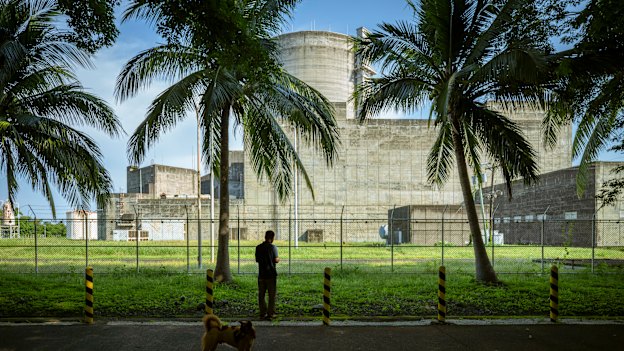
In an age of uncertainty, the government needs options. One proposal is to switch on a nuclear plant in Bataan that has been mothballed for 40 years.
Noel Germano leads the way through the dark, airless hallways of the Bataan Nuclear Power Plant, an isolated compound west of Manila that was meant to be the first source of atomic energy in the Philippines. Instead of the thrum of massive turbines and steam generators, there is eerie silence. The plant has been mothballed for decades.
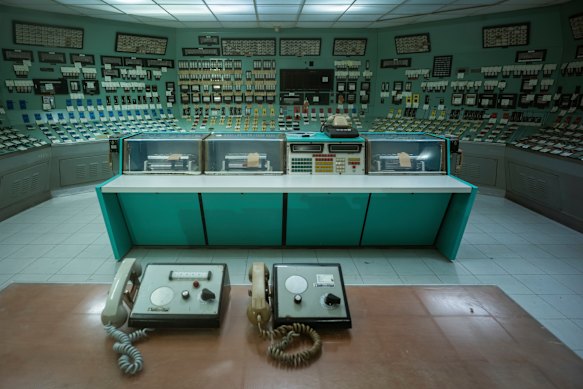
A yellow radiation protection suit is only for display, unneeded by Germano, who manages the plant, or any of his seven engineers as they go about the Sisyphean task of manually turning thousands of analogue dials, switches and gears to prevent decay.
The plant was heralded by president Ferdinand Marcos snr in the 1970s as a step into a prosperous, modern era for the Philippines. Of its four planned reactors, only one unit was completed in 1984, and it was never switched on. Decades later, his son – who was elected president in 2022 – has revived the country’s pursuit of atomic energy, and his government is exploring options including potentially reviving the plant in Bataan.
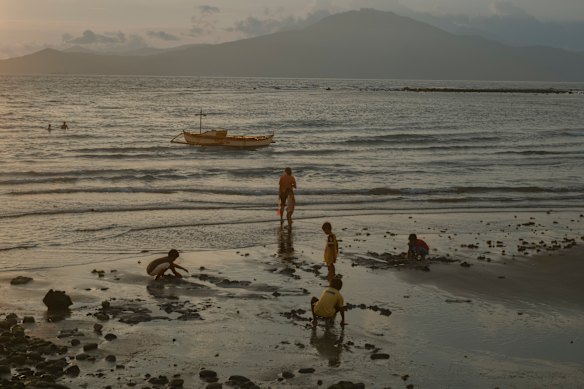
The hulking concrete structure sits on an 800-acre site fenced off from the small seaside town of Morong. The plant’s grounds are still well maintained, but its interior, with the reactor that was designed to produce 621 megawatts, resembles a museum diorama. Bringing it to life is not impossible, but it is a tall and expensive ask, experts say.
The goal is the same now as it was in the ’70s: energy security. Marcos, a dictatorial leader who was in power from 1965 to 1986, wanted to diversify the Philippines’ energy sources to guard against global oil shocks like the one in 1973. His son, Ferdinand “Bongbong” Marcos, has had to deal with similar fallout from the wars in Ukraine and the Middle East.
Reviving the Bataan plant might prove a hard sell in a cash-strapped country, especially to the Filipinos who see it as a reminder of the corruption and repression of the Ferdinand Marcos snr era. And the threat of nuclear catastrophe feels immediate for many residents of Morong just up the coast.
The project has never been free of scepticism, facing a number of questions from the beginning. Does the Philippines have enough expertise to run a nuclear power plant safely? Is it wise to build one in a part of the world where earthquakes and tsunamis are a constant threat? Can the country even afford it?
Ferdinand Marcos snr’s government secured financing for the plant through debt. Hundreds of engineers and technicians were sent abroad for training to build up a workforce capable of running a nuclear facility.
The site, on a peninsula across the bay from Manila, was chosen because there was abundant water to cool the reactor, and it was considered high enough to be safe from tsunamis, a constant threat given the region’s frequent earthquakes.
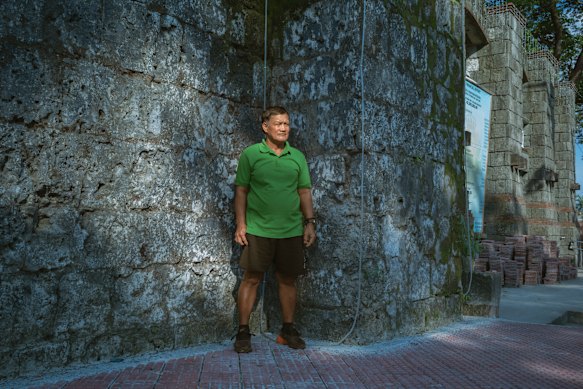
Construction began in 1976, bringing a windfall to many people in Morong and nearby towns who were hired to work on the project. They included Valentino Tolosa, who said he could not believe his luck when, aged 18, he got a job as a cable puller. It paid about $US27 a day, 10 times the allowance he got from his mother, he said.
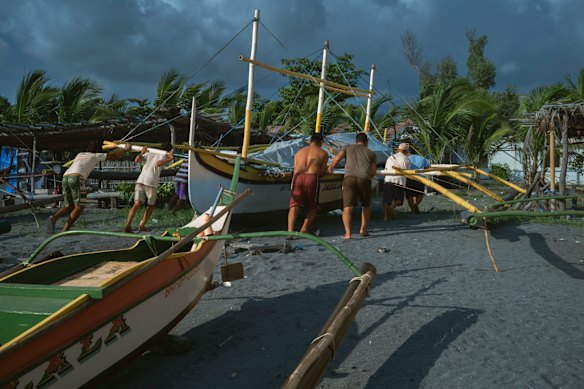
Three years into the plant’s construction, more than 12,000 kilometres away in Pennsylvania, a reactor at Three Mile Island suffered a partial meltdown in what remains the worst nuclear energy accident in US history. It turbocharged the anti-nuclear movement in the Philippines, with activists regularly coming to Morong to campaign against the plant being built nearby.
Rumours also spread across the Philippines in the 1970s that the site was particularly dangerous because it sat above a fault line, and was 64 kilometres from Mount Pinatubo, an active volcano. Researchers from the Philippine Department of Science and Technology have since found no active fault lines under Bataan, and the site was unharmed by the volcano’s most destructive eruption since, in 1991.
The first Marcos government, which displayed little tolerance for dissent, came down hard on the plant’s opponents.
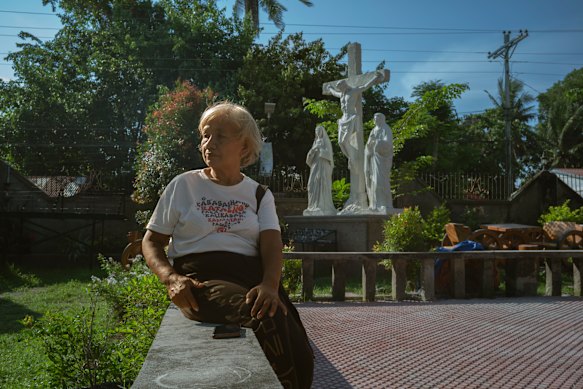
Pilar Nazareno, a resident of Morong, said dozens of her neighbours who had questioned the nuclear project at the time were taken by police or labelled communists by the government. Some residents pretended to attend Bible studies at a local church as cover for discussions about the plant, she said.
“It fell to the priests and nuns to teach us about the nuclear plant, and what would happen to us if it had a meltdown,” Nazareno, 68, said.
The Three Mile Island accident led Philippine authorities to suspend construction at Bataan in 1979 for a safety review.
The design was updated, and work resumed the next year, but safety was just one of the criticisms: Marcos faced persistent allegations of corruption related to the project, including that the American company Westinghouse had given him millions of dollars in illegal payments to secure a contract to build the plant.
By the time it was completed in 1984, the plant’s cost had more than doubled to more than $US2 billion. It took two more decades for the government to pay off the accumulated debt.
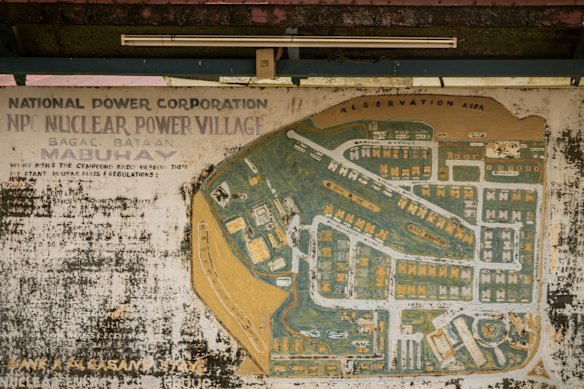
Marcos was by then struggling for his political survival. In February 1986, he was overthrown and fled the country. With its biggest backer out of office, the nuclear plant’s future was thrown into doubt.
“When the government changed, we already knew nothing would move forward at the plant,” said Antonio Corpuz, a chemical engineer who was appointed the plant’s manager in 1978.
Two months after Marcos’ departure, a reactor exploded at the Chernobyl nuclear power plant in the Soviet Union, in what became the world’s worst nuclear accident. It left little appetite in the Philippines for the Bataan project. A new government mothballed the plant in April that year and sold its uranium fuel to other countries.
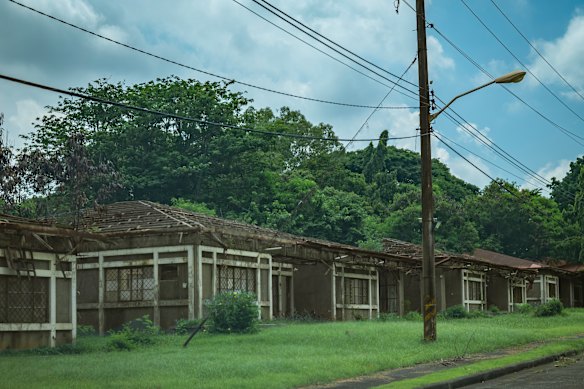
The site’s two back-up generators were taken away to provide power to remote islands. Radiation detectors were also removed from the security posts because they were not needed: there was no nuclear material at the plant. Instead of overseeing power generation, Corpuz and his team were tasked with preserving the plant. And, in the 1990s, hundreds of engineers left after the government cut its maintenance budget, leaving only enough for a skeleton crew. Many went to the United States, Japan, South Korea and the United Arab Emirates for higher-paying jobs.
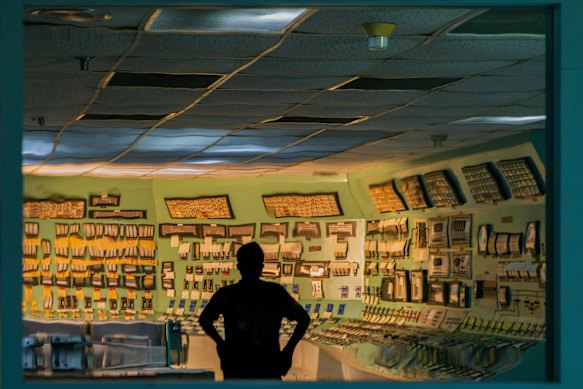
Today, the only part of the plant that appears pristine is the reactor room, a 50-metre-high cylindrical structure with steel-reinforced, one-metre-thick concrete walls. The structure protects the reactor core, which sits in a deep well that would be filled with water if the plant were operational. Many components in the core are still wrapped in plastic.
Supporters of the Bataan plant have pointed to reactors of the same design in the United States and South Korea that have run safely for decades.
Mark Cojuangco, a member of Congress and a champion of the Bataan plant, said the Philippines had missed an opportunity by mothballing the project. “We could have built factories like South Korea and leaped ahead of the region,” said Cojuangco, whose father was a tycoon close to Marcos.
Bongbong Marcos has appeared mindful of the Bataan plant’s history and the long-running scepticism about its safety and usefulness, often avoiding direct mention of the project.
In 2024, his government commissioned a study by the Korea Hydro and Nuclear Power Co on the feasibility of reviving the plant. The Energy Department of the Philippines said in July that the study had been completed, but declined to provide its findings. A 2017 study by the same South Korean company found that about a quarter of the plant’s equipment would need to be replaced before it could be switched on, at a cost of about $US1 billion.
Marcos had aimed for the Philippines to begin generating nuclear power by 2032, but the Energy Department told reporters in July that it might not be possible until 2038 as the agency evaluates other options, including plants at different sites. A 2024 survey commissioned by the Energy Department found more than 70 per cent of Filipinos in favour of nuclear power.
If the government decides in favour of the Bataan plant, the refit is still expected to take years.
Germano, the plant’s manager, said he doubted he would see it switched on in his tenure. He retires in 2030.
This article originally appeared in The New York Times.
Get the day’s breaking news, entertainment ideas and a long read to enjoy. Sign up to receive our Evening Edition newsletter.
Disclaimer : This story is auto aggregated by a computer programme and has not been created or edited by DOWNTHENEWS. Publisher: www.smh.com.au