
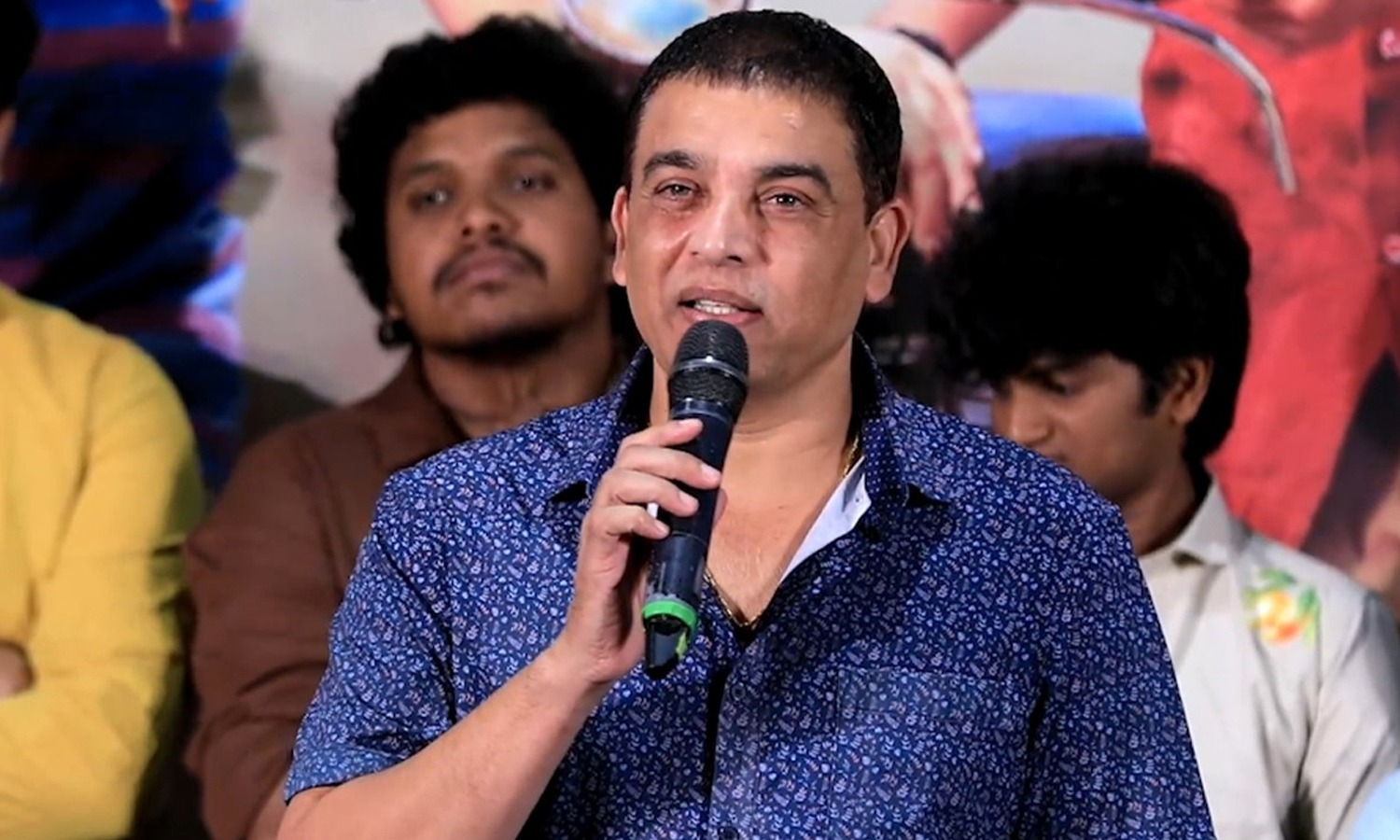
Speaking at a recent event, noted producer Dil Raju made some blunt observations about the present condition of Tollywood. “Today’s industry is in a very bad shape. I will say this with courage as it might scare some people out there,” he said. His comments immediately triggered widespread discussions across film circles because they come at a time when the Telugu film industry is already battling several challenges, including poor theatrical footfalls, declining audience enthusiasm for regular releases, increasing production costs, confusion over release dates, and an overdependence on star-driven pan-India spectacles.
According to Dil Raju, the industry cannot survive merely on hype, promotions, or star power anymore. He stressed that audiences today have become extremely selective and are only willing to visit theatres when they strongly believe a film can offer a worthwhile cinematic experience. “It would be a big challenge for us if we don’t bring our audience into theatres. To do that, you should make such great movies and get your audiences into theatres too,” he stated.
The senior producer also highlighted the importance of small and medium-budget films in sustaining the larger ecosystem of Telugu cinema. While big-budget films may generate huge openings and media attention, he believes the long-term health of the industry depends on content-driven films that encourage audiences to visit theatres regularly. According to him, once audiences regain the habit of watching films on the big screen, the theatrical market will gradually become healthier and more stable.
Another young filmmaker and producer, Sai Rajesh, also made strong remarks at another event while discussing the changing nature of film promotions and audience engagement in the digital era. Sai Rajesh expressed frustration over the increasing difficulty in understanding genuine public response to songs, teasers, and trailers.
According to him, digital numbers today have become highly misleading. YouTube views, Twitter trends, and social media engagement are often manipulated through paid promotions and artificial boosting, making it difficult for filmmakers to judge whether audiences are genuinely connecting with the content. In earlier times, theatrical buzz, audience talk, and organic excitement gave producers a much clearer understanding of a film’s reach and potential. But today, inflated digital metrics often create a false sense of confidence before release.
Sai Rajesh further pointed out that the excessive promotional culture itself has made audiences increasingly skeptical about the industry. Many viewers no longer trust online trends or viral publicity because they believe much of it is manufactured rather than organic. This growing disconnect between promotional hype and actual audience interest, according to him, has become one of the biggest problems facing filmmakers today.
However, not everyone within the industry agrees with the growing “crisis narrative” surrounding Tollywood. Producer-director Madhura Sreedhar Reddy strongly countered the pessimistic tone through a blunt social media post on X. His argument was simple and direct — cinema is ultimately a business, not a social service or charity.
Madhura Sreedhar Reddy stated that producers should stop publicly seeking sympathy whenever films fail commercially. According to him, if filmmakers genuinely have passion for cinema, they should continue making films sincerely and responsibly. But if filmmaking no longer works financially for them, they should either adapt to the changing market or move on to another business instead of repeatedly portraying themselves as victims of audience behavior or changing viewing habits.
His comments carried a deeper criticism of the industry’s approach toward failure. He argued that cinema is perhaps the only business where stakeholders regularly come out and emotionally blame external factors whenever projects fail. In most industries, business owners quietly analyze their mistakes, study market trends, improve their products, and move forward. But in cinema, producers often blame audiences, OTT platforms, piracy, ticket prices, social media negativity, or changing viewing habits instead of introspecting about the quality of their content.
The contrasting opinions from Dil Raju, Sai Rajesh, and Madhura Sreedhar Reddy clearly reflect the larger debate currently unfolding within Tollywood.
Disclaimer : This story is auto aggregated by a computer programme and has not been created or edited by DOWNTHENEWS. Publisher: deccanchronicle.com



