
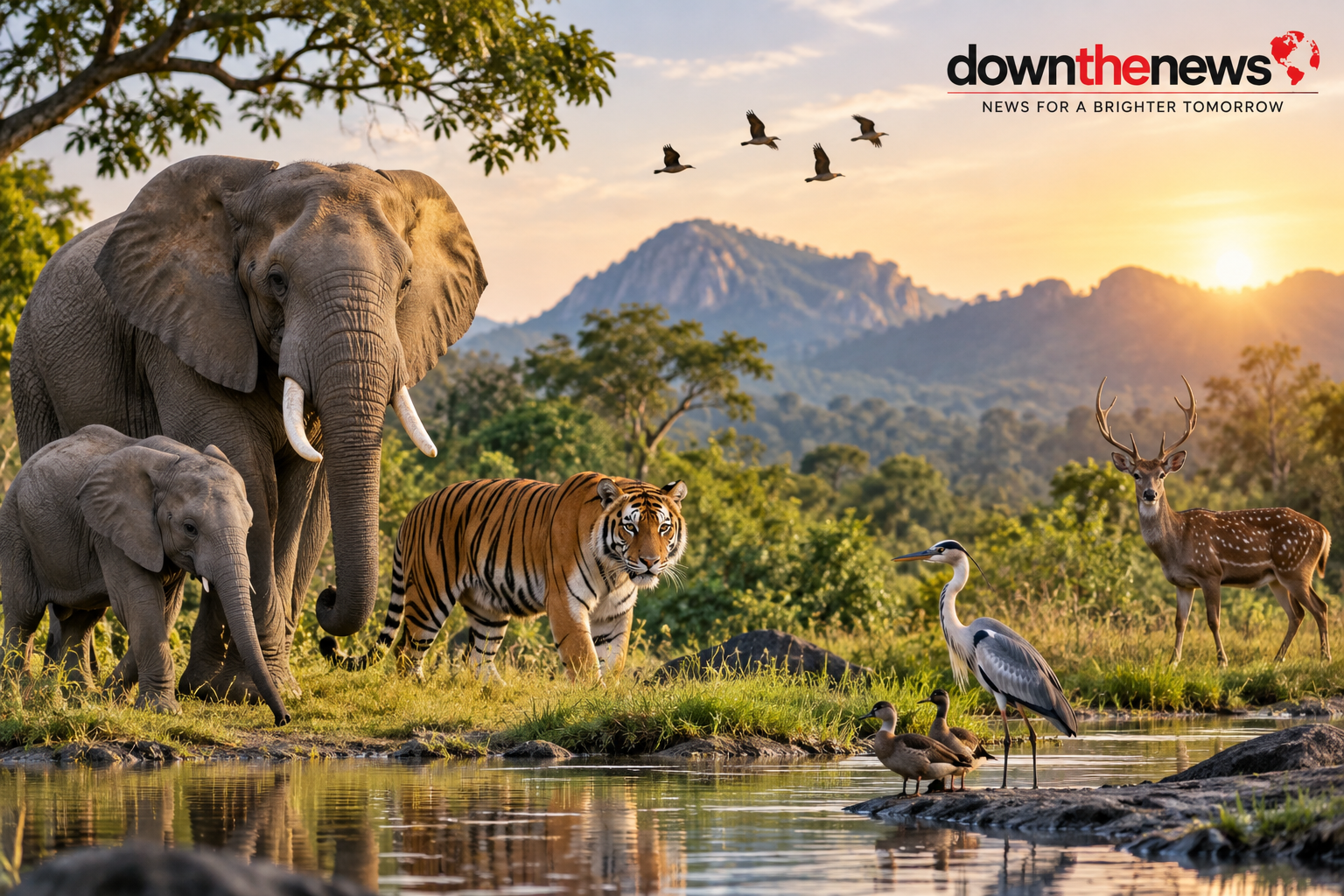
🐅 Top 20 Animal & Wildlife News Stories
Saturday, October 10, 2026
India & World | Conservation, Animal Rescues, Endangered Species and Biodiversity
Today’s wildlife news highlights urgent conservation challenges and encouraging developments, from a suspected viral disease affecting tigers in Madhya Pradesh to orangutan rescues in Indonesia, India’s new bird-monitoring initiatives and efforts to combat illegal wildlife trafficking.
🇮🇳 India Animal & Wildlife News
1. Kanha Tiger Reserve Investigates Suspected Canine Distemper Virus After Cub Dies
Forest officials at Madhya Pradesh’s Kanha Tiger Reserve have sent biological samples from a deceased tiger cub to a laboratory in Jabalpur to determine whether canine distemper virus (CDV) contributed to its death. The cub had been found alone and severely weak in August and received veterinary treatment before dying earlier this week.
The investigation has raised concerns because the suspected disease has already been linked to the deaths of seven other big cats in the region. Laboratory results are expected to help establish the cause of death and guide further action. Canine distemper virus can affect several carnivore species, making disease surveillance important in landscapes where wildlife populations overlap.
2. Himachal Pradesh Keeps All Seven Monkey Sterilisation Centres Operational
The Himachal Pradesh Forest and Wildlife Department has reversed an earlier decision to close five of the state’s seven monkey sterilisation centres. The facilities, located in Shimla, Kangra, Mandi, Hamirpur, Sirmaur, Chamba and Una districts, will remain operational while officials explore alternative funding arrangements.
The state’s programme has sterilised approximately 188,752 rhesus macaques between 2007 and 2025. However, funding shortages, staffing constraints and changes to the legal framework governing monkey management have affected operations.
The decision reflects the continuing challenge of managing human-monkey conflict while balancing public safety, animal welfare and wildlife-management requirements.
3. Hirakud Wildlife Division Launches Safaris to Promote Ecotourism
The Hirakud Wildlife Division in Odisha has introduced two safari vehicles connecting Sambalpur Zoo with the Hirakud-Debrigarh landscape. The initiative aims to improve access to local wildlife attractions while encouraging environmental awareness and conservation tourism.
The launch formed part of the state’s 72nd Wildlife Week celebrations. Students from 38 schools, 10 colleges and three universities participated in related competitions focused on wildlife, photography, habitat protection and environmental issues. Around 250 students were recognised for their participation.
The programme seeks to connect visitors and young people with wildlife conservation while supporting local awareness and sustainable tourism.
4. Six Arrested in Odisha After Seizure of Two Leopard Skins
Forest officials in Odisha’s Gajapati district have arrested six people and seized two leopard skins during raids targeting suspected illegal wildlife trading.
According to officials, one skin was recovered near Paralakhemundi bus stand, where two individuals were allegedly negotiating its sale. A second skin was seized during a separate operation in the Mohana forest range.
Authorities also confiscated motorcycles and mobile phones and are investigating the source of the skins, the intended buyers and possible connections to a wider trafficking network.
The case highlights the continuing threat posed by illegal trade in wildlife products and the importance of enforcement against poaching and trafficking.
5. Infant Orangutan Rescued in Maharashtra Set to Return to Indonesia
An infant male orangutan seized from an apartment in Dombivli, Maharashtra, in November 2024 is expected to be repatriated to Indonesia. The animal, believed to be approximately three years old, was among several wildlife species recovered by forest officials in a suspected trafficking case.
The orangutan is currently housed at the Greens Zoological Rescue and Rehabilitation Centre in Gujarat. Indian and Indonesian officials have indicated that the repatriation process is at an advanced stage.
Returning the animal to its country of origin could help ensure that its long-term care is managed in coordination with specialists familiar with the species. Any future rehabilitation or release would depend on its health, behaviour and suitability for life in an appropriate environment.
6. Migratory Birds Arrive Early at Odisha’s Chilika Lake
Migratory birds have begun arriving at Chilika Lake earlier in October, drawing attention from birdwatchers and conservationists. Species reported in the area include northern pintails, Eurasian wigeons, gadwalls, shovelers and glossy ibises.
The early arrivals are being monitored because the timing of migration can be influenced by changing temperatures, rainfall, water levels and conditions along migratory routes. An early arrival does not automatically indicate a climate-driven change, but repeated observations over time can help scientists identify emerging patterns.
Odisha’s Forest Department has intensified patrolling, with 22 temporary bird-protection camps operating around the lake and Nalabana to help protect the incoming birds.
7. Nationwide Sarus Crane Survey Begins Across India
The Bombay Natural History Society has announced a coordinated nationwide survey to estimate the population of Sarus cranes, India’s tallest flying bird.
The survey encourages forest departments, research institutions, conservation groups, farmers, educational institutions and citizen scientists to visit known Sarus crane habitats and record their observations.
The initiative is intended to establish a stronger picture of the species’ distribution and population, identify important habitats and help conservationists understand emerging threats.
Sarus cranes depend on suitable wetland and agricultural landscapes, where drainage changes, habitat loss and human disturbance can affect their survival. Reliable population data will help guide future protection measures.
8. India’s First High-Altitude Snow Leopard Safari Opens in Ladakh
Ladakh has launched India’s first high-altitude wildlife safari specifically focused on observing snow leopards in their natural mountain habitat. The initiative, announced on October 8, aims to combine conservation awareness with tourism opportunities for local communities.
Snow leopards are notoriously difficult to spot because their pale-grey coats blend into rocky mountain terrain. Guided tracking experiences can help visitors appreciate the challenges of conserving these elusive predators and the fragile ecosystems they inhabit.
For the initiative to remain sustainable, wildlife authorities and tourism operators will need to manage visitor numbers, prevent disturbance and ensure that local communities share in the economic benefits.
9. Great Indian Bustard Recovery Advances With Reintroduction Programme
India has taken another important step towards recovering the critically endangered Great Indian Bustard, with two captive-bred males released into Rajasthan’s Desert National Park on October 4.
The species faces severe threats from habitat degradation, disturbance and collisions with overhead power lines. Its remaining wild population is extremely small, making carefully managed breeding and reintroduction programmes important for its survival.
Scientists have been raising birds at specialised conservation centres and preparing selected individuals for release. Continued monitoring, habitat management and measures to reduce power-line collisions will be crucial if the birds are to survive and eventually reproduce in the wild.
10. India Expands Tiger Recovery Efforts With Reintroduction in Buxa
India’s tiger-conservation programme has received renewed attention following the transfer of a tigress from Bihar’s Valmiki Tiger Reserve to West Bengal’s Buxa Tiger Reserve earlier this month.
The initiative aims to restore a viable tiger population in the Buxa landscape, where habitat conditions and prey availability are important factors for long-term success.
Wildlife specialists will need to monitor the tigress’s adaptation, movement and interactions with the surrounding environment. Adequate prey populations, trained field staff and measures to reduce human-wildlife conflict will be essential to establishing a sustainable population.
🌍 World Animal & Wildlife News
11. Wildfires in Indonesia Threaten Endangered Orangutans
Wildfires across parts of Indonesia’s Borneo and Sumatra islands are placing endangered orangutans at serious risk. Rescue teams have been treating animals suffering from burns, dehydration and smoke exposure after fires damaged their forest habitats.
One rescued female orangutan, known as Novita, was found clinging to a nearly leafless tree in Central Kalimantan. She suffered burns to her hands and feet and received oxygen and intravenous fluids before being transferred to a rehabilitation centre.
Another orangutan, Sampurna, died shortly after being rescued from a fire-affected palm-oil plantation.
Indonesian authorities and conservation groups are working to rescue stranded animals, restore safe habitat and prevent further damage. The fires demonstrate how habitat destruction can threaten wildlife even when individual animals are successfully rescued.
12. Smithsonian Conservation Campus Welcomes Five Cheetah Cubs
The Smithsonian’s National Zoo and Conservation Biology Institute has announced the birth of five cheetah cubs at its conservation campus in Front Royal, Virginia.
The cubs were born on October 5 to Zura, a five-year-old first-time mother. Their arrival is an encouraging development for conservation programmes working to maintain healthy cheetah populations and improve knowledge of the species’ breeding and care requirements.
The facility has also brought renewed public attention to cheetah conservation through its Cheetah Cub Cam, allowing people to observe the growing family remotely.
Cheetahs face threats in the wild from habitat loss, declining prey populations, conflict with people and illegal wildlife trade. Managed breeding programmes can contribute to conservation, although protecting wild habitats remains essential.
13. WWF Report Warns of a 73% Decline in Monitored Wildlife Populations
The World Wildlife Fund’s Living Planet Report 2026 has highlighted a severe decline in monitored vertebrate populations around the world.
The report found that the average size of monitored wildlife populations fell by 73% between 1970 and 2022. The analysis draws on data covering tens of thousands of populations and thousands of species, including mammals, birds, fish, amphibians and reptiles.
The figure does not mean that 73% of all individual wild animals have disappeared. Instead, it measures the average change in the sizes of monitored populations.
Habitat destruction, overexploitation, pollution, invasive species and climate change are among the major pressures facing wildlife. The findings underline the importance of protecting ecosystems and restoring damaged habitats.
14. Africa’s Wildlife Populations Show Severe Long-Term Declines
The latest global biodiversity assessment also highlights particularly steep declines in monitored wildlife populations across Africa.
According to reporting on the WWF findings, Africa experienced an average decline of approximately 80% in monitored wildlife population sizes between 1970 and 2022. Agricultural expansion and habitat loss are among the leading pressures identified.
The figures cover monitored populations rather than every animal on the continent. Nevertheless, the trend raises concerns about the future of species and ecosystems that support food systems, tourism, water security and local livelihoods.
Conservationists are calling for stronger habitat protection, sustainable land management and more effective efforts to prevent illegal wildlife exploitation.
15. Scientists Test Drones to Track Invasive Burmese Pythons in Florida
Scientists in the United States are testing drone technology to locate Burmese pythons in Florida’s Everglades, where the invasive snakes pose a serious threat to native wildlife.
The US Geological Survey is experimenting with small uncrewed aircraft equipped with radio-tracking technology to detect pythons that are otherwise difficult to find because of their camouflage and secretive behaviour.
Improved tracking could help researchers understand the snakes’ movements and identify areas where control efforts are most urgently needed.
Burmese pythons prey on native mammals and other animals, disrupting ecosystems that evolved without this large non-native predator. Researchers hope the new approach will make surveys more efficient and improve invasive-species management.
16. Rare Snake Species Successfully Breed at Prague Zoo
Prague Zoo has reported a significant breeding achievement involving three snake species that had not previously reproduced there.
The species include rough-scaled pythons from north-western Australia, Nosy Komba ground boas from Madagascar and Tartar sand boas from Asian desert regions.
The success is particularly noteworthy because some of the snakes descend from animals confiscated from wildlife smugglers. Their offspring demonstrate how specialised zoo facilities can support the care and breeding of animals recovered from illegal trade.
Successful breeding can help improve knowledge of these species and strengthen conservation-management expertise. It also highlights the importance of preventing wildlife trafficking before animals are removed from their natural habitats.
17. Botswana Faces Backlash Over Authorised Killing of 23 Elephants
Botswana has faced criticism from animal-welfare and conservation groups after authorities authorised the killing of 23 elephants for meat during the country’s 60th independence celebrations earlier this month.
The decision has renewed debate over how governments should manage elephant populations, address human-wildlife conflict and balance wildlife policies with local needs.
Supporters of controlled culling sometimes argue that population management is necessary in areas where elephants damage crops, threaten communities or exceed the carrying capacity of particular habitats. Critics question whether killing elephants is justified and argue for greater investment in non-lethal approaches.
The controversy illustrates the complex challenges involved in managing large wildlife populations while protecting both people and animals.
18. Conservationists Warn of Threats to India’s Grassland Ecosystems
India’s efforts to save the Great Indian Bustard have renewed attention to the importance of grassland conservation.
Grasslands support a wide variety of birds, mammals, reptiles, insects and plant species, yet they are often overlooked in conservation planning. Agricultural expansion, infrastructure development, disturbance and changes in land management can reduce the availability of suitable habitat.
Protecting the Great Indian Bustard requires more than breeding and releasing individual birds. Conservationists also need to safeguard feeding grounds, nesting areas and wider grassland ecosystems.
The success of reintroduction programmes will depend on whether released birds can survive and reproduce in the wild over the long term.
19. New Research Highlights the Importance of Protecting Migratory Bird Routes
The early arrival of migratory birds at Chilika Lake and the launch of India’s nationwide Sarus crane survey have renewed attention to the importance of wetlands and bird migration routes.
Migratory birds depend on a chain of suitable habitats for feeding, resting and breeding. Damage to one important wetland can affect birds travelling across several countries.
Changes in rainfall, water levels, food availability and temperatures can influence migration patterns. Long-term monitoring helps researchers distinguish natural variation from persistent ecological changes.
Protecting wetlands, limiting disturbance and coordinating conservation efforts across national borders are essential for maintaining healthy migratory bird populations.
20. Conservationists Call for Stronger Action Against Illegal Wildlife Trade
The seizure of leopard skins in Odisha and the successful breeding of confiscated snakes at Prague Zoo highlight two sides of the international fight against wildlife trafficking.
Illegal trade can remove animals from the wild, undermine vulnerable populations and expose trafficked animals to poor transport and living conditions. Some species are targeted for their skins, while others are sold as exotic pets or collected for their eggs.
Effective enforcement requires cooperation among forest departments, police, customs agencies, wildlife specialists and international authorities. Rehabilitation centres and accredited zoos can assist animals recovered from trafficking, but preventing the illegal trade in the first place remains a central conservation priority.
🐾 Key Wildlife Takeaways for October 10, 2026
- Tiger conservation: Kanha is investigating a suspected disease after a cub’s death, while India’s wider tiger-recovery efforts continue.
- Animal welfare: Himachal Pradesh will keep all seven monkey sterilisation centres operational.
- Wildlife crime: Six people have been arrested in Odisha following the seizure of two leopard skins.
- Orangutan protection: Wildfires in Indonesia are causing injuries, habitat destruction and wildlife deaths.
- Bird conservation: India’s nationwide Sarus crane survey and the early arrival of migratory birds at Chilika highlight the importance of wetland protection.
- Scientific innovation: US researchers are testing drones to locate invasive Burmese pythons.
- Global biodiversity: WWF’s latest assessment warns of a 73% average decline in monitored vertebrate wildlife populations since 1970.
- Conservation successes: Cheetah births and rare-snake breeding demonstrate the contribution of specialised conservation programmes.




