Check in every week for the unfiltered opinions of our writers and editors as they break down the hottest topics in the sport, and join the conversation by tweeting us at @golf_com. This week, we discuss the details of the future PGA Tour schedule and the end of Nelly Korda’s impressive major streak.
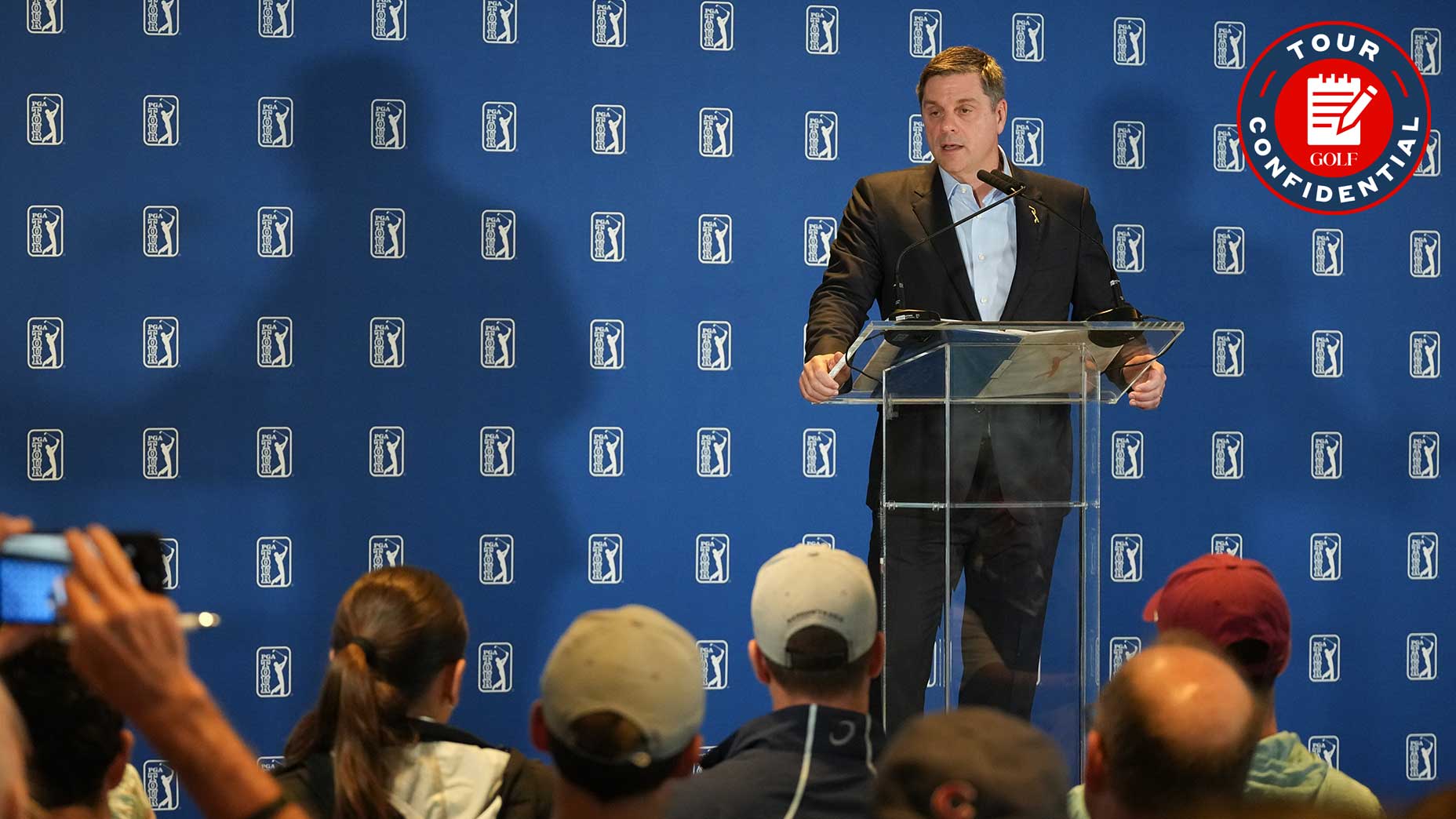
It’s official: beginning in 2028, the PGA Tour will witness the biggest shift in its competitive structure in decades, a plan that’s been long teased and was further rolled out by Tour CEO Brian Rolapp at the Travelers Championship. There’s lots to break down — you can read up on all of it here — but in short it’s two different tracks (a Championship Series and Challenger Series) with more schedule certainty and promotion/relegation. Let’s keep it simple: Will it work? And is it an improvement?
Josh Sens, senior writer (@joshsens): It doesn’t solve the biggest problem, which is that so many players expect to get paid more than they’re worth in the market. I don’t see that going away. But this is definitely an improvement in the simplicity at the top and clarity of the schedule. Players know at the start of the season where and when they’ll be playing, and fans do, too. The relegation – and elevation – paths are also more straightforward. The total number of main events will be (slightly) fewer as well, which is good. The world does not need more professional golf. It needs more interesting events. On that front, how can you not like the shift to match play to determine the season-ending playoff winner?
Josh Berhow, managing editor (@Josh_Berhow): It does seem like an improvement, and I’ll admit I wasn’t a huge fan of this a couple of months ago (it seemed like still too much golf). But with more clarity now, I’m optimistic. I like that every event will know where it stands and fans can eventually figure out at which tournaments they’ll see Scottie Scheffler and at which ones they will not. And the match play tweak is a good addition. I can see why they shied away from it over the years but it’s time for a change and some added juice. Maybe they get lucky and get some marquee matchups along the way. Match play is simply too much fun, and too essential to golf’s history, to not be played more on the top tour.
Josh Schrock, associate news editor (@schrock_and_awe): It’s for sure an improvement. The PGA Tour was in desperate need of a shakeup that made its competitive model easier to understand instead of just being a large number of individual tournaments that lead to a convoluted postseason event that is hard to understand. Promotion and relegation is a system that is easy for every fan to understand and gives clear stakes to every tournament. Having a defined schedule for players on both tracks is a bonus for them. Having a clear structure that determines the best player of the season, rewards them and then goes into a match-play postseason is a huge win if the Tour can pull it off. I’m very optimistic about these changes and they come at a time when the Tour needs to elevate interest to get as big a chunk of the TV pie as they can as the NFL prepares to renegotiate.
Time to nitpick. What don’t you like? Or what still needs work?
Berhow: For this to work I think it needs to be cutthroat and I like that sponsor exemptions are being eliminated, although I’m curious if certain players will be grandfathered in (through career exemptions created) to make sure they are on the more desirable tour. If that’s the case I hope it’s not too generous because that’s how the sponsor exemption craze became an issue to begin with.
Schrock: I agree with Berhow. There seems to potentially be some wiggle room for big name players to drop out but be placed back into the Championship Series through career exemptions. Those need to be few and far between or else the Tour risks having this all fall flat. How good you are at getting the ball in the hole should determine what Tour you are on. I don’t want to see Tony Finau or Jordan Spieth or Popular Player X finish 110 on the Championship Series and not have to go down to the Challenger Series unless there’s a good reason. Career exemptions should have a high bar and be able to be used one time.
Sens: Good points above. On a non-structural note, no serious effort to improve pro golf is complete without addressing the problem of pace of play. The game, like baseball before it, needs to pick it up. Rolapp’s from the NFL. Maybe they could institute a pass rush. At the very least, enforce the play clock mercilessly and without exception. I hope an announcement like that is coming next.
Which type of players are happiest with this schedule, and which aren’t?
Sens: The Track 1 guys are clearly the happiest as they’re guaranteed to be playing in the biggest events throughout the year. For the guys outside the top, it’s obviously the opposite. Eliminating sponsors exemptions (another good move) can’t be welcome news to certain players who have relied on their popularity more than their performance to get into events.
Schrock: I think the Track 1 guys are happy because of the defined schedule and the purses they will play for, but this is a big win for players on Track 2, especially those who would be playing on the Korn Ferry Tour or splitting their time between the two. The $4 million purses on the Challenger Series will be a big increase from the KFT and the Challenger Series gives them a clear competitive avenue to get where they want. There has to be enough churn between Track 1 and 2 to make it right, but I think almost everyone should be happy with this development outside of the players who have been feasting on sponsor exemptions, made-cut exemptions and career money exemptions while playing bad golf. They won’t be pleased.
Berhow: It’s great for the middle tier of the top-track guys (are you following?) because they are safe on the most lucrative tour. I don’t think Scottie and Rory and those guys are much worried about dropping down. Although it puts pressure on the guys closer to the 100 range. For a lot of them, their spot on one tour vs. the other has significant ramifications.
One other juicy nugget: the Tour’s postseason will introduce match play and finish at a “prestigious” course the Tour wouldn’t otherwise use to host a full-field event. Do these mystery venues add any intrigue for your average fan?
Sens: Venues definitely matter, and not just for architecture junkies. The better courses pose more interesting questions, which makes for more interesting competitions, even if you don’t give a hoot about design. The rumors of the likes of Pine Valley, Cypress and Seminole being in the picture seem like just that. Rumors. And besides, I actually think it makes more sense for them to go to high-pedigree resort courses, somewhere the average fan can actually play. That formula works nicely at Pebble, Kohler, Pinehurst and such. There are others.
Berhow: I like the high-end public option, Sens. And venues matter, but honestly not just for fans but for players. Most of these guys are bigger golf nerds than the audience watching, so they’d love to change it up as well. Cypress Point, Pine Valley, whatever — they’d look great on TV. And many of the ones rumored are great match-play courses too.
Schrock: Venues matter a ton for the players and the fans. As excited as I am about the match play championship, that’s something the Tour has to nail with the venues it chooses. If it leaks the possibility of Pine Valley, Seminole, Cypress etc., only to end up playing at East Lake, TPC Southwind etc., that will be a big loss. I think a rotation of these exclusive courses (if they are interested), along with prestigious courses, or even unique courses we’ve rarely seen like Chambers Bay, is the right combination the Tour is looking for to nail this format. But, in short, yes, venues are the most important part of this gambit in my eyes.
Haeran Ryu won the KPMG Women’s PGA Championship, shooting a final-round 70 to finish 13 under overall and end Nelly Korda’s quest for a third straight major title. Korda tied for 8th. Are you surprised Nelly wasn’t in the mix more at the end?
Berhow: The putter just failed her all week, especially over the weekend. She was working with her sister on the putting green after her third round and looked frustrated. And she missed a shorty for par on the opening hole on Sunday. The body language wasn’t great after it. She’s an epic ball-striker and does basically everything well, but it might always come down to good and bad weeks with the putter for her (which sounds a lot like another World No. 1 we know). Nothing wrong with a top 10 after winning the first two majors. I’d be surprised if she didn’t win one of the final two.
Schrock: She was still in the mix entering Sunday. Her putter has been the difference between good weeks and wins for years now. It’s a massive win that the balky putter week came at Hazeltine and not Riviera. No offense to the KPMG but the win at Riv was more important for Nelly and the sport. As much as the LPGA might want her to, she can’t win them all. Her run at the Nelly Slam added juice to the week. I expect her to threaten at both the Evian and the Women’s Open, be in the Hall of Fame by year’s end and potentially have four legs of the career Grand Slam in the bag. (I won’t call winning all five the Super Slam.)
Disclaimer : This story is auto aggregated by a computer programme and has not been created or edited by DOWNTHENEWS. Publisher: golf.com