For decades, the math at the top of the bag was written in stone: driver, 15-degree 3-wood, 5-wood. You didn’t question it. But over the past few seasons, a quiet revolution has completely rewritten tour gear philosophy. We’ve collectively woken up to the fact that forcing a tiny, shallow-faced 3-wood to pull double duty—as both a 270-yard missile off tight turf and a bulletproof fairway finder off the tee—is a statistical trap. The game’s best minds have stopped chasing theoretical versatility and started building specialized tools for distinct jobs.
The old paradigm didn’t work because the physics didn’t work. The margin for error on a traditional fairway-wood face is just too thin for the modern, high-speed game. With statistics being such a HUGE part of the game these days, the old thinking has proven to be a risk.
Then you look at a guy like Jake Knapp.
Knapp possesses one of the most effortless, elite speed signatures in pro golf—cruising past 118 mph clubhead speed with a fairway wood in his hands without even blinking. He is the poster child for the new era of top-of-bag architecture, completely abandoning traditional distance-based gapping in favor of absolute functional separation. Instead of a standard 3-wood, his bag is built around PXG’s latest Lightning platform and a precisely weighted mini-driver.
I recently stood on the range at Scottsdale National with Knapp as he went through a full testing session. Watching how he shifts responsibilities between these head shapes proves that the traditional gapping chart is officially dead. For players with high speed, or for anyone who struggles with consistency off the turf, the choice of fairway-wood sole architecture is what matters most. Keep in mind, this is PLAYER SPECIFIC. There isn’t a one-solution-works-for-all answer.
Overcoming the steeper delivery trap
To understand why specific fairway profiles work so beautifully for Knapp, you have to look closely at how he impacts the golf ball. Because of his speed and natural athletic tendencies, he can get a bit steep through the hitting zone. On a standard, shallow-faced 3-wood, that steep delivery is a recipe for disaster.
“For me, more consistency off the tee box was everything,” Knapp explained as we monitored his ball flights. “Since I’m somebody who’s a little bit steeper, traditional 3-woods, I would always hit them high in the face. Especially if I went to go hit one lower, I’d always hit them super low-spin and knuckly. I was never really able to find a 3-wood that I absolutely loved or could do all the things I wanted to do.”
Traditional fairway woods leave very little room to protect against vertical face misses. When you strike a ball slightly high or low on a standard face, the spin collapses into a diving, low-spin knuckle ball OR (which isn’t the worst thing) a low face, spinny floater.
Knapp’s solution is a complete separation of responsibilities at the top of the bag. While he retains an adjustable, larger-profile mini-driver strictly for selective, specialized tee shots on tight driving holes, he shifts his turf-interaction needs to a high-lofted 5-wood.
On tour, long par-5 approach shots require a ball to land soft from 240 to 265 yards out. A dedicated, high-lofted fairway wood provides the necessary launch to drop the ball out of the sky with stopping power, while preventing the severe offline misses when your swing path wanders.
For most elite players, there IS a driver swing and a rest of the bag swing. Some more extreme than others, but the days of “sweeping” a fairway wood have been traded for a steeper, “hit it like a 5-iron” approach. Modern fairway wood design and ball technology have shifted that over the years.
This structure forms a distinct setup blueprint that completely abandons traditional distance-based gapping in favor of absolute functional separation:
[The modern top-of-bag blueprint]
- Standard driver (460cc): Maximum distance / aggressive lines
- Mini-driver (300cc-340cc): Tee only / tight dispersion / position play
- High-loft fairway (5-wood): Turf only / max launch / soft landings
Why the mini-driver changes the equation
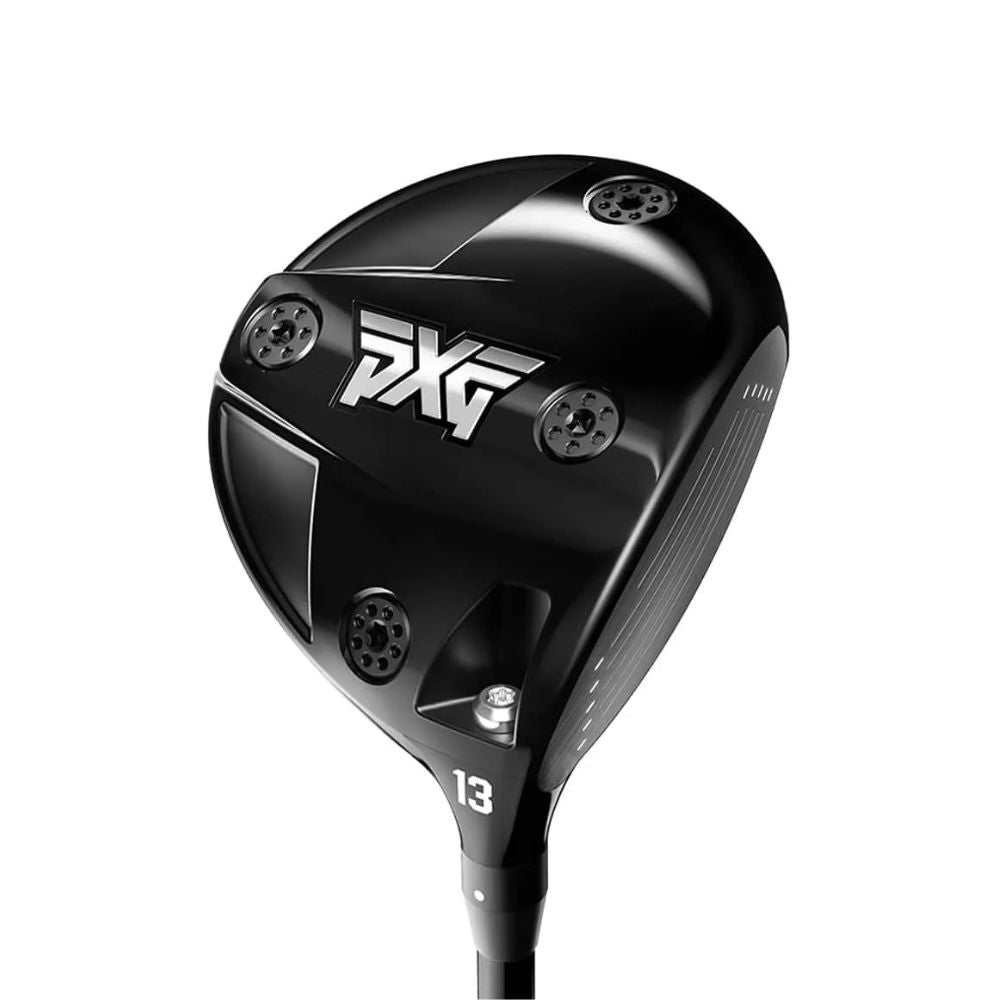
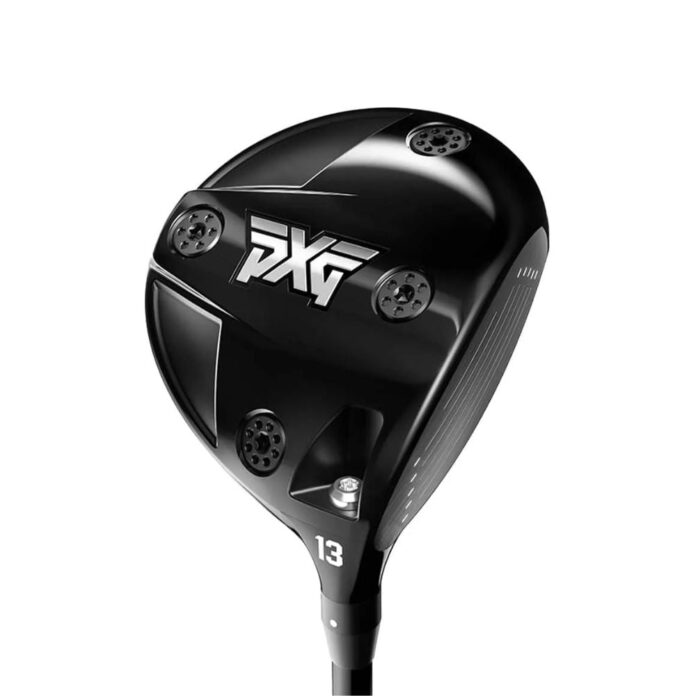
PXG Secret Weapon Mini Driver
Unleash precision and power with the PXG Secret Weapon—a mini driver designed to deliver exceptional off-the-tee performance and remarkable versatility from the fairway. Engineered for advanced players who demand both accuracy and distance.
High MOI Design for Unmatched Stability
The Secret Weapon is built with a high MOI design for outstanding stability and forgiveness. Its lightweight composite crown inserts are crafted from high-grade carbon fiber using an advanced compression molding process. This strong yet light material enables our engineers to strategically redistribute weight within the clubhead, increasing MOI and shifting the center of gravity lower and further back. The result is enhanced distance, improved launch, and greater forgiveness on off-center hits.
Versatility for Off-the-Deck Performance
The Secret Weapon is designed for versatility, featuring a tighter leading edge that makes it easier to hit from the turf, enhancing playability across all surfaces and no matter the playing conditions.
Optimized Distance for Maximum Performance
Featuring a thin titanium face that maximizes ball speed and energy transfer, the Secret Weapon is built for distance. Its design promotes a high launch with low spin, resulting in a powerful, penetrating ball flight. By pushing the USGA’s limits on ball speed (CT), the Secret Weapon delivers top-tier performance. Testing shows a 3 mph increase in ball speed and a 300rpm reduction in spin compared to the Black Ops 3-Fairway, further enhancing distance and control.
View Product
ALSO AVAILABLE AT: PGA TOUR Superstore, PXG
For Knapp, his 13-degree mini-driver—which he calls “my baby”—offers an immediate solution to his steep delivery off the tee. A modern mini-driver bridges the massive structural gap between a standard 175cc fairway wood and a 460cc driver, living comfortably around the 300cc mark to provide a much deeper vertical face profile and a massively increased footprint.
“The difference for me is like, I can tee this thing a little bit higher,” Knapp noted. “Like 17 last week, it’s like a little downwind, and I feel like I can tee it higher and hit it like a driver and it comes out nice. Whereas if I did that with a 3-wood, it’s like if I’m going to hit it hard, that’s a small area to get the numbers that I want. So I feel like the versatility of it is just so much greater than a 3-wood.”
During our testing session, Knapp caught one slightly off the heel—a miss that would typically send a traditional 3-wood rocketing off-line with high spin. The mini-driver absorbed the blow effortlessly: ball speed dropped only 2 mph, and he lost a mere five yards of carry, keeping the ball dead on his target line.
“Having a little bit bigger head just gives you a little bigger area to hit it and I feel like for me it just gives me that little bit more forgiveness, which why wouldn’t you want that?” Knapp said. “With a 3-wood, I would have gained 1,000 or 1,500 spin and it just goes a mile in the air, way more right, and ball speed’s way down.”
Diving into the PXG Lightning Fairways
While the mini-driver handles the tee box, evaluating Knapp’s options for long approach shots off the grass led us right into the new PXG Lightning platform. For golfers who want to feel like they can seamlessly compress the ball off the turf without having to alter their delivery, the architectural changes in this lineup stand out immediately.
When Knapp grounded the standard Lightning 5-wood, the clean design language and visible loft immediately checked his visual boxes. “I like it when it looks like there’s some loft,” Knapp noted at address. “I want to feel like I can get on top of it, I don’t want to feel like I ever need to help it in the air. So having something that gets up a little bit quicker is nice to have.”
ALSO AVAILABLE AT: PGA TOUR Superstore, PXG
The data off the turf backed up the visual confidence. Even when catching a strike slightly low on the face, the platform’s stability kept his launch and spin numbers incredibly tight.
“That’s nice,” Knapp said after tracking a few shots. “I mean, that’s what you want out of a club like this. Having something that you can hit in different places in the face and have it come out through similar windows.”
We then tested his situational shot—the soft, spinny, 240-yard cut that players use to hold greens on long par-fives. The Lightning responded perfectly, holding its spin up at 4,724 rpm and carrying 240 yards exactly on line. “Well, that was nice,” Knapp remarked. “I mean, that’s kind of exactly what that shot should do. To me, it feels like I’m hitting like an 80-yard wedge shot. It feels like I’m — it’s very under control.”
See Part 1 of Tour Validated with Jake Knapp HERE
Time to audition a high-loft fairway?
If you are an amateur golfer struggling to keep your driver on the planet, or if you regularly find yourself pulling a traditional 3-wood on a tight par-4 only to wipe it into the right trees, you need to look at the math.
A modern fairway-wood platform combined with a specialized tee option allows your natural angle of attack to find the center of the face, delivering the exact launch and spin window you need to manage long shots. If an elite professional with world-class ball-striking capability is willing to sacrifice traditional bag configurations for the sake of tightening his dispersion windows and raising his launch height, it’s a sign that you should probably stop fighting your 3-wood and look into a broader, higher-lofted footprint.
Disclaimer : This story is auto aggregated by a computer programme and has not been created or edited by DOWNTHENEWS. Publisher: golf.com