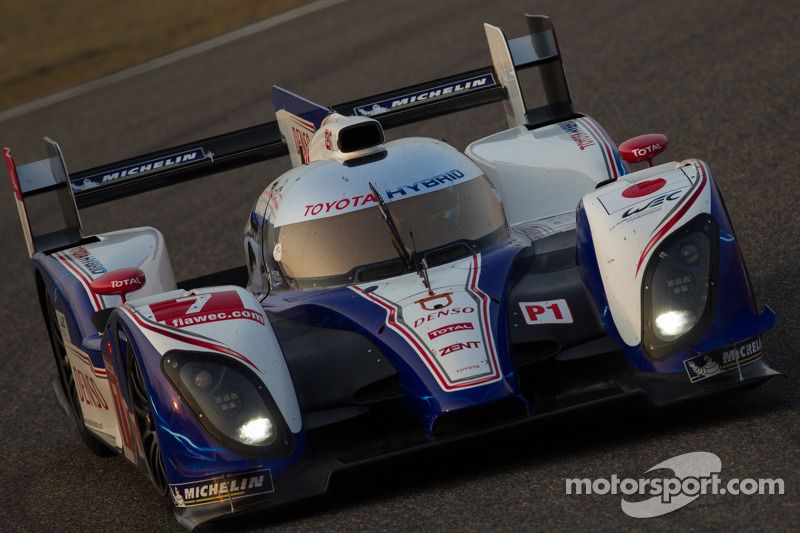
Toyota has been an ever-present fixture in the World Endurance Championship since its (re)birth in 2012. While its rivals have joined, left and returned over the last decade and a half, Toyota remained committed to the championship through wider automotive industry shifts and even a global pandemic.
It has not been a smooth ride though, and the Japanese marque had to endure years of heartbreak before it became a near-unbeatable force in the WEC. And while the advent of the Hypercar era has made sportscar racing more competitive than ever, with Ferrari now setting the benchmark, Toyota remains one of the championship’s most formidable outfits.
“As a driver, when we started this programme, I could never, ever imagine that we could continue our programme like this, in such a way and in such a long time,” said Kazuki Nakajima, who was present for Toyota’s first race in WEC and is now the vice-chairman of its sportscar team.
“Not only myself but everyone in the team has a big appreciation for all the support from Japan, especially from Mr Akio Toyoda, who is pushing all the motorsport activities. We are very lucky to be in this situation where we can continue pushing like this.
“But thinking about the future, I think we also need to push further. Hydrogen is part of it. We do think that Le Mans 24 Hours is a kind of good platform where we can compete together, but also push the technology further for the future. So, this is something we have to further develop and expand.”
At this weekend’s season opener in Imola, Toyota will debut the TR010 Hybrid, a heavily-revised version of the GR010 Hybrid that has been in service since 2021. Here’s a look at the team’s journey in the WEC, all the way back to the inception of the programme 14 years ago.
WEC debut – 2012 Le Mans
#7 Toyota Racing Toyota TS030 Hybrid: Alexander Wurz, Nicolas Lapierre
Photo by: James Holland
Toyota missed the first two races of the WEC’s inaugural season in 2012, but its TS030 Hybrid – the spiritual successor to the iconic GT-One – was ready in time for Le Mans. The #7 Toyota even led the race around the six-hour mark, but the team’s race unravelled shortly afterwards. Anthony Davidson suffered a huge airborne accident in the #8 Toyota after coming into contact with a Ferrari GT car, while the #7 entry would also retire later with technical problems.
First win – 2012 Sao Paulo

Start: #7 Toyota Racing Toyota TS030 Hybrid: Alexander Wurz, Nicolas Lapierre leads
Photo by: DPPI
Following Le Mans, Toyota downscaled its LMP1 programme to a single car for the remainder of the 2012 season. But even as Audi remained dominant, Toyota emerged as a formidable rival, with Nakajima, Nicolas Lapierre and Alexander Wurz picking up the marque’s maiden win at Sao Paulo. Two more wins would follow that year, including a home triumph at Fuji.
First real fight with Audi – 2013 Le Mans

#8 Toyota Racing Toyota TS030 Hybrid: Anthony Davidson, Stéphane Sarrazin, Sebastien Buemi
Photo by: James Holland
Although Toyota eventually had to concede defeat, the 2013 iteration of Le Mans proved it was able to take the fight to Audi on the biggest stage. The TS030 Hybrids were able to go two laps further between fuel stops, putting serious pressure on the R18 e-tron quattros. The car also proved extremely reliable, demonstrating the rapid progress at the Cologne-based team.
First WEC titles in 2014

#7 Toyota Racing Toyota TS040 Hybrid: Alexander Wurz, Stéphane Sarrazin, Mike Conway
Photo by: Toyota Racing
As Porsche joined the grid in 2014 and kickstarted an epic three-way battle in LMP1, Toyota won five of the eight WEC rounds to sweep both titles. Davidson and Sebastien Buemi wrapped up the drivers’ crown a race early, while the manufacturers’ championship was a foregone conclusion heading into the season finale in Shanghai.
Heartbreak at Le Mans in 2016

#5 Toyota Racing Toyota TS050 Hybrid: Anthony Davidson, Sébastien Buemi, Kazuki Nakajima
Photo by: Simon Winson
Few moments in motorsport are as agonising as Toyota’s loss at Le Mans in 2016. With just minutes to go in the race, Nakajima’s Toyota came to a screeching halt at the start/finish straight with a loss of power. To make matters worse, the car was not even classified, having completed the last lap in over 11 minutes after Nakajima managed to restart the engine.
All-time lap record – 2017 Le Mans

#7 Toyota Gazoo Racing Toyota TS050 Hybrid: Mike Conway, Kamui Kobayashi, Stéphane Sarrazin
Photo by: JEP / Motorsport Images
Kamui Kobayashi’s sensational pole lap in qualifying for the 2017 Le Mans will forever serve as a reminder of the much-loved LMP1 era. On a clear track with no traffic, Kobayashi set a time of 3m14.791s, becoming the fastest ever driver at La Sarthe. With modern hypercars much slower than their LMP1 predecessors, his lap record is unlikely to be usurped in the near future.
Another disaster at Le Mans

#7 Toyota Gazoo Racing Toyota TS050 Hybrid: Mike Conway, Kamui Kobayashi, Stéphane Sarrazin
Photo by: Anthony Rew
The 2017 Le Mans was arguably the lowest point for Toyota in its modern-day Le Mans history. Despite leading early, its two full-season WEC entries were thrown out of contention before dusk with reliability issues. The extra third car Toyota fielded at Le Mans was also eliminated in an accident, leaving Porsche to contend with LMP2 cars en route to another win.
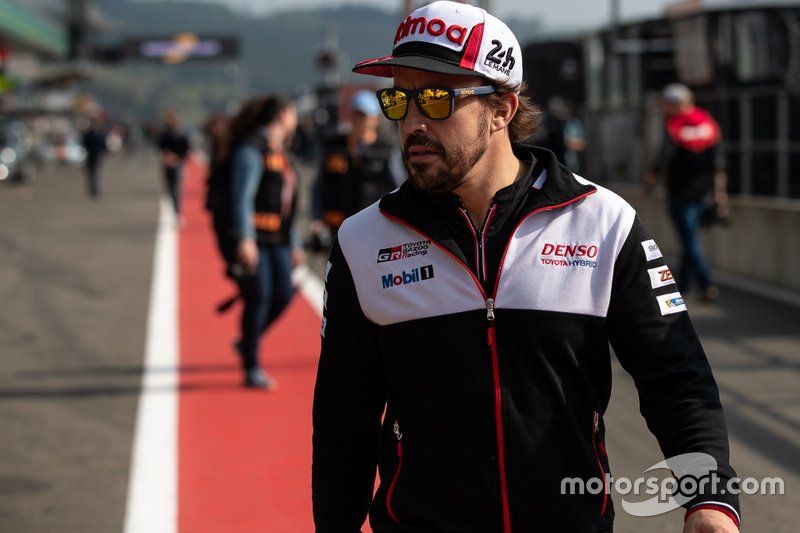
Fernando Alonso
Photo by: Paul Foster
While the rapid exits of Audi and Porsche spelled the end of LMP1’s golden days, Toyota helped sustain interest in the championship by signing two-time Formula 1 champion Fernando Alonso to its driver roster. Although Alonso’s move to sportscar racing was largely driven by McLaren-Honda’s competitive struggles and his growing disillusionment with F1, his arrival was nevertheless a major coup for Toyota and the WEC.
First Le Mans win

#8 Toyota Gazoo Racing Toyota TS050: Sébastien Buemi, Kazuki Nakajima, Fernando Alonso, #7 Toyota Gazoo Racing Toyota TS050: Mike Conway, Kamui Kobayashi, Jose Maria Lopez cross the finish line
Photo by: Sam Bloxham / Motorsport Images
Toyota finally ended its ‘Le Mans curse’ in 2018, claiming a dominant 1-2 win. While competition in LMP1 was severely limited compared to previous years, despite the arrival of several privateers, Toyota got everything right in the race to finally bag that win that had eluded it for decades. The win would lay the foundation of one of the most dominant periods in the series’ history.
Hypercar era

#7 Toyota Gazoo Racing Toyota GR010 – Hybrid Hypercar: Mike Conway, Charles Milesi
Photo by: Toyota Racing
Another key moment for Toyota was the rollout of the GR010 Hybrid, marking Toyota’s entry into WEC’s new Hypercar era. While most of its rivals didn’t (re)join the championship until 2023, Toyota was present from 2021 onwards to set the benchmark for manufacturers drawn by the new LMDh and LMH regulations.
2013 Le Mans winning streak ends

#8 Toyota Gazoo Racing Toyota GR010 – Hybrid of Sebastien Buemi, Brendon Hartley, Ryo Hirakawa
Photo by: JEP / Motorsport Images
After five consecutive victories, Toyota’s dominance at Le Mans was finally broken in 2023 as Ferrari triumphed with the 499P. Although Ferrari had a quicker car, Toyota continued to challenge for victory until the closing stages, with Ryo Hirakawa putting up a valiant fight until he went off at Arnage.
We want your opinion!
What would you like to see on Motorsport.com?
– The Motorsport.com Team
Disclaimer : This story is auto aggregated by a computer programme and has not been created or edited by DOWNTHENEWS. Publisher: motorsport.com