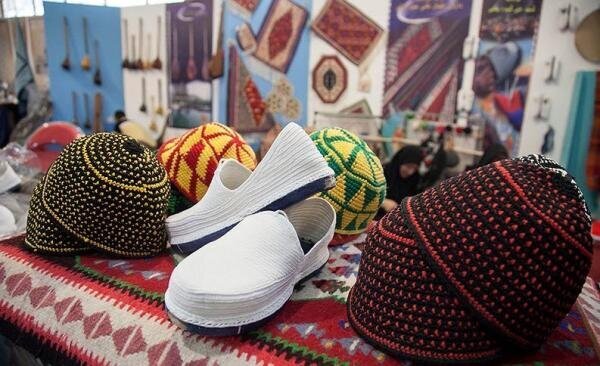
TEHRAN- Nearly 50 handicraft artists and practitioners in Iran’s western Kermanshah province have attended a training session on exporting their products to Iraq, as part of efforts to expand international markets for locally made traditional crafts.
The workshop, titled “Handicraft Exports to Iraq,” was organized by the Handicrafts Department of the Kermanshah Cultural Heritage, Tourism and Handicrafts Office in cooperation with Madaen International, an export accelerator company, CHTN reported on Friday.
Amin Kogani, deputy head of handicrafts in Kermanshah province, said the development of new markets and sales channels for handicrafts was among the department’s main priorities.
He noted that Iraq, due to its geographical proximity and existing market potential, offers promising opportunities for Kermanshah’s artisans to introduce their products to international customers.
During the session, participants learned about the characteristics and potential of Iraq’s handicrafts market, marketing and sales strategies, requirements for entering foreign markets, and practical procedures for exporting their products to the neighboring country.
Kogani emphasized that producing high-quality handicrafts alone was not sufficient to ensure success in international markets. Artisans also need to understand their target markets, consumer preferences, marketing techniques, packaging standards, sales channels and export regulations.
He added that specialized training sessions could strengthen the commercial knowledge of artisans and producers while helping bridge the gap between production and access to markets.
The provincial handicrafts official said the department sought to support both the production of traditional crafts and the preservation of their authenticity, while creating more opportunities for local artisans to promote and sell their work in domestic and international markets.
He described Iraq not merely as a nearby destination for Kermanshah’s handicrafts, but also as a potential gateway for expanding exports and introducing the province’s artistic and cultural capabilities to a wider audience.
The workshop also focused on practical ways for artisans to enter the Iraqi market, enabling participants to pursue marketing, sales and export opportunities with a better understanding of the requirements involved.
The initiative reflects broader efforts to strengthen the commercial capacity of Iran’s handicrafts sector by combining traditional production skills with professional marketing and export training.
Iran is home to a rich variety of handicrafts shaped by its diverse regional cultures, centuries-old artistic traditions and locally available materials. Persian carpets and kilims, pottery and ceramics, metalwork, woodcarving, traditional textiles, enamelwork, miniature painting and inlaid woodwork are among the country’s best-known crafts. These products represent not only artistic skills passed down through generations but also an important part of Iran’s cultural heritage and creative economy.
The handicrafts sector has considerable potential to generate employment, support small businesses and create income opportunities, particularly for women and rural communities. Unlike many industrial products, traditional crafts often rely on specialized skills and distinctive regional designs, giving them cultural and artistic value in international markets. Expanding their commercial reach can therefore contribute both to economic development and to the preservation of traditional knowledge.
Export development, however, requires more than producing distinctive and high-quality goods. Access to international markets depends on identifying customer preferences, adapting product presentation to different markets, ensuring suitable packaging and shipping, developing recognizable brands and establishing reliable distribution channels. Digital marketing and e-commerce can also help artisans reach overseas customers directly, reducing their dependence on traditional intermediaries.
Neighboring countries, including Iraq, offer potential opportunities for Iranian handicrafts because of geographical proximity and longstanding cultural and commercial connections. For provinces such as Kermanshah, these links can provide a starting point for developing cross-border trade, establishing business partnerships and introducing local products to new customers. Training artisans in export procedures, pricing, market research and international sales can help turn this potential into sustainable business opportunities.
Strengthening cooperation between handicraft producers, export companies, trade organizations and cultural institutions could further improve the sector’s competitiveness. By combining the authenticity of traditional Iranian craftsmanship with modern business practices, Iran can broaden the international reach of its handicrafts while supporting artisans, preserving cultural heritage and creating new sources of income.
SAB/
Disclaimer : This story is auto aggregated by a computer programme and has not been created or edited by DOWNTHENEWS. Publisher: tehrantimes.com