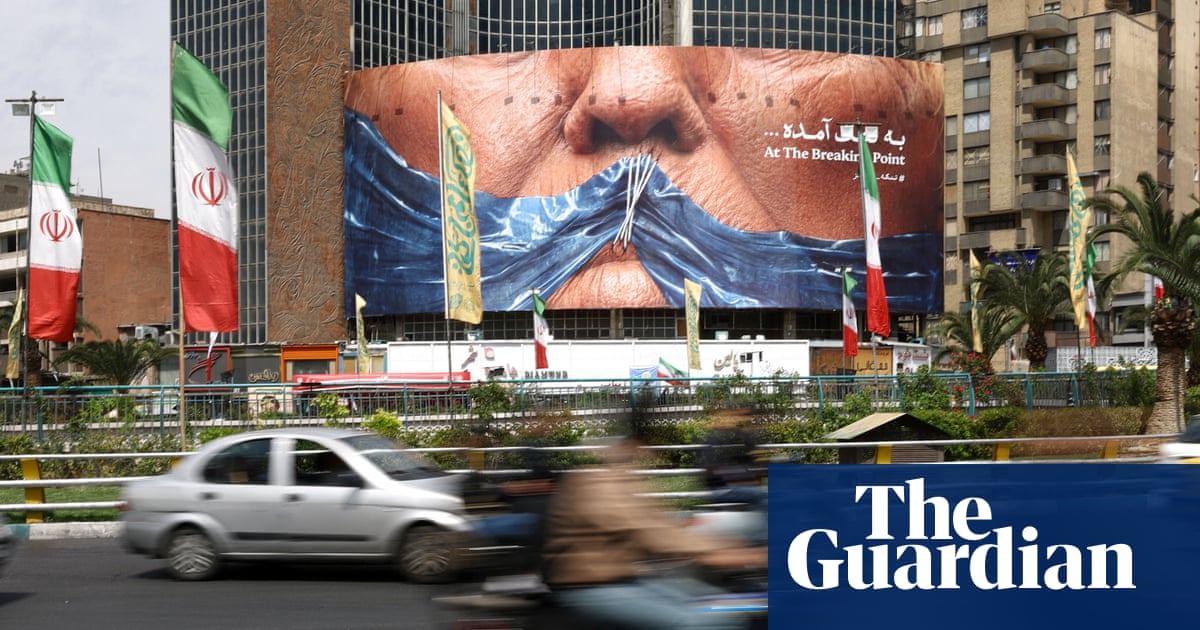
Donald Trump has said he is reviewing the latest peace proposal from Tehran, but cast doubt on the prospect of a diplomatic breakthrough by claiming Iran had not yet “paid a big enough price” for its past wrongs.
Trump’s remarks came amid growing speculation over the possibility of another round of US strikes against Iran aimed at forcing concessions, including a halt to the country’s nuclear programme.
Israeli press reports quoted senior military officials as saying they were preparing for possible US strikes on Iran, and the likelihood that Tehran would hit back against Israel.
A senior Israeli officer who briefed reporters on Friday said any peace agreement without a cessation of Iran’s uranium enrichment programme and the surrender of its stockpile of highly enriched uranium would be considered a failure.
In Iran, the military-backed Fars news agency quoted a senior official as saying a return to all-out conflict was “likely” four weeks after a ceasefire was brokered by Pakistan. Pakistani efforts to resume peace talks in Islamabad, after a first round broke up without agreement, have failed as each side set preconditions that the other refused to fulfil.
Asked on Saturday about the possibility of renewed hostilities, Trump said it was possible, adding: “If they misbehave, if they do something bad, but right now, we’ll see.”
While issuing threats of a return to bombing, Trump has also argued to Congress that the ceasefire meant hostilities had “terminated” in an effort to claim the administration is not obliged to seek congressional approval for military operation by a legal deadline of 60 days from the start of the war.
The suspension of enrichment for a number of years, and the dilution or export of the stockpile, had been on the table in US-Iranian negotiations that had started when Trump launched an attack on Iran on 28 February alongside Israel’s prime minister, Benjamin Netanyahu.
The war has led to an additional crisis as both sides have imposed parallel blockades of the strait of Hormuz, the gateway for a fifth of the world’s oil and gas supplies, as a means of exerting economic pressure to gain concessions, with dire implications for energy prices and the global economy.
Iran presented a new 14-point proposal to the US via Pakistan on Friday, with a reported focus on the lifting of the blockades and a new mechanism for managing the strait. Iranian press reports portrayed this as a comprehensive peace plan to be implemented within 30 days, rather than just a ceasefire. It also included the payment of compensation to Tehran for war damage, the lifting of sanctions and cessation of hostilities on all fronts, including in Lebanon, where Israel continues to exchange fire with Hezbollah despite a ceasefire having been declared by Trump. On Sunday, Israel ordered thousands of Lebanese people to leave villages in southern Lebanon.
The US president told reporters on Saturday that he had not yet seen the details of the new Iranian proposal, but would review the full text that day. Shortly afterwards, he posted a comment on social media saying he “can’t imagine that it would be acceptable in that they have not yet paid a big enough price for what they have done to Humanity, and the World, over the last 47 years”.
Trump had already rejected an Iranian proposal, which was also Hormuz-focused, earlier in the week. His readiness to keep up a US blockade on all shipping using Iranian ports seriously complicates a planned visit later this month to China, Iran’s biggest customer for oil, accounting for 80% of its exports, and representing about 13% of China’s oil imports.
The intelligence wing of Iran’s Islamic Revolutionary Guards Corps issued a statement via state television on Sunday, which said: “Trump must choose between an impossible operation or a bad deal with the Islamic Republic of Iran”. It also cited a “shift in tone” from China, Russia, and Europe towards Washington and what it called Iran’s own “deadline” on the blockade. It was unclear what deadline was being referred to.
The US has threatened to tighten its blockade by threatening to impose sanctions against shipping companies found to have made payments to Tehran to move their cargoes through the strait.
Rising petrol prices and a slowing global economy also pose a political threat to Trump as the US approaches congressional elections in November. A Democratic win in one or both chambers would weaken his presidency. Trump has so far shrugged off domestic concerns as he has become increasingly aggressive on the world stage – towards traditional adversaries and allies alike.
Trump has signalled he is prepared to escalate a showdown with Germany over critical remarks about the Iran war made by the country’s chancellor, Friedrich Merz. The Pentagon was reportedly taken by surprise by Trump’s announcement on social media that troops would be redeployed, but on Friday announced 5,000 of its roughly 40,000 troops in Germany would be withdrawn. The next day, Trump told reporters: “We’re going to cut way down. And we’re cutting a lot further than 5,000.”
He did not provide a reason for the redeployment, which would trigger resistance from Congress if it took troop levels in Europe below a minimum level stipulated by the legislature late last year. The congressional lower limit of 76,000 permanently stationed and temporarily deployed troops was imposed after the administration withdrew a brigade from Romania, and earlier threats from Trump to pull troops out of Germany and other European countries.
The Republican chairs of the Senate and House armed services committees criticised the proposed withdrawal from Germany, issuing a statement saying it “risks undermining deterrence and sending the wrong signal to Vladimir Putin”. Rather than being withdrawn from Europe, the troops should be moved further east towards Russia, they said.
Disclaimer : This story is auto aggregated by a computer programme and has not been created or edited by DOWNTHENEWS. Publisher: theguardian.com