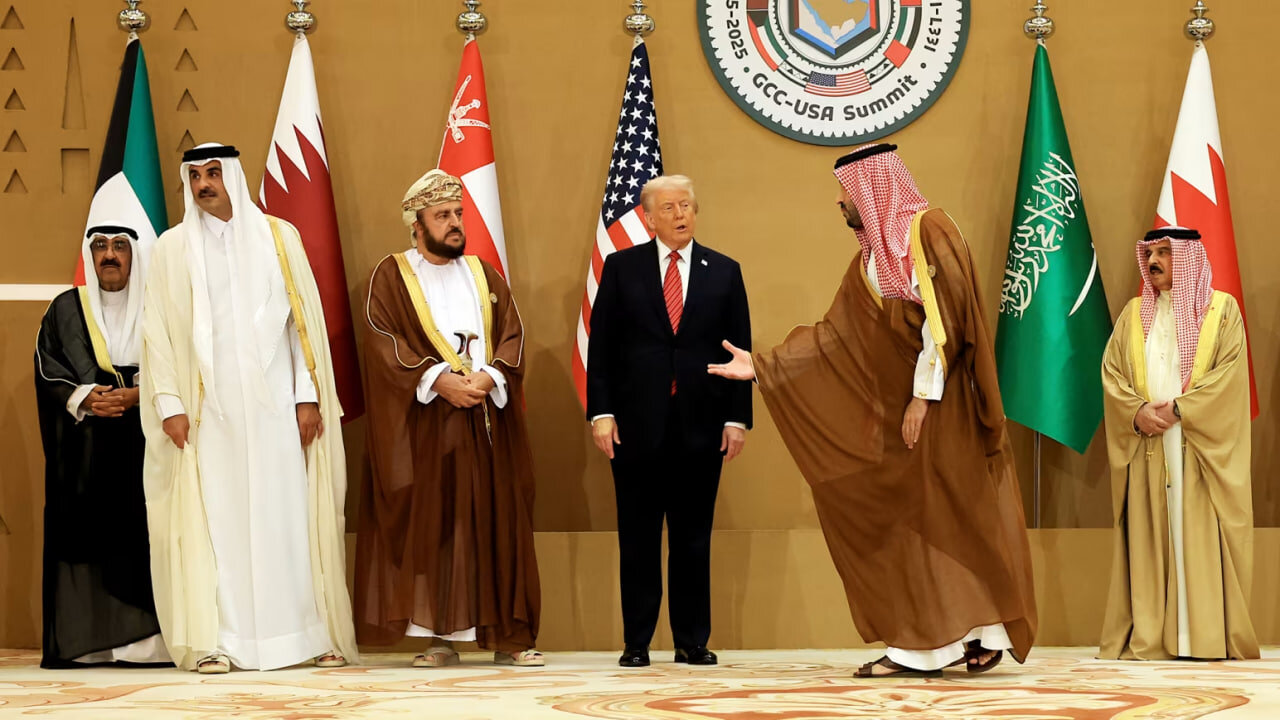
TEHRAN — Democrats who won both chambers of Congress on Nov. 3 have told Saudi Arabia, the United Arab Emirates and Qatar to expect investigations into the money their governments and state-linked investors have sent the Trump family.
The warning carried a threat, The Washington Post reported. Governments that stonewall risk their standing in Washington.
They are expected to stonewall anyway. Diplomats told the Post that the documents lawmakers want most, private messages between royal courts, Trump family executives and administration officials, are the ones the Arab monarchies least want public.
An Emirati stake and a chip deal
Four days before Trump’s second inauguration, Aryam Investment 1, an Abu Dhabi vehicle backed by Tahnoon bin Zayed al-Nahyan, agreed to pay $500 million for 49 percent of World Liberty Financial, the crypto firm run by Trump’s sons and Zach Witkoff, son of envoy Steve Witkoff.
The Wall Street Journal reported that Eric Trump signed the agreement. Half the price was due upfront, and about $187 million of that went to Trump family entities, at least $31 million to Witkoff-linked ones.
Tahnoon is the UAE’s national security adviser, the president’s brother, and chairman of G42, an AI company that wanted American chips.
It got them. Weeks before the administration announced a framework allowing up to 500,000 advanced chips a year, Tahnoon’s MGX used World Liberty’s USD1 stablecoin to close a $2 billion investment in Binance.
The New York Times reported that Steve Witkoff pushed for chip access while the two families were landing the crypto money.
Senate Banking Committee Democrats, led by Elizabeth Warren, counted at least 10 favorable U.S. actions after the investment in a June report.
Democrats cited $1.4 billion in arms sales and approval of 35,000 advanced chips for G42. Warren calls the whole arrangement “corruption, plain and simple.” Sen. Chris Murphy of Connecticut calls it “brazen, open corruption.”
A $400 million jet
Qatar’s Boeing 747-8, valued at about $400 million, went to the Pentagon, and “War” Secretary Pete Hegseth accepted it in May 2025.
After a rushed, taxpayer-funded refit by L3Harris in Texas, it flew as Air Force One for the first time in early Jul. 2026.
Yet the rollout quickly turned humiliating. After a Jul. 8 NATO summit in Ankara, supposed security concerns over the aircraft’s lack of standard military defenses forced the Secret Service to sideline the Qatari jet.
Trump had to board the older Air Force One for the television cameras, then slip out inside an airport catering truck to reach a smaller military transport. He flew covertly to England on that smaller plane, while the gifted jumbo jet was bypassed and later pulled offline for further upgrades.
Democrats called the transfer bribery and introduced legislation to block $1.9 billion in arms sales to Doha.
Trump has said for more than a year that the plane will end up at his presidential library. ABC reported that ownership would pass to the library foundation shortly before he leaves office.
Sen. Chuck Schumer has pointed to a $5.5 billion resort and golf project Eric Trump signed in Qatar, and to Attorney General Pam Bondi’s earlier lobbying for Doha. A federal ethics filing lists a $5.25 million license fee from a planned Doha golf resort.
From Kushner to Riyadh
Saudi Arabia’s “Public Investment Fund” gave Jared Kushner’s Affinity Partners $2 billion in 2021, six months after he left the White House and over objections from the fund’s own advisers about his inexperience.
The relationship has paid. A March letter from Rep. Robert Garcia and Sen. Ron Wyden estimated that Affinity collected more than $60 million in foreign fees in 2025, $39 million of it from Saudi Arabia, and that Kushner has earned more than $110 million in Saudi fees since 2021.
Affinity also sits inside the $55 billion Electronic Arts buyout that closed Aug. 4. The Saudi fund holds about 93 percent of the company, Affinity about 1 percent.
Kushner is also “an unpaid envoy,” which spared him the financial disclosure an official role requires. CNN reported that Affinity was the largest shareholder in Israel’s Phoenix Financial, a 7.4 percent stake worth more than $1 billion, while he negotiated over Gaza.
Phoenix held at least $265 million in the arms maker Elbit Systems.
The Trump Organization’s latest ethics filing reports about $38 million in licensing fees from Persian Gulf developers, including roughly $21.9 million from Saudi-based Dar Al Arkan and $12.5 million from Dubai’s Damac.
Projects include a Trump tower, a $1 billion Trump Plaza in Jeddah, and two residential communities near Riyadh.
Policy is in the mix too. The administration signed a civil nuclear agreement with Riyadh in July and sent it to Congress Aug. 24.
It supposedly allows enrichment up to 5 percent after joint studies, potentially 20 percent after more, and does not require Saudi Arabia to accept the stricter IAEA inspection protocol.
After congressional objections, Trump posted that approval depends on Saudi Arabia joining the so-called Abraham Accords. That condition appears nowhere in the text.
What Congress can do
Subpoenas cannot reach foreign governments. They reach bankers, lawyers, Trump Organization executives, and federal agencies.
One Democratic aide told the Post that lawmakers will be “less likely to want to be full partners with a country that we believe is involved in corrupting our system.”
Donald Sherman of Citizens for Responsibility and Ethics in Washington said investigators want messages that tie the money to decisions. “It’s one thing to intuit, it’s another thing to know,” he said.
Murphy, who visited the Persian Gulf in October, said he told Crown Prince Mohammed bin Salman (MBS) and Qatar’s emir that “our foreign policy has been corrupted.”
The Intercept reported in March 2018 that Saudi Crown Prince Mohammed bin Salman boasted to confidants that Jared Kushner was “in his pocket” after Kushner reportedly shared sensitive intelligence on Saudis disloyal to the prince.
A Democratic-led House committee opened an Affinity inquiry in 2022, before Republicans took the chamber.
The timing is awkward for Arab capitals in the Persian Gulf. The war on Iran is in its ninth month, and the Pentagon is rethinking its regional footprint.
Allison Minor, a former National Security Council official, says the Persian Gulf states face “an uphill battle” with Democrats, who also hold grievances over Sudan and Yemen.
The Arab monarchies may refuse to cooperate. Their ruling families have little interest in releasing communications that could expose how favors are requested, granted, or priced.
But refusal carries consequences. Congress can slow arms sales, restrict security assistance, scrutinize export licenses, and make future agreements harder to approve.
Disclaimer : This story is auto aggregated by a computer programme and has not been created or edited by DOWNTHENEWS. Publisher: tehrantimes.com