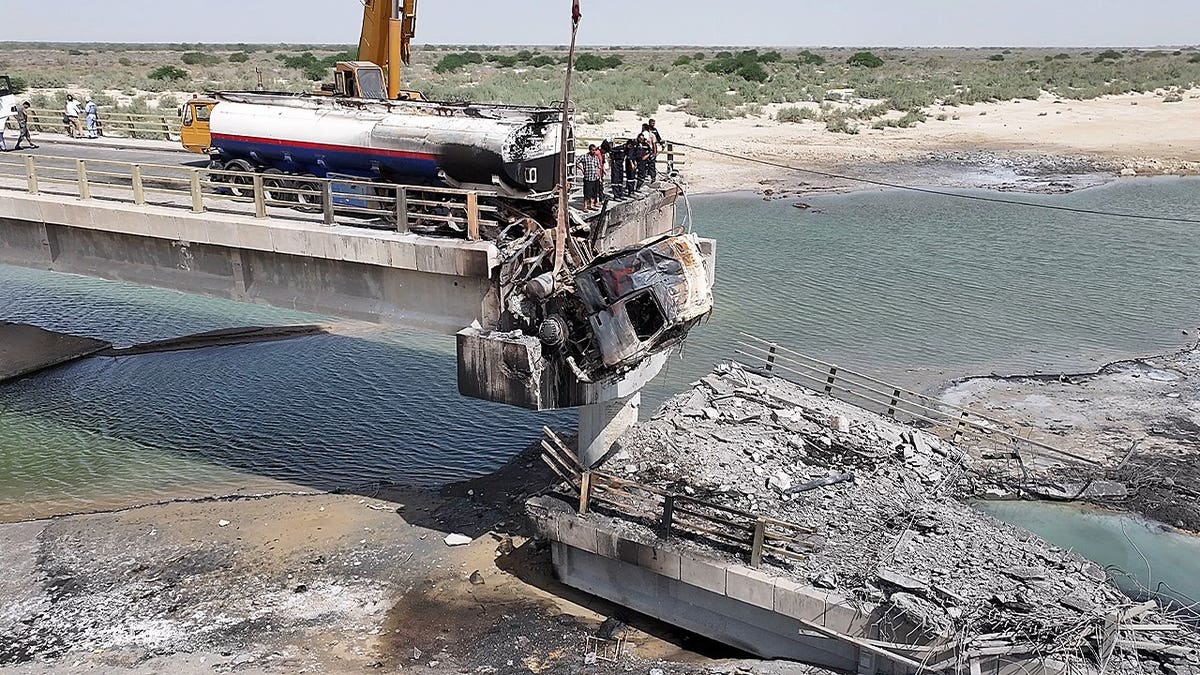
Trump warns Iran of US retaliation
President Donald Trump delivers a strong warning to Iran, stating the U.S. will bomb bridges or power plants if Iranian forces attack ships in the Strait of Hormuz. This follows ongoing U.S. strikes on Iranian military sites.
NEWYou can now listen to Fox News articles!
Nearly five months after launching a sweeping campaign against Iran’s nuclear, missile, naval and proxy capabilities, the Trump administration is now fighting to reopen the Strait of Hormuz while negotiations have yet to produce a permanent settlement.
The administration says its renewed strikes have a clear immediate objective: “making Iran pay.” Less clear is what Iran must do to end the strikes — or what conditions would allow the U.S. to step back from a growing military commitment in the region.
President Donald Trump has threatened to expand the campaign to Iran’s nuclear sites, bridges, power plants and other infrastructure.
ARMY IDS 2 VICTIMS KILLED IN JORDAN AIR BASE ATTACK; TRUMP: IRAN WILL PAY ‘MANY TIMES OVER’
In response to questioning on the end goals in Iran, a U.S. official said: “Right now, the President is focused on making Iran pay for their violations of the MOU and their continued acts of terrorism in the Strait of Hormuz,” referring to the memorandum of understanding between Iran and the United States.
“In addition, the President will make Iran pay for the recent deaths of U.S. soldiers,” the official said.
The Trump administration says its renewed strikes have a clear immediate objective: “making Iran pay.” (Morteza Akhoundi via Getty Image)
“These devastating blows will continue until the President deems otherwise, but talks between our countries are continuing,” the official said. “President Trump has all of the cards and all options at his disposal, and Iran can never possess a nuclear weapon.”
The response defined the immediate campaign as punishment for Iran’s actions but did not identify any condition Tehran could meet to halt the strikes beyond Trump deciding that the punishment had been sufficient. Follow-up questioning by Fox News Digital went unanswered.
STEVE FORBES URGES TRUMP TO KEEP THE STRAIT OF HORMUZ OPEN AT ALL COSTS
When Trump launched its military Operation Epic Fury mission Feb. 28, the White House laid out four sweeping objectives: preventing Iran from obtaining a nuclear weapon, destroying its ballistic missiles and production capacity, annihilating its navy and severing its support for terrorist proxies.
The administration declared those military objectives achieved in April. But Iran retained enough capability to close the Strait of Hormuz, attack commercial shipping and target U.S. forces and allies across the region.
The administration’s immediate focus is now the strait. U.S. Central Command said Thursday that its latest strikes targeted Iranian maritime capabilities, coastal surveillance sites, air defenses and missile and drone facilities to degrade Tehran’s ability to attack commercial vessels.
TRUMP SEEKS $672M TO STOP IRANIAN NUKES AS NEGOTIATORS WEIGH FATE OF URANIUM STOCKPILE
Secretary of State Marco Rubio has framed the current campaign as an effort to prevent Iran from establishing a “dangerous precedent” by controlling an international waterway, while maintaining that Washington remains open to diplomacy. He said Iran must stop attacking commercial ships and reopen the strait before the United States changes its behavior.
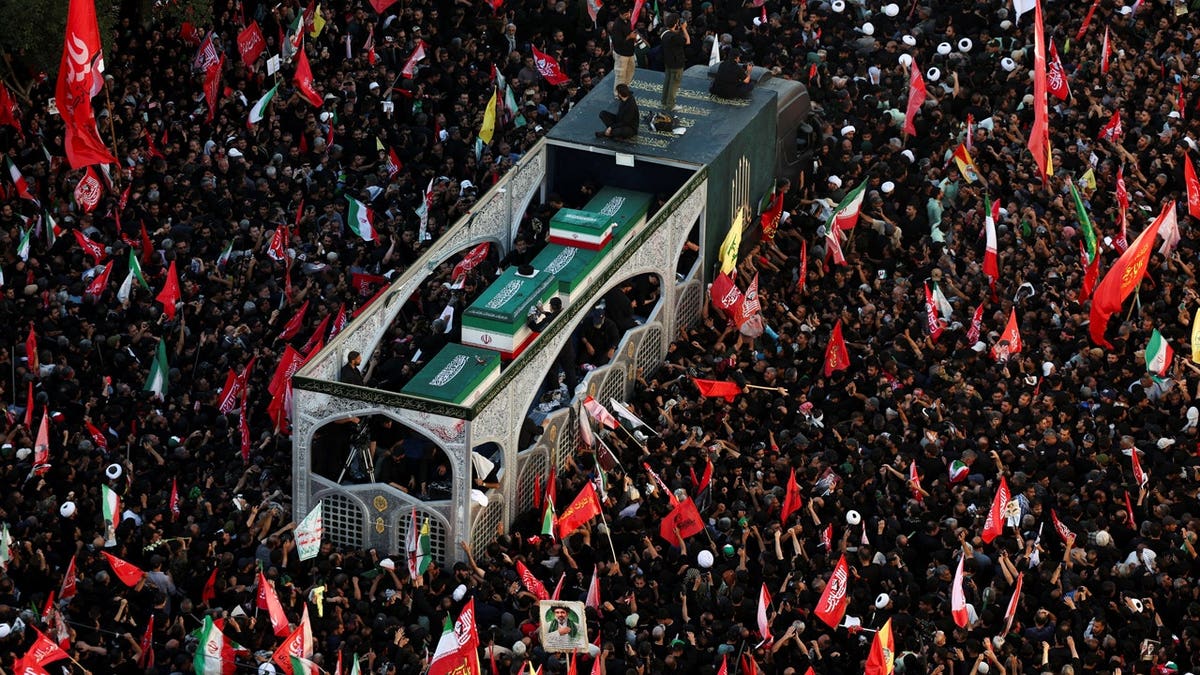
Mourners gather around a vehicle transporting the coffin of Iran’s late Supreme Leader Ayatollah Ali Khamenei, who was killed on February 28 in Israeli and U.S. airstrikes, and coffins of his family members, on the day of his burial, in a culmination of a mass funeral, in Mashhad, Iran, July 9, 2026. (Majid Asgaripour/West Asia News Agency, via REUTERS)
“Their behavior has to change in order for ours to change,” Rubio said Sunday.
Yet recent strikes have expanded beyond Iran’s maritime capabilities to include bridges and other infrastructure as Trump continues threatening nuclear facilities, raising new questions about how the widening target set fits into the administration’s broader strategy.
Meanwhile, the final nuclear agreement envisioned under the June memorandum of understanding has not materialized, even as the White House says talks between Washington and Iran are continuing. The memorandum had envisioned an agreement within 60 days, but renewed fighting has left its timing and prospects uncertain.
Trump has continued threatening Iran’s nuclear infrastructure, including the deeply buried Pickaxe Mountain facility. But he has also appeared to soften one of the administration’s original demands, saying in June that Iran could retain some ballistic missiles in proportion to neighboring countries.
The administration has not clarified whether the original missile objective was achieved, relaxed as part of negotiations or remains part of a future settlement, nor whether ending Iran’s support for proxies remains a condition for victory.
Publicly, the renewed campaign has a clear immediate military task — protecting shipping and preventing Iran from asserting control over Hormuz — but the connection between that mission, the stalled nuclear process and Trump’s threats to widen the war remains unexplained.
Eighteen U.S. service members have been killed since the war began, while Secretary of War Pete Hegseth told lawmakers Tuesday that the campaign has cost an estimated $37.5 billion.
Retired Air Force Brig. Gen. Robert Spalding, a senior fellow at the Hudson Institute, a conservative think tank, who served as a senior strategy official in the first Trump White House, argued that the campaign can still be understood around one overriding objective.
“I think the end goal is to prevent them from having a nuclear weapon,” Spalding told Fox News Digital. “The goal is very clear. It is: How do you want to go about getting to those goals, and then what are you willing to pay to achieve them? That’s the decision that has to be made.”
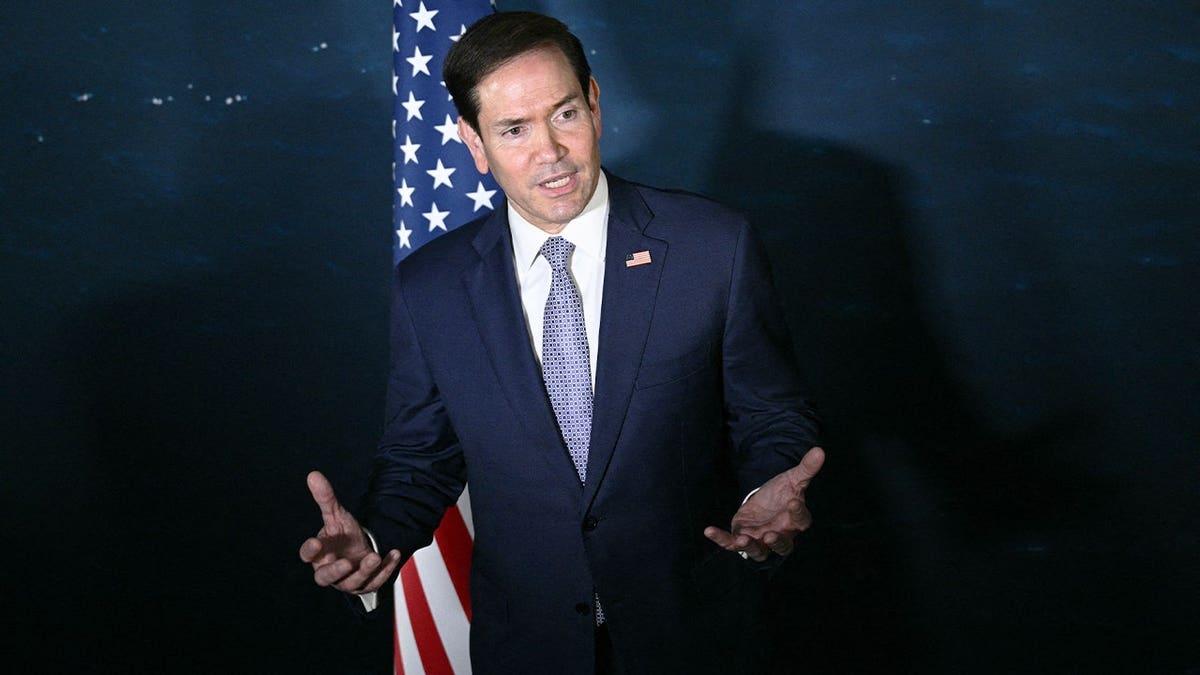
Secretary of State Marco Rubio has framed the current campaign as an effort to prevent Iran from establishing a “dangerous precedent” by controlling an international waterway, while maintaining that Washington remains open to diplomacy. (Brendan SMIALOWSKI / POOL / AFP via Getty Images)
On Hormuz, Spalding predicted that protecting commercial shipping could require prolonged U.S. presence, comparing it to Operations Northern and Southern Watch, the yearslong U.S.-led enforcement of no-fly zones over Iraq.
“I don’t think that we’re leaving the area anytime soon,” Spalding said.
He described that potential mission as “almost an airborne and seaborne occupation of the strait and the Gulf” intended to preserve the free flow of international shipping.
Such a mission could give the current strikes a defined military purpose, but it would not necessarily resolve the nuclear negotiations, eliminate Iran’s remaining leverage or produce a political settlement. It could instead leave American forces enforcing access to Hormuz for an extended period while the broader conflict remains unresolved.
Ali Vaez, Iran project director at the International Crisis Group, said the administration’s changing public emphasis reflects the absence of a coherent strategy connecting its military actions to an achievable end state.
“The administration does not seem to have a clear strategy,” Vaez told Fox News Digital. “It’s been a moving goalpost.”
Vaez also argued that the conflict has given Iran a potent new form of leverage: the demonstrated ability to choke shipping through Hormuz and impose economic pain on the United States. He described Iran’s control over the strait as a “weapon of mass destruction.”
“For more than four decades, the United States has been able to coerce the Iranian regime economically,” Vaez said. “The Iranians never had the possibility of retaliating in kind, of putting pressure on the pocketbook of every American citizen.”
The U.S. is now trying to inflict enough pain on Iran that it abandons its insistence on controlling the strait, according to Vaez. But Iran views that control as its most valuable remaining source of leverage and one it cannot surrender without weakening its position in any future negotiations, he argued.
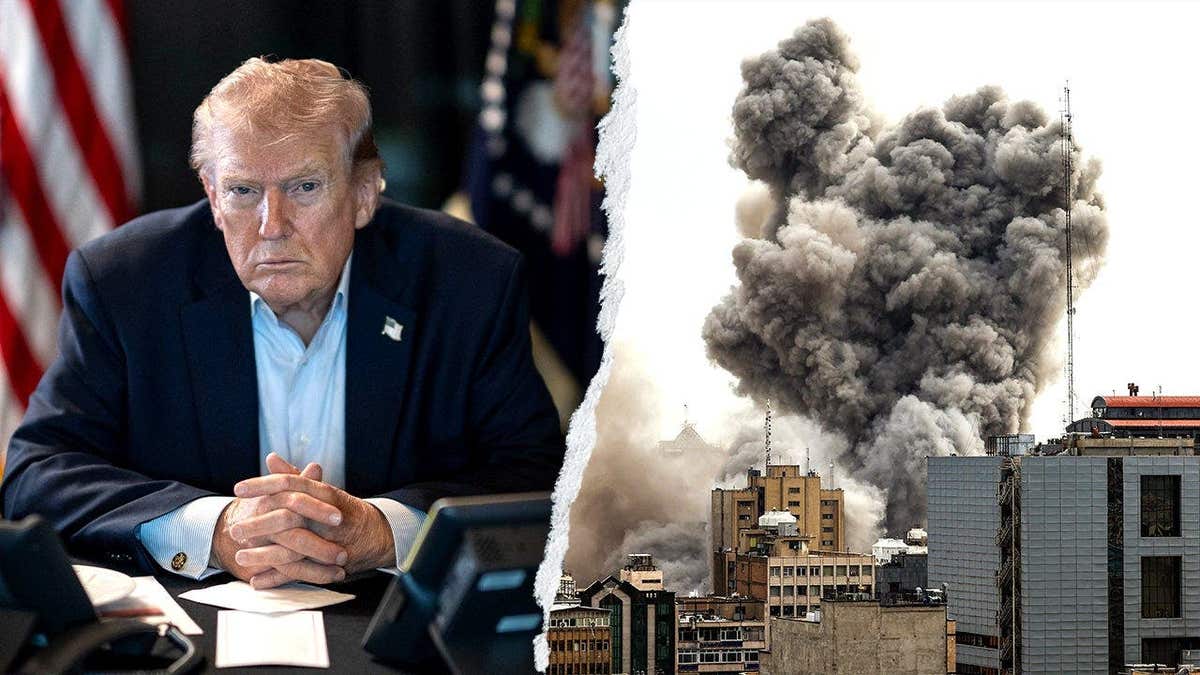
President Donald Trump confirmed the U.S. launched strikes on Iran on Saturday, Feb. 28, 2026. (The White House via X Account/Anadolu via Getty Images/Contributor/Getty Images)
“We are in a zero-sum situation,” Vaez said. “The U.S. is trying to remove a tool of leverage from the hands of the Iranians that they believe is essential to their survival.”
CLICK HERE TO DOWNLOAD THE FOX NEWS APP
Although the United States retains overwhelming military superiority, Vaez argued that neither side has been able to deliver a decisive blow. Washington can continue inflicting damage, he said, while Tehran has a greater willingness to absorb it because it views the conflict as a struggle for the regime’s survival.
“There is no military solution to resolving the problem in the strait,” Vaez said. “After much more death and destruction, I think both sides would return to the same logic that led them to agree to the MOU in the first place—which is that neither side is really able to deliver a knockout blow to the other.”
Disclaimer : This story is auto aggregated by a computer programme and has not been created or edited by DOWNTHENEWS. Publisher: moxie.foxnews.com