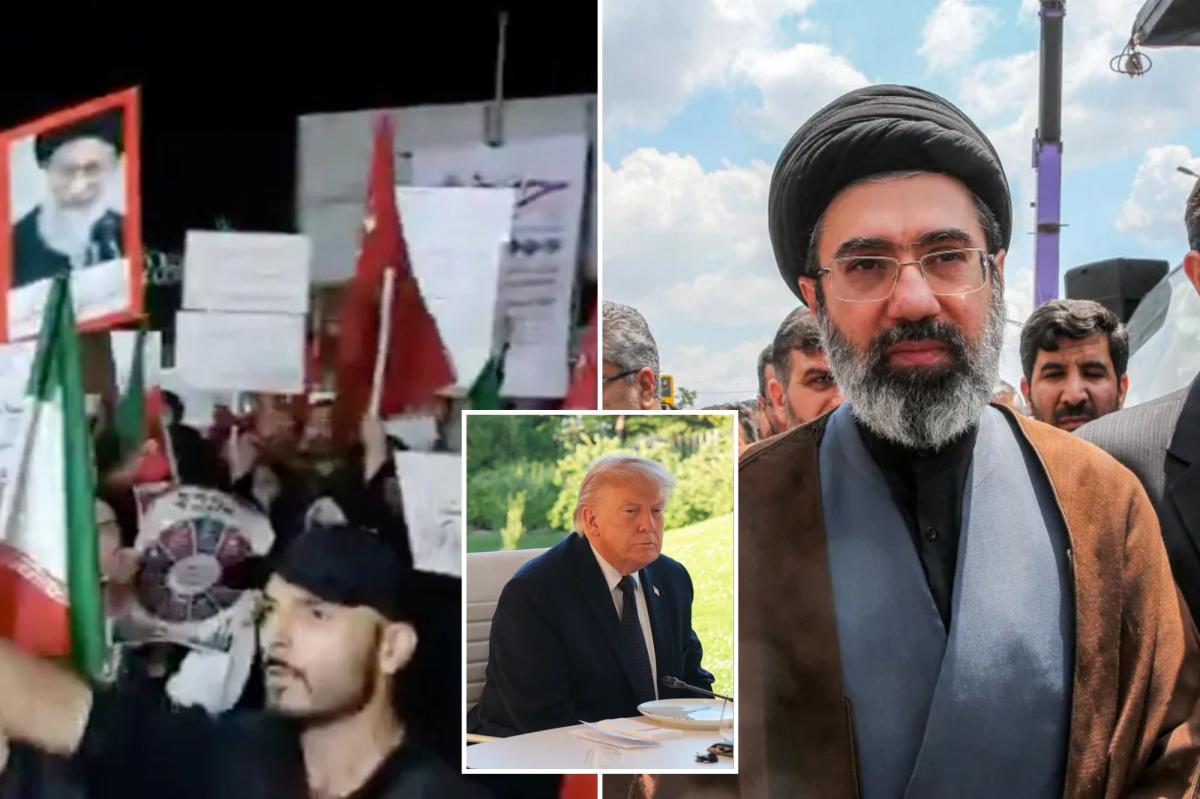
Many Iranians who stood against the regime are left feeling frustrated and angry as details emerge of the peace deal between Washington and Tehran — worrying that the Islamist hardliners are now more powerful and entrenched than ever.
President Trump signaled that the US was going to war with Iran’s regime partially over the deaths of thousands of anti-regime protesters. “HELP IS ON ITS WAY,” he posted on Truth Social on Jan. 13.
“They are frustrated that the regime is being left in place, unchecked, and soon to receive economic relief from the United States,” Khosro Isfahani, the research director for the Washington-based National Union for Democracy in Iran (NUFDI) think tank, told The Post.
“They fear this will embolden the Islamic Republic and allow it to redirect the frustration and defeat it suffered at America’s hands into rage against unarmed, innocent Iranians,” he added.
The feeling was echoed by Hessam Rahimian, founder of the Arizona-based Iranian Liberty Foundation group, who said he was “unhappy, upset, [and] angry” by the deal that was made over the weekend.
“It’s devastating. There was a hope for about 30 days for Iranian people, that they’re going to have an opportunity to be free,” Rahimian told local AZ Family.
Tens of thousands of protesters took to the streets in December and January to rail against sky-rocketing inflation, which had seen even basics like bread and meat become barely affordable for many in the nation of 93 million people.
The regime responded with horrifying violence — firing into crowds and killing up to 30,000 people, according to some estimates.
Many of those who survived, were tracked down and arrested — some tortured and sent to the regime’s horrific prisons, according to dissident groups and refugees.
Experts warn that should the war in Iran end as is, the Islamic Republic would have evidence to show its citizens that the regime cannot be toppled.
“The Iranian leadership could emerge from its most significant test in decades having demonstrated resilience, retained control, and shown a willingness to absorb substantial costs while preserving core regime interests,” said Danny Citrinowicz, a fellow at the Atlantic Council’s Middle East Programs.
“Such an outcome is likely to reinforce the confidence of the ruling elite rather than weaken it,” he added.
Maryam Rajavi, president-elect of the National Council of Resistance of Iran (NCRI) was more optimistic, saying the deal removes Iran’s ability to warmonger, but she added that any agreement must include an end to the execution of protesters, who have continued to be killed by the regime.
“I reiterate once again that any international agreement to end the war must include an end to the execution of political prisoners and the killing of protesters,” she said in a statement.
Frustration over the deal, however, goes both ways, with Iran’s hardliners reportedly upset that its negotiators caved too early and feel that the agreement puts Tehran directly under America’s influence, CNN reported
“We will effectively become a colony of the United States,” Parliament hardliner Mahmoud Nabavian said in an interview.
Pro-regime rallies in Tehran over the weekend also expressed discontent at top Iranian negotiators Abbas Araghchi and Mohammad Bagher Ghalibaf, saying it was their job to put together a deal that avenged slain Supreme Leader Ali Khamenei.
With both camps pushing at the extremes, Isfahani said that the future of Iran depends on what comes out of the Memorandum of Understanding.
“Both reactions get in the way of clear thinking. When it comes to this MOU, the responsible position is to wait and see what was actually written, what was agreed upon, and how it will be enforced,” he said.
“Real progress has been made in weakening the Islamic Republic, but the job is not done as long as the regime stands,” he added.
Disclaimer : This story is auto aggregated by a computer programme and has not been created or edited by DOWNTHENEWS. Publisher: nypost.com