Trump’s nuclear deal with Saudis jettisons longstanding US demands
-
Published
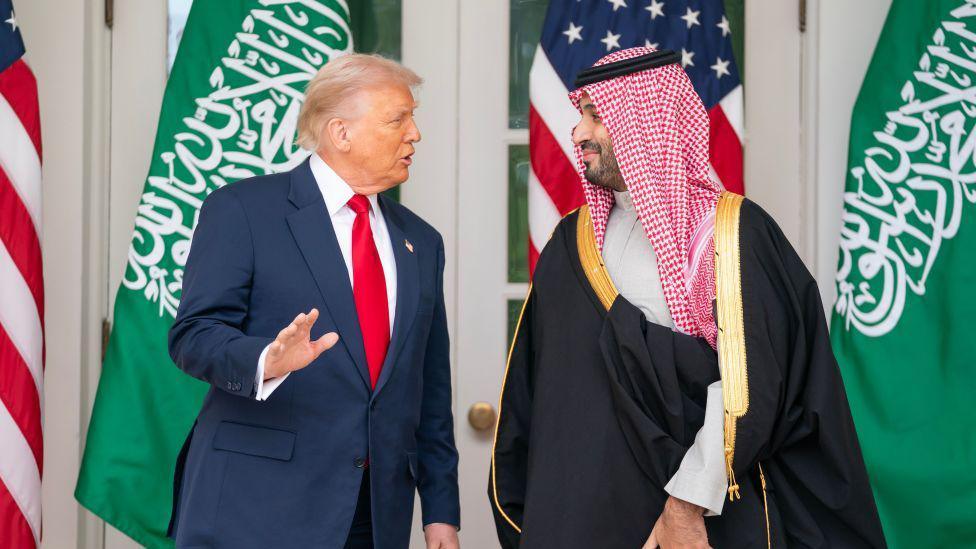
The Trump administration’s nuclear agreement with Saudi Arabia reversed a yearslong stance toward a key Middle East ally.
Past US presidents insisted that Saudi Arabia normalise relations with Israel in exchange for receiving American nuclear technology for civilian energy programmes.
President Donald Trump gave Saudi Arabia what it wanted without extracting concessions for Israel in return – and over objections from critics who argued that it could spark a nuclear arms race in the region.
The deal was the latest example of Trump jettisoning the traditional American approach to the Middle East, which centred on Israel and finding a two-state solution to the Israeli-Palestinian conflict.
In his second term Trump has focused primarily on strengthening America’s economic influence to compete with China and other rivals. Analysts said the nuclear pact with Saudi Arabia sent a signal that the US wants to keep regional allies in the fold even if it means angering Israel in the process.
“Countries in the Middle East want to develop their nuclear infrastructure and they’re going to do it even if the US is not involved. Washington at this point is recognising that,” said Yusuf Can, a Middle East expert at consulting firm Amena Strategies. With this nuclear deal, he added, “the US is basically saying you don’t have to work with China. You can work with us”.
-
US signs landmark nuclear deal with Saudi Arabia
-
Published2 hours ago
-
-
Tankers make sharp U-turns after Houthi shipping threat
-
Published20 hours ago
-
Transactional foreign policy has been a hallmark of Trump’s second term. The US has ratcheted up economic competition with adversaries like China and Russia in the Arctic and other parts of the world since Trump returned to office vowing to revive his “America First” approach to global affairs.
But signing a nuclear pact in the Middle East is an especially bold move that will raise tensions in a volatile region where the US is at war with Iran.
It represents a major victory for Saudi Arabia’s Crown Prince Mohammed bin Salman, who has sought a nuclear agreement with the US for years as part of a broader campaign to strengthen relations with the West.
The crown prince, known as MBS, said in 2018 that if Iran develops nuclear weapons then Saudi Arabia should be allowed to as well.
Details of the deal were not immediately released by the administration, but the pact reportedly does not include strict enforcement measures to block Saudi Arabia from developing a military nuclear programme in the future.
In that respect it differs from a 2009 nuclear cooperation agreement struck by the US and the United Arab Emirates which included strict inspections by the International Atomic Energy Agency (IAEA). Another key difference that critics of the Saudi deal are pointing to is that it reportedly allows them to enrich uranium themselves on their own soil.
To play this video you need to enable JavaScript in your browser.
This video can not be played
Even if Saudi Arabia doesn’t race to develop nuclear weapons right away, the potential ability to do so could still give the country a powerful deterrent force in the region, analysts said.
“It certainly helps lay the groundwork for nuclear weapons in the future,” said Imran Bayoumi, a resident fellow at the Atlantic Council think tank and former policy adviser at the US Defence Department.
The agreement will allow Saudi Arabia to diversify its energy sector and use nuclear power to meet rising electricity demands, energy experts said. Having nuclear power could eventually lessen Saudi Arabia’s reliance on oil, insulating it from volatilities in the global oil market, said Christopher Russo, an energy expert at the consulting firm Charles River Associates.
“Oil can be disrupted. You can bomb oil fields. Oil tankers can be stuck somewhere, as we’re seeing right now” in the Strait of Hormuz, Russo said. “Nuclear power is pretty self-contained.”
Saudi Arabia won’t reap the economic rewards anytime soon. It will likely take a decade if not longer for the country to build and open new nuclear power plants.
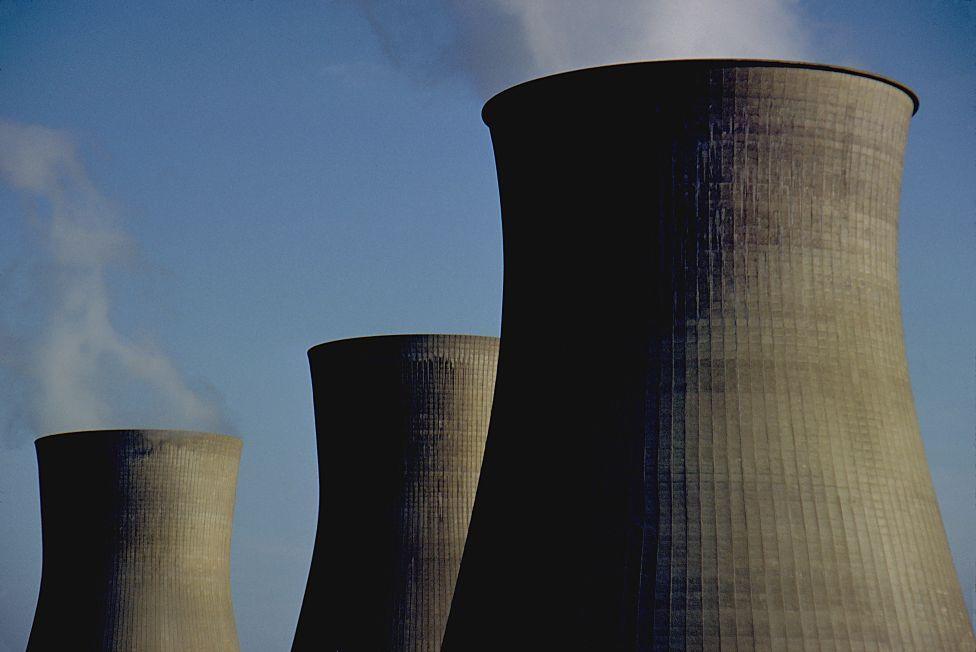 Image source, Getty Images
But the short-term political payoff is clear, as Saudi Arabia – already one of the most powerful states in the Gulf – further cements its status as a major force in the region. Moreover, Saudi Arabia struck the deal without having to recognise Israel or drop its demand that an eventual normalisation deal with Israel be tied to the creation of a Palestinian state.
That concession appeared to reflect a calculus by the Trump administration that a diplomatic breakthrough between Saudi Arabia and Israel isn’t likely to happen for some time. The countries were open to talks during the Biden administration, but negotiations stalled after the Israel-Hamas conflict in Gaza and the US-Israel war with Iran.
The timing for the administration’s announcement isn’t clearly explained. Officials did not say why the US has chosen to enter this agreement with Saudi Arabia now.
But the war with Iran likely played a part. Washington has sought to ease tensions with Saudi Arabia and other Gulf allies who have been targeted by Tehran since the start of the conflict. Saudi Arabia briefly denied the US access to Saudi airspace earlier in the war, and has pushed the US and Iran to de-escalate.
American companies will likewise benefit from the nuclear deal, though that also won’t happen overnight. Saudi Arabia will work with US-based firms to develop its civilian nuclear technology, opening a lucrative market for companies like Westinghouse that manufacture large-scale conventional nuclear reactors.
-
Why and how is US blockading Iranian ports in Strait of Hormuz?
-
Published30 April
-
-
‘What was their crime?’: BBC visits Iran school where strike killed 120 children
-
Published6 hours ago
-
Nevertheless the deal is already facing criticism in Israel and the US.
As news of the deal emerged on Wednesday, some Israeli politicians argued Saudi Arabia could become a new nuclear threat in the region. Israel is widely believed to have nuclear weapons, though it has not acknowledged so publicly, and it joined the US war with Iran over shared concerns about Tehran’s nuclear programme.
“A civilian nuclear program in Saudi Arabia [will] lead to a mad arms race across the entire Middle East,” Avigdor Lieberman, a member of the Israeli parliament and a former defense minister, said in a social media post.
Democratic lawmakers in Congress raised similar concerns.
“The deal really is a giveaway to the Saudis, and it’s only going to fuel further ambitions from Iran. It’s only going to further destabilise the region with Israel,” Democratic congressman Ro Khanna of California told the BBC. “It’s just not smart policy.”
US Energy Secretary Chris Wright said the agreement would boost the American economy and strengthen national security. Wright also said in a statement posted to social media that the US-Saudi pact would “uphold the highest standards of nuclear safety and nonproliferation.”
But the administration fuelled scepticism over the agreement by not immediately releasing more information about it on Wednesday. And perhaps in a telling sign, Trump did not preside over the signing ceremony making the deal official.
Trump attended the dignified transfer ceremony for four US service members who were killed in Iran, before holding a rally in Georgia where he argued that his policies were making the Middle East more stable than ever.
Disclaimer : This story is auto aggregated by a computer programme and has not been created or edited by DOWNTHENEWS. Publisher: BBC