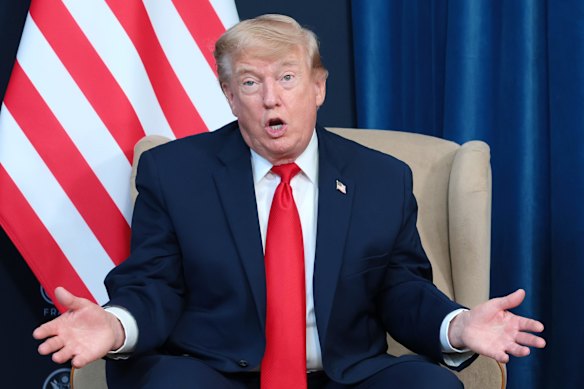
When the supposed leader of the free world refuses to recognise the possible dangers of AI as espoused by the heads of the very companies producing the AI products, Prime Minister Anthony Albanese is correct in his claim that the post-1945 international order doesn’t work any more (“‘No longer fit for purpose’: Albanese warns of world order upheaval”, September 24). Trump’s import taxes and tariffs went against the advice of economists, but his refusal to even discuss regulating AI’s capacity is clear evidence that he also is no longer fit for purpose. Currently, the Pied Piper of Mar a Lago is leading his Republican sycophants and toadies off a cliff. Hopefully, the American people will get out and vote at the midterm elections in force to restrict the damage this megalomaniac is doing to both his own people and the rest of the world. Peter Nash, Fairlight
Albanese recognises that the international landscape has changed dramatically, yet misses an opportunity to make a paradigm shift towards a more independent Australian foreign policy. Instead, he reaffirms that “our alliance with the United States is the anchor of Australia’s foreign policy”. It should not be. The United States has become a rogue nation, plunging the world into crisis through its disastrous war with Iran while remaining in denial about two of the gravest threats to humanity: climate change and the dangers posed by AI. It is time for Australia to join Canada and look towards like-minded liberal democracies in Europe to forge stronger alliances with them. Anchors may provide stability, but they can also drag down whatever remains tethered to them. Salvatore Sorbello, Campsie
One of the worrying features of AI is that since no one understands how it really works or how to control it, including the people who made it, you can blame almost anything on it and no one can reliably refute your assertion, allowing you to avoid responsibility for your negligence. Small wonder the scoundrels of industry and government are such big fans. Peter Fyfe, Enmore
Reports are that many Americans are already voting early, reluctant to arrive at polling booths where Donald Trump plans to install ICE agents in flagrant disregard of the US Constitution (“Iranian president vows not to surrender in defiant, historic UN speech”, September 24). It’s said that such high numbers already coming out in a country where voting is not compulsory signals a shift in support away from the Trump MAGA administration, consistent with polling throughout the country. If Trump thinks playing for time with Iran is a good strategy and making peace deals after the midterm elections is on the cards, he may have to think again because signs are his own time and his administration’s is fast running out. Frederick Jansohn, Rose Bay
Bruce Wolpe gives us some hope that the damage done by the Trump presidency can be repaired through a “reckoning that will occur” (“Trump’s ‘fake news’ ban backfires”, September 24). The wonder is that so many Americans have been taken in by Trump for so long, yet we are all paying the economic and social price. The hope is that, come the November midterms, people finally wake up to his bullying, selfishness, vanity and incompetence, and he loses control of Congress. Then again, given the contempt he’s already displayed for so many of the usual processes, I’m not counting on it. Adrian Connelly, Springwood
People pain
The RBA governor says the labour market is too tight and so the unemployment rate needs to increase (“Inflation tests RBA’s dearest asset”, September 24). The unemployment rate is just a number, but it has real-world implications – a few hundred thousand people losing their jobs, their financial security, possibly their houses, their ability to pay for school excursions or birthday presents, and facing higher rates of sickness, depression and suicide risk. Research on previous recessions shows some people never recover. Many carry lifelong disadvantage and poor health with the damage extending past the individual to their families, including their children. Meanwhile, a Labor government that claims to care about the people who put it in power refuses to lift an unemployment benefit that sits below the poverty line, or to reform the punitive, privatised JobSeeker system. If the RBA succeeds in increasing the unemployment rate, a whole new cohort of people will discover exactly how much they are personally being made to sacrifice to lower inflation. The media should report that in terms of people, not percentages. Cath Henshall, Bungonia
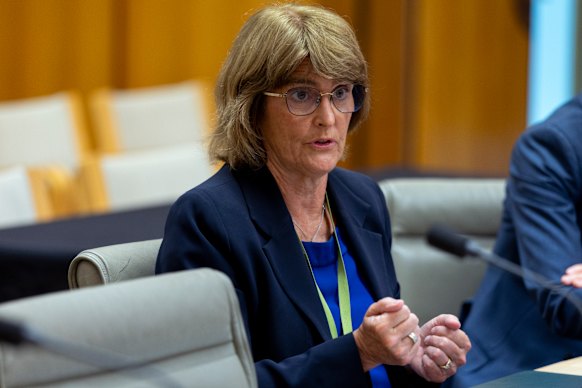
The RBA has practically no control over import prices. Other things equal, a rise in import prices implies a drop in living standards for our country as a whole. This effect is inescapable. What to do about it? The RBA is rather snookered – raising interest rates puts the burden squarely on borrowers and is actually a gift to bank shareholders and lenders, all of whom will be cheering for another rise next week. The RBA should again sit on its hands next week and await developments, especially the outcome of the September quarter CPI. It is, after all, not so wildly above its inflation target to justify a decidedly inequitable tightening of monetary policy. In any event, the upsurge in costs of imported fuel and fertilisers etc is more a fiscal concern. Mike Bush, Port Macquarie
I understand the mechanism by which raising interest rates can help curb inflation, but when I think of real people struggling to pay their mortgages, I cannot escape the notion that the RBA is using rates as a big, fat blunt instrument that causes massive collateral damage – everyone who’s bought property in Sydney in the past 10 years. Surely we are clever enough to create a system with a few more, smarter levers than the interest rate cudgel? Dick Clarke, Elanora Heights
It’s been said that insanity is doing the same thing over and over and hoping for a different result. The Reserve Bank might again raise rates to control inflation caused by events independent of, and unaffected by, our mortgage rates. It wants higher unemployment but apparently forgets that isn’t just a number but real people who will lose their jobs, and all the dislocation they and their families will suffer. It’s futility in action. Michael Berg, Randwick
Medicare muddling
Three months after a rogue OpenAI hacked into Medicare, the Australian government is informed (“Albanese establishes taskforce to investigate AI Medicare hack”, September 24). PM Anthony Albanese and acting PM Richard Marles fell over themselves on Thursday to assert that no private data was accessed. Both are missing the main point, as indeed is an opposition spokesman I heard, that, in all those three months, Medicare did not detect the breach, or if it did, did not reveal it. Marles said the information was not that sensitive and was merely behind a “fence”, not a “fortress”. This is a lame deflection to obscure the fact that a breach of an Australian government database went undetected until the culprit finally came clean. It’s incompetence. Albanese is taking advice to see if any laws have been broken. What? If it’s not illegal for an external agent to break into secure government data, he’d better change the laws quickly. Mike Salon, Darlinghurst
Coalition loses climate plot
I mystified by just where the Coalition thinks it is heading with its newly announced energy policy and what it hopes to achieve by its continual attacks on renewables (“Coalition unveils plan to dismantle net zero goals,” September 24). Especially given the success of the government’s solar and battery subsidy program, and rapidly escalating sales of EVs (so much for the death of the weekend). The policy of removing emission standards from vehicles is just dumb. Over the past five or so years, the Coalition has lost many traditionally safe seats over their refusal to accept that climate change is a major driver of voting patterns. Just how it hopes to reclaim these key seats without a shifting its climate change stance is beyond me. It appears the inexorable move by the Coalition to the right and the removal of moderate voices from the party room is undermining whatever hope it has of regaining government for years to come. Denis Minehan, Cooma
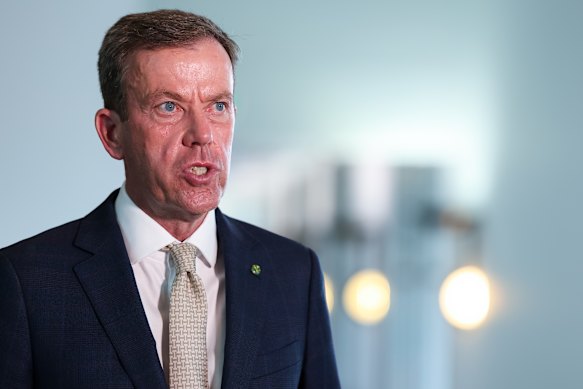
So let me get this straight. The Coalition’s Dan Tehan would unwind most of the existing emissions reduction policies, at the same time as assuring us that the companies responsible for producing those emissions are good corporate citizens who want to reduce their emissions. Oh please – pull the other one, Dan. It is already apparent, under the current government’s pathetic approach to emissions reduction, that many of our big corporations are already walking back their climate change commitments. Why should they take it seriously if governments don’t? May I suggest that our current batch of politicians have a good, long chat with their kids and ask how they feel about taking over a world where heatwaves and other extreme weather events will be the norm, where much of northern Australia will be largely uninhabitable and where many of our neighbouring countries will collapse under the weight of food shortages and social breakdown. Catherine Rossiter, Fadden (ACT)
Paying for privilege
I almost choked on my breakfast muffin when I read how much Kings School’s fees will be (“King’s tuition tops $50,000 mark”, September 24). I wasn’t quite sure whether I was laughing at how ludicrous it is, or crying at how inequitable these fees are. Despite these exorbitant charges, the school still needs millions in government subsidies. Actual education and teaching seems to have become less important in favour of the show of opulence and state-of-the-art facilities. We need to open our eyes to the growing divide between those who can pay for expensive facilities and those who go the low-cost, public education route. I find it obscene that private schools are entitled to generous government subsidies, breeding yet another generation of entitled young people. Let’s get rid of so many private schools in favour of one system. I can assure everyone private is not for everybody, but a quality public education system is. Augusta Monro, Dural
Ordinary punters and their children resorting to far less costly types of school may take comfort in the wise old adage “I have never let my schooling interfere with my education”. Steve Ngeow, Chatswood
With fees of over $50,000, is the Kings School elite? No, and nor is it exclusive – it’s just ridiculously expensive. John Bailey, Canterbury
Sellers won’t play
Treasurer Jim Chalmers thought every house seller would kick the ball back to him after his disastrous May budget. It seems they haven’t even laced their boots up (“More properties languish on the market as sellers won’t cut price hopes”, September 24). David Sayers, Gwandalan
Off the rails
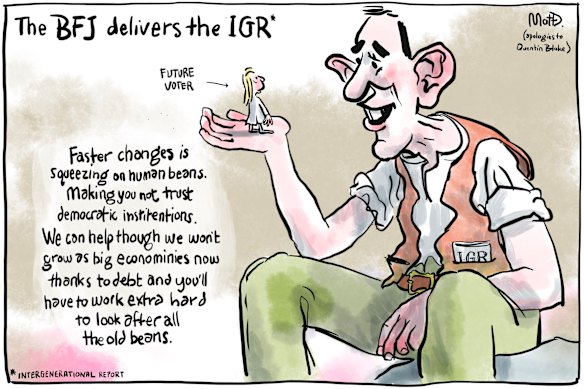
If what Matt O’Sullivan is telling us is true (and he’s usually right), NSW government agencies and their advisers are making a complete cock-up of rail transport planning both to the new city of Bradfield and Western Sydney Airport (“How fight over valuable Sydney land will shape a future train line”, September 24). I say this having led planning studies for rail connections to the airport since 1991, including for heavy, double-decker rail and metro. Not content with building an incompatible orphan metro to St Mary’s, with the worst kind of passenger interchanging, and failing to link Western Sydney Airport directly to Parramatta and the CBD, they are now squabbling over the location of stations in Bradfield. To be effective like Wynyard and Town Hall stations are as city transport nodes, Bradfield stations need to require less than 400 metres of walking to any part of the new development and, if access to Western Sydney Airport from southern heavy rail is to be effective, there needs to be cross-platform interchanging. It is a nonsense to suggest the two stations should be separated and that they might constrain city development, given they can both be underground. Dr J. J. C. Bradfield would be horrified. Peter Thornton, Killara
Touch of madness
A vehicle travelling at 70 km/h covers about 20 metres a second (“Poor, cheap and silly design puts danger at our fingertips”, September 24). In a touchscreen-controlled car, if you needed to defrost the windscreen, adjust the A/C or just turn down the radio, it might take you three or four seconds. Then remember that you’re surrounded by other drivers being similarly distracted, and you’ve just travelled 80 metres in a tonne and a half of metal without having your eyes on the road. In a school zone, you’d have covered the length of two cricket pitches, with children running around you. It’s madness. And don’t get me started on allowing drivers to talk on a phone while on the road. Andrew Scott, Pymble
What an oddity it is that resting my hand on my mobile as I drive carries a heavy fine and loss of points, but adjusting the car speaker volume on a large touch screen in the dash is acceptable. Could it be the constant presence of car manufacturer lobbyists outside our politicians’ offices? Greg Baker, Fitzroy Falls
As someone who has trouble setting the timer on my toaster, my heart sinks now whenever I have to replace a household appliance. I don’t want my washing machine to be smarter than me, nor do I want a fridge that predicts what I want (it’s vaguely disturbing). For the life of me I cannot work out how to make these new-fangled gizmos work, so let’s bring back the icebox and wood-burning stove. At least they did their job effectively and without any presumptuous backchat. Alicia Dawson, Balmain
- To submit a letter to the Sydney Morning Herald, email letters@smh.com.au. Click here for tips on how to submit letters.
- The Opinion newsletter is a weekly wrap of views that will challenge, champion and inform. Sign up here.
Disclaimer : This story is auto aggregated by a computer programme and has not been created or edited by DOWNTHENEWS. Publisher: www.smh.com.au