
Michael Gebicki is Traveller’s expert Tripologist. Each week he tackles the thorny issues in travel as well as answering your questions. Got a question for the Tripologist? Email tripologist@traveller.com.au

I’m organising a holiday for two extended families and three generations, ages three to 70s, and I’m tearing my hair out trying to accommodate different preferences, needs, budgets and diets. Two weeks, over the December-January period. Any suggestions?
A. Leeson, South Yarra, Vic
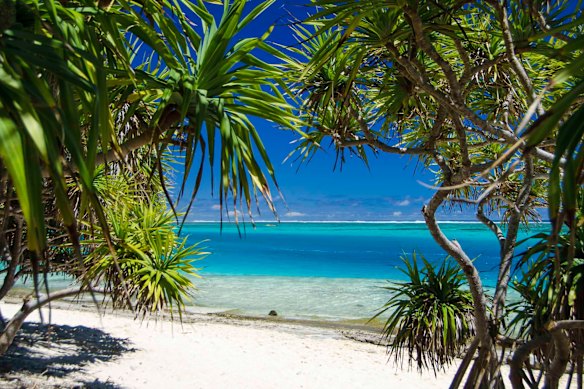
Make it easy on yourself and take a cruise. Cruises are perfect for multi-generational holidays. You only have to unpack once, you don’t have to worry about getting them onto buses or flights, there are plenty of activities that will work for your different age groups, you get a family-friendly choice of cuisines from burgers with fries to Asian and European fine dining and big ships have cabins at various price points. What might suit your group is a Pacific Islands cruise, starting from Sydney and hopping through the islands.
There are several relevant December-January sailings, including nine to 10 night itineraries to New Caledonia’s Noumea and Lifou and Mystery Island and Port Vila in Vanuatu. Longer itineraries add Fiji, but remember it’s the vessel as much as the islands that make the holiday, choose carefully. December–January is cyclone season in the South Pacific. That’s a risk to take into consideration, but I wouldn’t let it affect your plans.
Next May I’m spending a few days in Thailand before travelling to Europe to board a cruise to Greenland. I don’t like the cold and I’m concerned about the need to pack clothing for wildly different climates. How can I stay under the checked baggage limit?
P. Vickers, Ashbury, NSW
Sign up for the Traveller newsletter
The latest travel news, tips and inspiration delivered to your inbox. Sign up now.
In Greenland in May, you can expect temperatures between minus 6 degrees and 6 degrees, and you’ll be on the water in a Zodiac some of the time. Dressing for extreme cold requires layers. A thermal base layer, top and bottom, then a fleece and finally a windproof/waterproof layer on top. Throw in a beanie, a scarf and warm gloves and you’re in business. The base layer can be polypropylene fabric, available from outdoor stores at low cost. I like wool, and Icebreaker makes fantastic base-layer products but they’re pricey, wait for the sales. You can also go with thermal leggings but sturdy trousers (preferably not cotton) should be fine. For the fleece, a zip-up jacket works well, also in synthetic or wool. The acme of outer-layer fabrics is Gore-Tex, which does a fantastic job but it’s expensive. There are plenty of synthetic jackets that perform almost as well for a much lower price. Chilled feet are no fun, so wear thick socks and shoes with rubber compound soles, such as Vibram, which doesn’t transmit the cold. I’ve gone through ice storms in Greenland dressed like this and never felt cold. This clothing will add about 5kg to your checked luggage.
We’re vising relatives in Vancouver next June and we’d like to cruise the Inside Passage. We’ve received varying advice regarding size of the vessel, when to go and for how long. What are your thoughts?
M. Zhang, Box Hill, Vic
Cruising on the Inside Passage is dominated by big vessels that take upward of 2000 passengers and they offer good value, heaps of on-board facilities, several different categories of staterooms and multiple dining choices. However, big ships can feel busy and out-of-kilter with the pristine region they’re visiting. If you want to get to grips with the raw majesty of this chilly and spectacular wilderness, get mud on your boots and perhaps paddle a sea kayak around melting sea ice, a small vessel is the only way to go. Typically, these vessels carry fewer than a hundred passengers, and only a couple of dozen in some cases. Smaller vessels will also take you into bays and even some ports that cannot accommodate larger vessels. Cruises are generally seven days. The Small Boat Company and Un-Cruise Adventures are two small-ship cruise operators that get good reviews.
My husband and I are visiting Japan in May, flying into Tokyo and spending two to three weeks travelling, finishing in Kobe for a masters basketball tournament. Would love your suggestions for the best way to spend our time. We’re hoping for a mix of cultural activities, mountains and coastal villages, big and small cities and great food. Looking to travel by train.
E. Vagg, Warrnambool, Vic
iStock
May is an excellent time to visit Japan, but you’d probably want to avoid Golden Week, which finishes on May 5. Massive numbers of Japanese are on the move in Golden Week, crowds are huge in the cities and accommodation becomes scarce and expensive. In Tokyo, look for accommodation around Asakusa/Ueno, it’s an atmospheric quarter of the city, easy to navigate and transport options are first-rate. Spend your first full day exploring Asakusa, Senso-ji, the oldest and most famous Buddhist temple in Tokyo, Kappabashi shopping street, famous for its kitchenware, and Yanaka, a vision of olden Japan, known for its historic temples and not-so-historic cat culture cafes. The next day visit the Meiji Jingu Shinto shrine, Harajuku and Omotesando, home to flagship fashion galleries designed by some of the world’s greats. For the day trip I’d choose Kamakura, a scenic coastal city about an hour’s train ride from the capital. Make your next stop in the Kiso Valley, the quiet and mountain scenery are a complete contrast to Tokyo.
Base yourself around Kiso-Fukushima, a three-hour train trip from Tokyo, and spend a couple of days exploring this sublime region with its traditional wooden houses, forests, old post towns and mountain paths. Continue to Kanazawa for the next two nights. This typically requires backtracking toward Nagoya or via Toyama/Tsuruga on the Hokuriku Shinkansen. Kanazawa is one of Japan’s finest small cities. Beside the highlights, including Kenroku-en Garden and Kanazawa Castle, be sure to take in the Nagamachi Samurai District, Omicho Market and the 21st Century Museum of Contemporary Art. From here take a train south to Kagaonsen and continue to Yamanaka and Yamashiro Onsen, offering traditional inns, hot springs, crafts and excellent regional food. You might elevate the experience by choosing a beautiful ryokan with a private or semi-private bath, excellent food and preferably a garden.
Next stop is Kyoto for a four-night stay, exploring the gardens and temples, and you might take a private half-day craft tour. The city is known as a stronghold for artisans who maintain traditional crafts such as lacquerware and ceramics. Take the train from Kyoto to Kobe and arrive a few days before the tournament to give you time to explore Kitanocho, with its Western-style mansions built for merchants and diplomats in the 19th and early 20th centuries, the waterfront and the Nada sake breweries. If time allows, make a day trip to Nara, Japan’s first capital, with its World Heritage temples, deer park and pilgrimage trails. To help with further planning, see the official Japan Tourism website.
A note from the Tripologist
After 16 years, the Tripologist column is coming to an end. I’m not disappearing, I’ll be back contributing to a new feature, “The Traveller Guide To …” the mysteries of travel – the things you often don’t know you need to know until you need to know them.
Writing the Tripologist column has been an exhilarating ride, and a privilege. Your questions have taken me into the wilds of Kyrgyzstan, along Japan’s pilgrimage trails and into just about every nook and cranny of Italy, a mutual passion. I’ve learned much, and been amazed by the adventurous spirit and sense of curiosity that define the Traveller readership. Thanks for all the questions, the feedback and, above all, for your many years of support. Best wishes for wherever the trail takes you from here.
Travel advice is general; readers should consider their personal circumstances
 Michael Gebicki is a Sydney-based travel writer, best known for his Tripologist column published for more than 15 years in Traveller. With four decades of experience, his specialty is practical advice, destination insights and problem-solving for travellers. He also designs and leads slow, immersive tours to some of his favourite places. Connect via Instagram @michael_gebickiConnect via email.
From our partners
Disclaimer : This story is auto aggregated by a computer programme and has not been created or edited by DOWNTHENEWS. Publisher: www.smh.com.au



