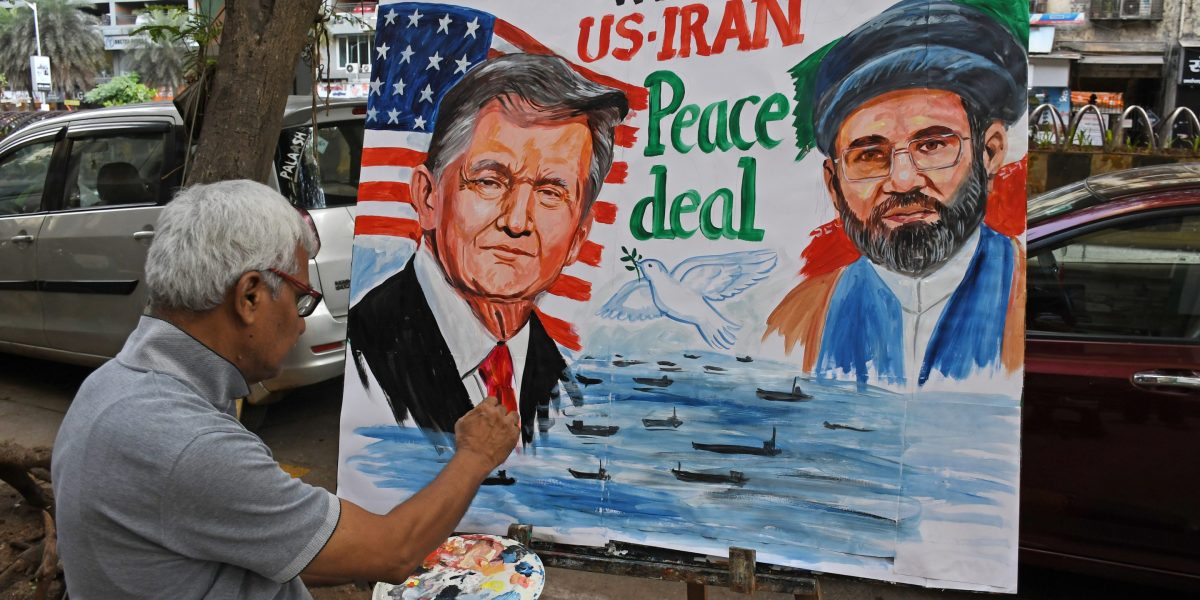
The Gulf Cooperation Council will have breathed a collective sigh of relief when the U.S. and Iran agreed an interim deal to end more than 100 days of war.
Announced on Sunday evening, the memorandum of understanding, which provides a 60-day ceasefire extension and free passage of shipping through the Strait of Hormuz, is due to be formally signed in Geneva on Friday.
The Gulf states, often to their surprise, have been on the front line of the conflict, facing missile and drone attacks.
Is it too soon for them to start talking about a bounce back?
Historically, the Gulf has shown an ability to recover quickly after major shocks. After the 1991 liberation of Kuwait, oil production and core economic activity rebounded more quickly than many observers had anticipated, supported by oil revenues, substantial overseas assets, and government-led reconstruction. Studies of Kuwait’s recovery highlight the importance of sovereign wealth funds and strong state finances.
More recently, the recovery of Dubai’s tourism sector in the aftermath of the COVID pandemic was unusually fast by global standards. By the end of 2022, Dubai received 14.36 million international visitors, reaching 86% of pre-COVID tourism levels and outperforming the 63% global tourism recovery rate.
Admittedly, this rapid resurgence was in part driven by a combination of mega-events such as Expo 2020 and the Qatar World Cup, but Dubai also wasted no time in leveraging its position as a global aviation hub and luring tourists and residents alike through a host of tax-free incentives, visa, and citizenship reforms.
Clearly, a direct analogy cannot be drawn between a global pandemic and war—missiles striking buildings has not only shaken residents’ nerves but also investor confidence. And that will take time to return.
No doubt GCC states will need to redouble efforts to attract inward investment as businesses sit on the sidelines to see if peace lasts, but in aggregate, their economic fundamentals remain sound.
At the end of May, Fitch maintained the credit ratings and stable outlooks on five GCC states—excluding Oman—largely due to their substantial fiscal buffers that have acted as a cushion against economic shocks.
While Saudi has seen some notable downsizing of its gigaprojects, the Gulf’s healthy coffers will help ensure they remain broadly committed to pursuing their respective economic diversification strategies. The UAE’s exit from OPEC, meanwhile, brings it more immediate liquidity and fiscal flexibility.
Wood Mackenzie estimates that the fields affected by the Strait’s closure could return to 70% of pre-conflict production within three months and 90% within six months, assuming operators choose a measured and controlled ramp-up. Safely transiting the oil through the Straits of Hormuz will arguably present the bigger challenge.
The Iran war has redrawn the economic and geopolitical landscape of the Gulf but the conflict has also deepened its conviction to accelerate reforms and plans for recovery are already being hammered out.
As we have seen during the course of this war, a lot can happen in a day, let alone 60 days. Successful negotiations on the most contentious issues and the emergence of a permanent deal that could reset the Gulf’s fortunes hang in the balance.
Melissa Hancock
melissa.hancock@fortune.com
Get in touch: Reply to this email with feedback or contact me directly at the address above.
SpaceX IPO: Meteoric success
So, it happened. The much-hyped and eagerly-awaited SpaceX listing achieved lift-off last Friday—sending the company’s valuation skyrocketing past $2 trillion—and giving the Gulf’s sovereign wealth funds a handsome payday.
Saudi Prince Alwaleed bin Talal’s net worth has climbed to its highest level in a decade.
As I covered in my newsletter last week, Gulf investors were among the earliest backers of SpaceX and its subsidiaries, viewing its technology offering as central to ensuring their economic competitiveness and national resilience.
Their enthusiasm for the rocket, satellite, and AI company shows no sign of abating.
Gulf funds doubled down on their positions in the days leading up to the listing, submitting orders for shares worth billions of dollars, Bloomberg reported.
SpaceX’s debut is the first of three mega-IPOs expected this year, along with AI giants OpenAI and Anthropic.
That means the performance of SpaceX stock will be closely scrutinized in the coming days and weeks.
Its high valuation has already made it the world’s eighth -largest company by market capitalization, ahead of Musk’s electric vehicle maker, Tesla, and just behind Taiwanese chipmaker TSMC. Here’s how it stacks up against other historic IPOs.
But the question on most people’s lips today is whether the share price will continue to “pop” or experience a significant correction.
For a full analysis of how investors should be thinking about SpaceX, read my colleague Shawn Tully’s piece here.
Gulf-backed Paramount-Warner Bros merger approved
The U.S. Department of Justice has approved the $111bn merger of Paramount Skydance and Warner Bros. Discovery with a trio of Gulf sovereign wealth funds committing roughly $24 billion in equity.
The UAE’s L’imad, Saudi’s Public Investment Fund (PIF) and the Qatar Investment Authority (QIA) will own a combined stake of 38.5% and therefore comprise the lion’s share of the 49.55% stake that will be owned by foreign investors.
While they will not have board seats or voting shares so as to limit political and regulatory sensitivity, the Gulf funds’ involvement is also significant in helping to finance one of the largest mergers of U.S. media and entertainment assets.
The acquisition of Warner Bros. would significantly expand Paramount’s media and entertainment footprint, adding the CNN news network, HBO and other major television brands, as well as DC Studios and New Line Cinema, to its already extensive asset base.
For Gulf funds, the acquisition provides access to brands that have a global reach that extends across film, television, streaming, gaming, licensing, and consumer products.
In doing so, it provides them with valuable intellectual property and cultural soft power while also supporting their economic diversification strategies as they seek to build out their tourism and entertainment industries.
From New York to the Gulf: U.S. Private Credit Firms have spotted a new opportunity
We’re not even halfway through, but 2026 is already a year the U.S. private credit markets would rather forget.
A historic industry-wide spike in redemption requests across 16 direct lending funds—amounting to $19 billion in the first quarter—was a stark illustration of souring sentiment towards the asset class. Collectively, the funds hold investments worth roughly $275 billion.
With investors spooked by a heady mix of high interest rates, increasing borrower debt burdens and high exposure to a software industry vulnerable to AI disruption, household names such as Blackstone, Blue Owl Capital and Cliffwater became embroiled in the “risk-off” panic.
Blue Owl Capital was in the eye of the storm.
The NYSE-listed firm, which manages $315 billion in assets, saw investors rush to withdraw roughly $5.4 billion from two of its flagship funds—ultimately forcing it to cap withdrawals at 5% of shares.
Never let a crisis go waste, Rahm Emanuel told his boss, Barack Obama. The private credit sector has been listening, with a wave of moves as they hunt out new opportunities.
Blue Owl Capital announced last week that it had opened an office in Abu Dhabi.
In welcome contrast to the volatility besetting the US market, the relatively nascent Gulf private credit market represents a bright spot and is attracting a steady stream of global asset managers.
Gulf sovereign funds quadrupled their allocations to private credit between 2021 and 2025 to roughly $80 billion, according to data from Gulf SWF.
And the growth trajectory looks positive, according to industry experts I spoke with last week. Read my piece here.
The Big Number
$ 20 billion
The amount raised and deployed by JP Morgan into the Gulf region since the beginning of the Iran war, with the U.S.’s biggest bank estimating that hundreds of billions of dollars will be needed to rebuild infrastructure and support diversification once the war is over. Speaking to The National, Doug Petno, JPMorgan’s co-chief executive of commercial and investment banking operations, who met with regional sovereign and corporate clients in recent weeks, said the bank is going to “move faster” in terms of building its capabilities across the Gulf. It plans to double its regional headcount in the next three to five years.
What to read this week
- The Strait of Hormuz is set to fully reopen on Friday after the U.S.-Iran peace agreement has been signed, but unwinding the biggest oil disruption ever will take longer than creating it, as my colleague Jason Ma explains. He cites Capital Economics; working assumption that 80% of energy flows will resume by the end of Q3, but a return to ‘normal’ could stretch into 2027.
- The SpaceX listing is a huge win for VC firms such as Founders Fund and Andreessen Horowitz, but given that returns will be concentrated among a limited number of VCs, is SpaceX a win for venture? My colleague Allie Garfinkle spoke to an industry expert who explained why it’s complicated.
- U.S. stock futures jumped and oil prices tumbled on the news that the U.S. and Iran had agreed on an interim truce. However, the most contentious issues will be negotiated over the next 60 days as outlined in this Fortune piece.
Disclaimer : This story is auto aggregated by a computer programme and has not been created or edited by DOWNTHENEWS. Publisher: fortune.com