The United Kingdom has revised its immigration rules, doubling the time most foreign workers must wait to qualify for permanent residency to 10 years and making refugees who arrive on “small boats” wait as long as 30 years.
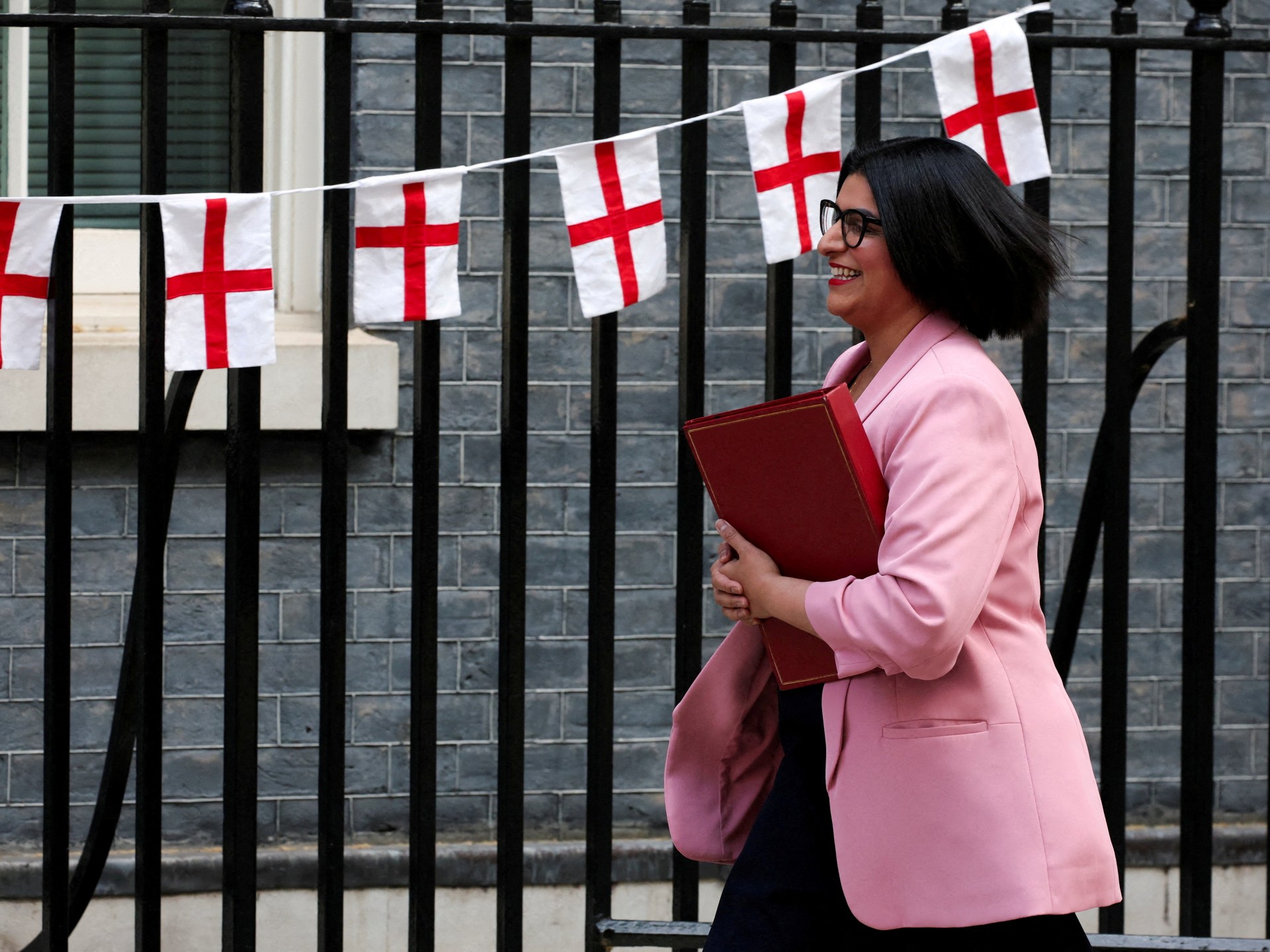
Home Secretary Shabana Mahmood, speaking in Parliament on Monday, said hundreds of thousands of care workers will be exempt from the hardline rules, offering a concession amid political outcry within the governing Labour Party.
Recommended Stories
list of 3 itemsend of list
Permanent residency, known in the UK as indefinite leave to remain, carries the right to work, study, use the free National Health Service and claim welfare benefits. Until now, it has been granted after five years.
The new rules, set to take effect next year, tie eligibility for permanent residency to income.
People who earn more than 50,000 pounds a year ($67,000) will still be able to apply after five years, and those earning more than 125,000 pounds ($167,500) after three. Everyone else will be placed on the 10-year path. The median salary in the UK is about 39,000 pounds (roughly $52,000).
The rules will apply retroactively to workers already in the country.
“Settlement should not be automatic. It should be earned,” Mahmood, the home secretary, told Parliament, adding that the changes would restore fairness by linking the right to settle to what immigrants contribute.
“Those who contribute most will settle fastest,” she said. “Those who don’t play by the rules will be refused or wait longer.”
Care workers, refugees
The UK government first proposed last year that lower-skilled workers wait 10 to 15 years for permanent residency.
Advertisement
But the plan drew fierce opposition from unions and parts of the Labour Party, particularly over its effect on care workers, who are often poorly paid and work in a sector that has long struggled to fill vacancies. Many of them arrived in the early 2020s, under Conservative governments, to fill gaps left by European workers who departed after Brexit.
Under the revised plan, care workers will be able to settle after five years if they have met the conditions of their visas and earn at least 25,000 pounds ($33,500) a year.
Mahmood said the rules would offer a path for care workers “who worked hard and answered our call when we needed them”.
As for refugees, those who arrive through one of the government’s “new safe and legal routes” will be able to settle after five years, she said. For other refugees, the standard wait will become 20 years, with an additional 10 years for those who entered the country by an “illegal” method, such as by small boat, she said.
Under the new rules, applicants will also be disqualified if they have a criminal record, cannot speak English “to a high standard”, owe money to the government, or have not made at least three years of national insurance contributions.
Mahmood said the overhaul would mean that half a million people would settle later than they otherwise would have, saving the government billions of pounds in benefits.
In total, the government estimates that as many as 1.4 million people will receive settled status between 2026 and 2030.
The changes, announced after a 12-week public consultation that drew more than 200,000 responses, are part of a broader effort to tighten immigration rules after arrivals surged following Brexit.
They are a response to political pressure, including from Nigel Farage’s populist Reform UK party, which has surged in popularity in recent years with calls for stricter migration controls. Reform UK has sought to depict the arrivals of refugees on small boats across the English Channel as a crisis, and anti-immigration activists have staged protests, including outside facilities that house asylum seekers.
Prime Minister Andy Burnham’s government has said that increased law enforcement cooperation between the UK and France has helped reduce the number of people making the crossing so far this year by more than 40 percent compared with 2025.
Disclaimer : This story is auto aggregated by a computer programme and has not been created or edited by DOWNTHENEWS. Publisher: aljazeera.com