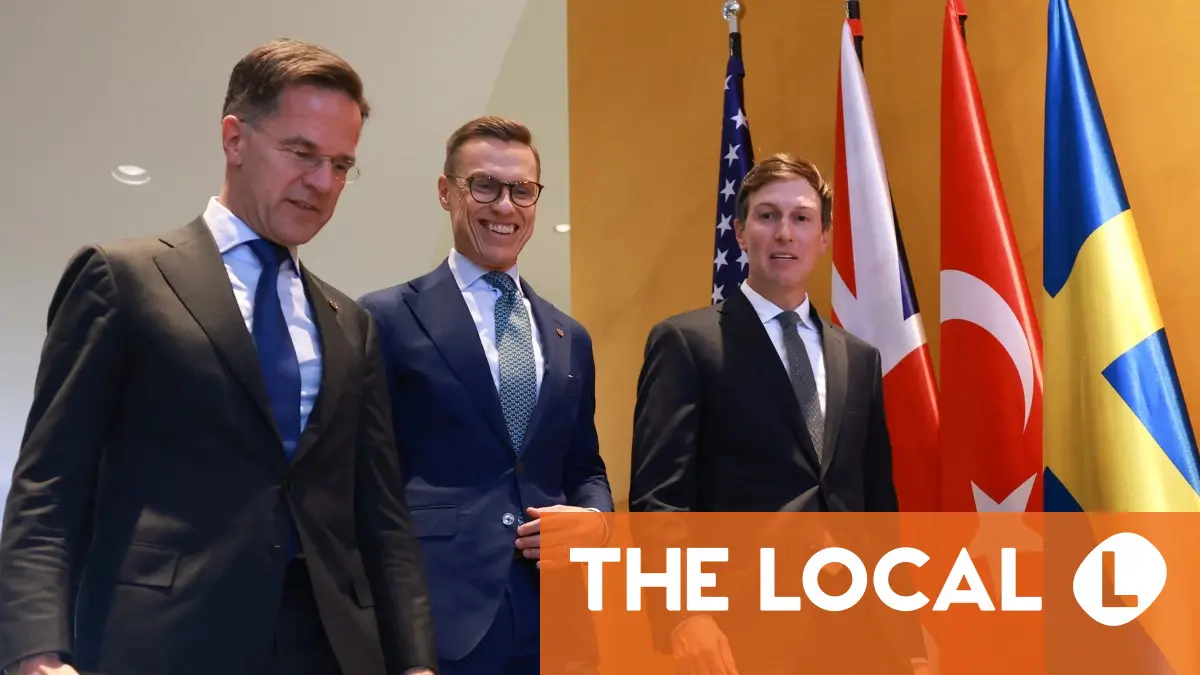
Ukraine’s allies met Thursday for a “Coalition of the Willing” summit in Germany with President Volodymyr Zelensky to stress solid wartime support for Kyiv and to push for a European role in any future peace talks.
The meeting — co-hosted by the leaders of Germany, France and Britain — was being held shortly after unprecedented three-way talks in China between US President Donald Trump, Russia’s Vladimir Putin and China’s Xi Jinping.
Putin later said he had, through diplomatic channels, invited European leaders to Moscow but also insisted on core demands, ruling out all military ties between Ukraine and Europe as part of a deal to end the war.
In Berlin, more than 25 leaders met, along with the heads of the EU and NATO and US envoys Jared Kushner and Steve Witkoff, to discuss how to help Ukraine through its fifth winter of war, and how to eventually end Europe’s worst conflict since World War II.
Zelensky — after talks with German Chancellor Friedrich Merz, French President Emmanuel Macron and British Prime Minister Andy Burnham — said they discussed “countering Russian ‘shaheds’ (drones) and missiles, protecting the energy sector and infrastructure, as well as our diplomatic efforts”.
“It is important that today’s Coalition of the Willing meeting and bilateral meetings with leaders deliver results,” Zelensky wrote on X. “More support is on its way. Thank you to everyone who is helping.”
NATO chief Mark Rutte welcomed the fact that, in recent talks in Abu Dhabi, the US and Ukraine had agreed “to have Europe involved” in negotiations so far dominated by the United States, Russia and Ukraine.
“But also we’ll discuss today how in the meantime, as long as the war continues, we keep Ukraine strong,” Rutte said. “And that means making sure they have what they need in terms of weapons and other support.”
‘Come to Moscow’
There had been fears that Trump, Putin and Xi may make sweeping decisions on the war over the heads of Kyiv and Europe during their China meeting — but few tangible details had emerged hours after the talks ended.
READ ALSO: What does the US midterm result mean for German defence and trade?
Putin, speaking later at a press conference in China, said that “the American side is urging us to agree to the involvement of the Europeans”.
“Through diplomatic channels, we suggested to the Europeans to come to Moscow,” Putin said. “And after that we will decide in what format the talks can continue.
“We understand that discussing issues linked to security in Europe is pointless without the Europeans.”
However, he also said Moscow could not accept any kind of defence ties between Ukraine and Europe, stressing that “military cooperation in any form is, of course, a problem”.
Kushner wrote on X that he and Witkoff had updated Merz on Trump’s “discussions in China and the latest efforts to achieve a just, lasting and durable peace in Ukraine”.
“We continue to work in close coordination with Germany, Ukraine and our European partners to align our positions and prepare for the next round of negotiations.”
‘Far more painful’
Kushner thanked Merz “for his leadership, constructive engagement and close partnership as we work together toward our shared goal of ending this terrible war and building a secure and prosperous future for Ukraine and Europe”.
Germany has emerged as the biggest provider of military aid to Ukraine since Trump scaled back US support and is also rapidly rebuilding its own military to deter a hostile Russia.
READ MORE:
Merz has insisted that all 27 EU member states help finance Ukraine as it faces a 70-billion-euro funding shortfall next year.
The European Union on Wednesday proposed members give Ukraine an extra 45-billion-euro loan to help plug the finance gap.
The Germany summit comes as Russian strikes have hammered Ukraine’s energy and transport infrastructure, while Kyiv is in urgent need of US-made Patriot missiles at a time when the Middle East war has deepened a global shortage.
Ukraine has meanwhile targeted Russian oil facilities and on Thursday again attacked the bridge connecting annexed Crimea to Russia, the third time in a week the key transport artery had been targeted.
Putin, speaking in China, vowed that “we will respond to these attacks. Our response will be far more painful than Kyiv’s attack on the bridge.”
Disclaimer : This story is auto aggregated by a computer programme and has not been created or edited by DOWNTHENEWS. Publisher: thelocal.de