
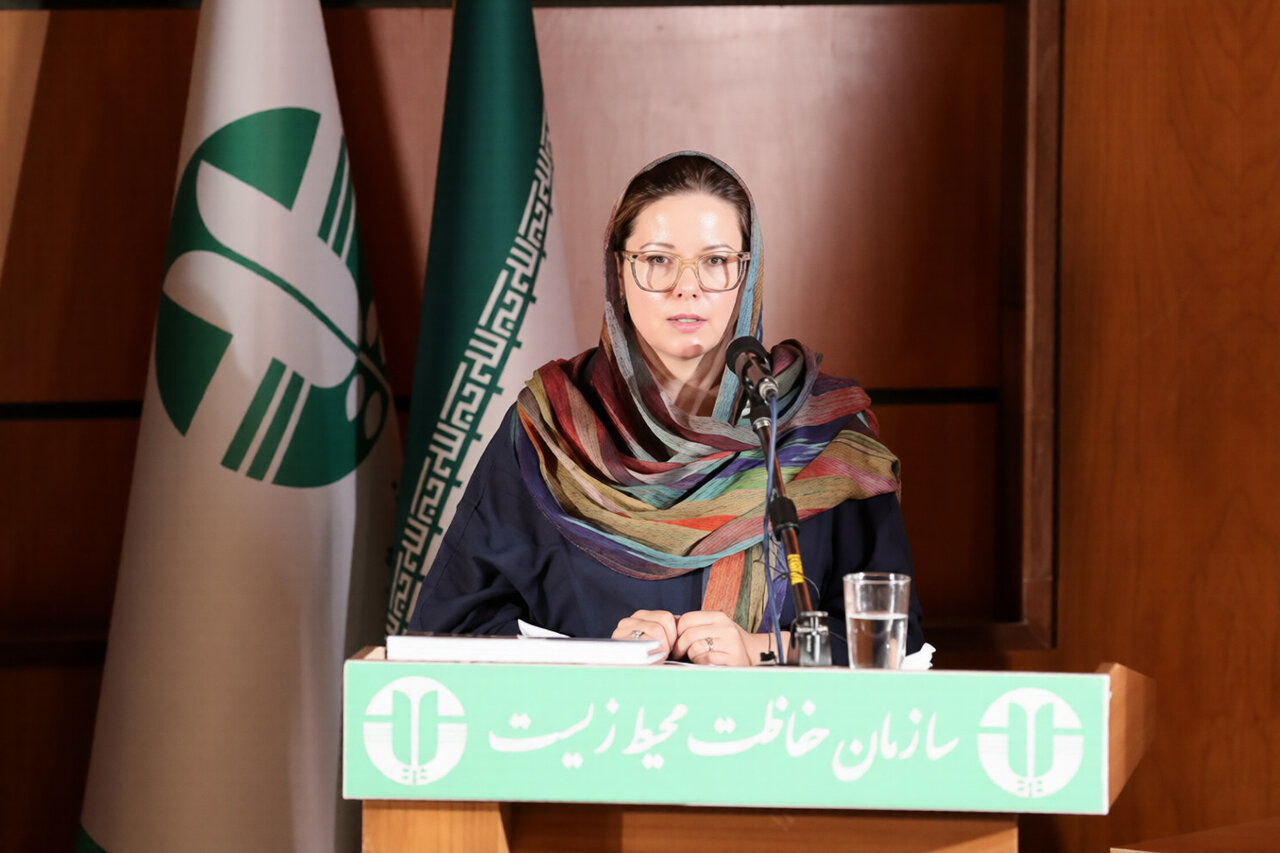
TEHRAN – UN Resident Coordinator in Iran Christine Weigand has stressed the far-reaching and long-term environmental consequences of war, saying environmental protection must be incorporated into both emergency response measures and long-term recovery plans, as protecting the environment ultimately means safeguarding human health, livelihoods and the future.
Weigand made the remarks in Tehran on Sunday at a conference on the environmental consequences of war and human rights.
Referring to the loss of human lives, the displacement of families and the destruction of homes and infrastructure, she said the environment and valuable ecosystems were also among the victims of war, warning that the damage inflicted on them could persist for generations.
Conflicts and environmental degradation, she noted, reinforce one another, deepening human suffering, undermining livelihoods and food security, and making reconstruction and the achievement of sustainable development more difficult.
Weigand also referred to the United Nations’ designation of November 6 as the International Day for Preventing the Exploitation of the Environment in War and Armed Conflict in 2001. She noted that contaminated water resources, damaged agricultural land and degraded ecosystems have consequences that extend far beyond the immediate destruction caused by war, undermining communities’ ability to rebuild their lives.
Citing examples of environmental damage in the conflicts in Gaza and Ukraine, the UN official addressed the consequences of attacks on oil facilities and water infrastructure in Iran. She said attacks on oil facilities had released smoke containing hazardous substances into Tehran’s atmosphere, while damage to a desalination facility on Qeshm Island had reportedly disrupted water supplies to more than 25 villages.
Weigand also warned of the possibility of oil pollution reaching the mangrove forests on Qeshm Island, emphasizing that such contamination could threaten sensitive coastal ecosystems along the Persian Gulf.
Recalling her own experience of air pollution in Tehran following the attacks on oil facilities, she said that, for millions of people, the issue was not merely an environmental concern but one that directly affected the air they breathed every day.
The UN Resident Coordinator cautioned that the disappearance of visible smoke does not necessarily mean the danger has passed. Burning oil can release hazardous compounds, she explained, and the resulting pollution can contaminate soil and water, affect agricultural produce and threaten human health. These consequences may persist long after a conflict ends, with children and future generations particularly vulnerable.
Emphasizing that investment in environmental protection is an investment in people and their future, Weigand said healthy ecosystems sustain community livelihoods, provide clean water and safe food, and strengthen societies’ resilience to crises. Conversely, the degradation of these systems increases vulnerability and makes recovery more difficult.
She identified evidence-based assessments, stronger national environmental management capacities, cooperation among different sectors and national and international institutions, and investment in climate change adaptation as essential measures for protecting and restoring the environment in conflict-affected countries.
Weigand also highlighted the longstanding cooperation between the UN Country Team in Iran and national partners in areas including climate resilience, sustainable water resource management, biodiversity conservation and pollution reduction. She reaffirmed the UN’s commitment to continuing this cooperation and its readiness to support national efforts to address emerging environmental needs.
Concluding her remarks, the UN official stressed that commitment to protecting and restoring nature must remain unwavering in the face of global environmental challenges.
“Our shared responsibility is to protect what remains, restore what has been damaged, and invest in building a more sustainable and peaceful future for all,” she said.
Disclaimer : This story is auto aggregated by a computer programme and has not been created or edited by DOWNTHENEWS. Publisher: tehrantimes.com




