
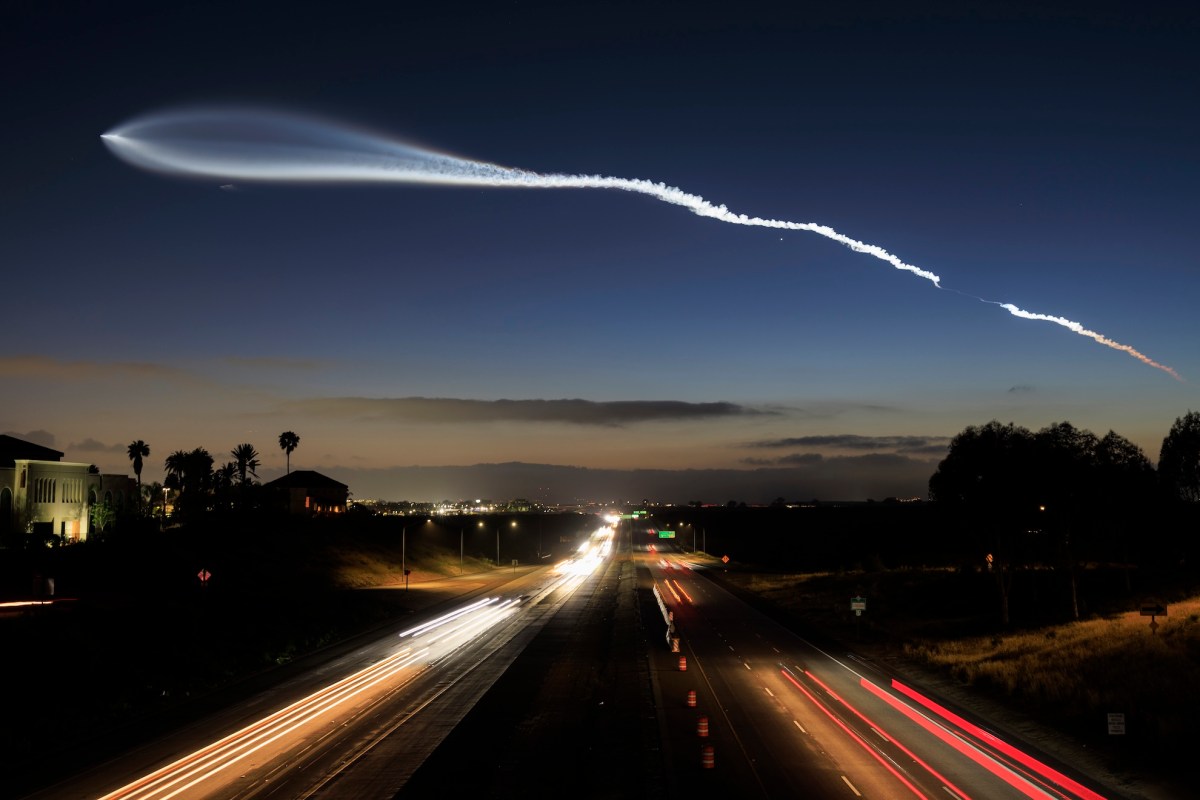
As SpaceX counts down to what could be the largest IPO in history, the race to build the next generation of launch vehicles is heating up. Asia wants in. Startups across Australia, India, Japan, and South Korea are racing to establish themselves in a market long dominated by the U.S. and China.
One of them is Unastella, a four-year-old South Korean startup that just closed a $24 million Series B, bringing its total funding to $44 million. The company launched its own rocket, the Una Express-I, from South Korean soil in May 2025.
The Seoul-based rocket startup is developing its own launch vehicles and engines, with an initial focus on small satellite launch services. Unastella’s near-term focus is validating its technology and business model through orbital launches, with crewed suborbital spaceflight as a longer-term goal, founder and CEO Jae Park told TechCrunch.
Unastella uses a kerosene and liquid oxygen propulsion system, one of the most proven combinations in rocket history, and one that is also used by SpaceX’s Falcon series. On top of that, the company swapped out the traditional turbo pump for an electric motor pump, a simpler and cheaper alternative that Rocket Lab has already validated in flight.
The tradeoff is payload. Electric motor pumps are heavier, which means less room for satellites. But Park said that’s a deliberate decision.
“We’re not an R&D group trying to build the most impressive rocket,” Park said. “We’re a commercial launch company trying to get to market fast.”
Park also notes that Unastella handles everything in-house, such as design, manufacturing, ground operations, and flight data. The UNA EXPRESS-I launch last year was the first real-world test of the entire system end-to-end, Park said.
The CEO has spent his entire career working on rocket engines. Before founding Unastella, Park worked on combustion systems for Korea’s Nuri rocket — the country’s first indigenously developed orbital launch vehicle, built by the Korea Aerospace Research Institute (KARI). He then moved to the German Aerospace Center in Berlin to work on European launch vehicle engines, and returned to Korea to join another rocket startup before deciding to build his own.
Unastella isn’t generating revenue yet, but investors appear to be backing the startup’s roadmap. Altos Ventures led the Series B, joined by Korea Development Bank, Strong Ventures, and Hana Ventures, among others.
UNA EXPRESS-II, targeted for later this year, is the launch Park is really building toward. Reaching 100 kilometers would mark a significant milestone, one he believes will open the door to partnerships with South Korea’s major aerospace and defense firms.
The 22-person startup has already laid the foundation and developed institutional relationships. Korea’s national space agency has flown components on UNA EXPRESS-I, and the Korea Aerospace Research Institute has transferred electric motor pump technology to the company.
Unastella is not alone in the race to tap into the global space launch market, which was worth roughly $15 billion in 2023. By 2030, it is projected to nearly triple to $41 billion, according to Grand View Research.
South Korea’s commercial launch sector is still in its early stages, but the field is already taking shape.
Hanwha Aerospace, the country’s largest defense conglomerate, took over the government-built Nuri rocket last year after acquiring full technology rights from KARI. Two startups are also competing: Innospace, which went public on the Korean stock exchange and has conducted a sub-orbital launch, and Perigee Aerospace, which is developing its Blue Whale rocket. None have yet achieved a commercial orbital launch. South Korea’s space agency KASA, established in 2024, has committed $266 million over seven years to build out launch infrastructure — a sign that the government is betting on the private sector to take the lead.
The competition extends well beyond Korea. In Asia, China leads the pack: Galactic Energy, LandSpace, and iSpace have all conducted multiple launches. Japan’s H3 rocket, developed by JAXA and Mitsubishi, completed its first successful launch in 2024, while startup Interstellar Technologies is building its own small vehicle. In Australia, Gilmour Space attempted its first orbital launch this year. And then there is Rocket Lab — founded in New Zealand, now listed on Nasdaq — which remains the only Asian-founded company to have built a commercially viable launch business.
When you purchase through links in our articles, we may earn a small commission. This doesn’t affect our editorial independence.
Disclaimer : This story is auto aggregated by a computer programme and has not been created or edited by DOWNTHENEWS. Publisher: techcrunch.com



