
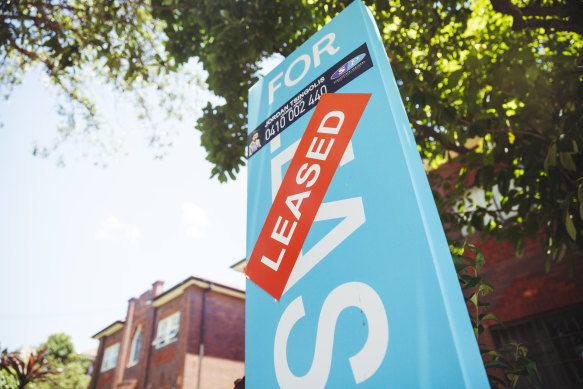
I was at a no-grounds eviction last week. Along with four police officers, two bailiffs, two locksmiths, two real estate agents, and a couple of photographers. All to evict a sick 70-year-old senior, and her son, from their suburban Perth home across the road from some remnant bushland and the Darling Scarp.
You might think you’d need a pretty good reason to make an elderly woman homeless like this. But under WA’s current rental laws, you don’t. In fact, you don’t need a reason at all, because WA is the only state in Australia (with the exception of the Northern Territory) that retains no grounds evictions in its rental laws.
Or, as the real estate agents put it when I asked them whether it was fair for a woman to be evicted when there was no breach of the tenancy agreement: “That’s not up to me. No-grounds terminations are legal in Western Australia.”
And they’re right. It’s not up to landlords or tenants to fix this – it’s up to the government, who finally seem to be prepared to get rid of unfair no-grounds evictions.
WA will be the last state in the country to get rid of unfair no-grounds evictions. It means that WA renters are routinely evicted into homelessness with no reason needed, no evidence presented, no defence available to the tenants – and no chance for them to fix any issues.
Ending unfair evictions is arguably the single biggest thing the state government can do to address WA’s housing crisis because unfair evictions are how people become homeless in the first place.
And it seems like an overwhelming majority of West Australians would support this move – 80 per cent of people polled this week said they support the government putting an end to no grounds evictions.
In response, the real estate industry is resorting to the same old cliches about spooked investors reducing housing supply if unfair evictions are ended – even though there are currently more than a dozen ways to evict a tenant for grounds like property standards or rent arrears under existing laws, with most taking significantly less time than a no-grounds evictions.
That probably explains why there is no evidence of a negative impact on rental supply from any other state that has already made this change. And why the WA community are responding to stories like the eviction last week and demanding the government end unfair evictions.
But the devil is in the detail. There’s currently multiple ways a family can be evicted without grounds – at any point during a periodic tenancy, or at the end of a fixed term tenancy – and that includes from public housing.
It’s even been suggested that the reason the WA government has been so slow to act on unfair no-grounds evictions is because they want to retain the ability to use them on their own tenants.
In fact, in the first eight years of this current WA government, as many as 1300 families were evicted from public housing without reason – up to 37 per cent of the total according to government data, which they won’t release in full.
Over that same period, thousands of children were evicted from public housing into homelessness.
And when you make a family homeless without a chance to defend themselves or even understand if they’ve done anything wrong, we all lose. Kids lose education, families are put in danger, community health suffers – and people die.
Unfair evictions are a life sentence. You wouldn’t sentence someone to prison without a trial – but in WA it is still legal to make someone homeless without a trial.
Over the last few years, I have represented dozens of tenants facing eviction in court.
The first case I had was an elderly man facing a no-grounds eviction. His landlord, the WA Department of Housing, had decided to make him homeless, but hadn’t decided to say why.
Instead, they just gave him 30 days notice and the magistrate had no choice but to evict him.
We walked out of court and I never saw him again. He said he was going to sleep in a park. A year later his family told me he had died.
Tragically, he is far from the only such case I have known.
Just this week, it was revealed that a young mother was tragically taken from her children when she contracted sepsis and died just months after being evicted into homelessness from public housing.
Many other families I know are scarred by similar tragedies following public housing evictions.
It is not surprising that an overwhelming majority of West Australians, including most landlords, recognise it is time to end unfair evictions.
Start the day with a summary of the day’s most important and interesting stories, analysis and insights. Sign up for our Morning Edition newsletter.
 Jesse Noakes is a writer and broadcaster with new media platform The Last Place on Earth, and a housing campaigner with End Unfair Evictions.
From our partners
Disclaimer : This story is auto aggregated by a computer programme and has not been created or edited by DOWNTHENEWS. Publisher: www.smh.com.au






