
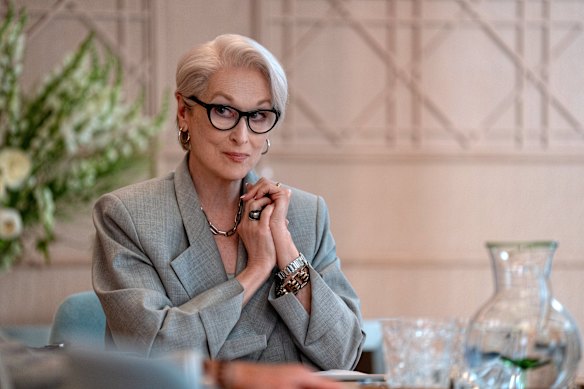

For a long time, Anna Wintour responded to The Devil Wears Prada exactly as Miranda Priestly would: with icy indifference.
Given the former Vogue editor-in-chief inspired Meryl Streep’s frosty character, such a response was apt. While attending a West End adaptation of the film, which in turn was adapted from Lauren Weisberger’s novel, Wintour coolly told the BBC it was “for the audience and for the people I work with to decide if there are any similarities between me and Miranda Priestly”.
Wintour appeared even less pleased with the book. Leslie Fremar, the inspiration behind the character Emily (portrayed in the film by Emily Blunt), told Vogue’s The Run-Through podcast last week that Wintour essentially “warned” her about the novel following its release in 2003.
“I got a call from Anna’s office saying she wanted to see me,” Fremar said. “I was petrified. [Wintour] said, ‘Who’s Lauren Weisberger?’ And I said, ‘She was your junior assistant.’ And she’s like, ‘Well, she wrote a book about us, and you’re worse than me’.”
At the time, Wintour was quick to tell the public she hadn’t decided whether to read the book or not. Meanwhile, Condé Nast, the publisher of Vogue, kept even quieter.
The message was clear: Wintour may not have been opposed to the book and subsequent film, but she sure as hell wasn’t involved with them.
Fast-forward 20 years, and the sentiment has changed – massively. The sequel to the beloved 2006 film landed in cinemas this week, and although Wintour doesn’t feature in it, she has been all over its promo.
Wintour and Streep posed together on the cover of Vogue in April, an unprecedented move given Wintour’s long-standing insistence on never featuring on the cover. They were, of course, both wearing Prada.
The magazine also released a short film featuring the pair meeting outside an elevator. “Don’t I know you from somewhere?” Streep asks drily, giving Wintour a once-over. It was the full-circle moment fans had been desperately waiting for.
Elsewhere, Vogue announced Weisberger’s 2003 novel – the book that started it all – as a May pick for its book club; it hosted an early screening of the sequel, to which it invited real-life former Wintour assistants; and managed to get the real-life Emily on its podcast The Run-Through. It even commissioned an op-ed from Weisberger herself, in which she outlined what life had been like since publishing the now-sacred text.
As they say, time heals all wounds. More than two decades have passed since the book launched. Wintour doesn’t even have the same job as Miranda any more – last year, she relinquished her title as editor-in-chief, becoming Vogue publisher Condé Nast’s global chief content officer instead. Perhaps the sequel doesn’t hit as close to home.
You know what else heals wounds? Money. The first film, though initially panned by many media outlets, ended up a major commercial success, grossing more than $457 million globally. Fans quoted Miranda left, right and centre (“that’s all” being a particular favourite), cerulean made a major comeback, and everyone became wannabe fashion journalists.
So, it was unsurprising that hype immediately began buzzing once the movie sequel was announced in 2024. With new editor-in-chief Chloe Malle at the helm, Vogue clearly wished to keep up with the zeitgeist, proving it was in on the joke rather than the butt of it. After all, Malle has expressed a desire to time Vogue’s print issues with major cultural events. If The Devil Wears Prada 2 isn’t a major cultural event, what is?
There are few better ways to show your willingness to evolve than to endorse a mega-popular franchise you initially ignored. The sequel has since received glowing reviews, with some critics admitting it made them cry, further suggesting the company had backed a winning horse.
However, as refreshing as it is to see a high-end fashion magazine having fun with its own image, it also begs a less favourable question: Is Vogue unfashionably late to the party?
The magazine’s sudden willingness to jump aboard this cultural phenomenon could, at least to some, reek of desperation to remain relevant in a world in which beauty standards are now largely driven by social media. After so much silence or indifference, the outpouring of support, including from the queen of Vogue herself, could scream calculated more than “good sport”.
There’s also the question of what it could mean for the film. The first movie received little support from Vogue, making it a witty underdog satire. With Vogue on-board, however, it almost becomes an advertisement, the mutually beneficial commercial relationship between film and media suddenly starkly obvious.
No matter how you cut it, though, it probably won’t matter. The sequel has already been showered with praise, and it’s gearing up for massive box office success. As Miranda says in the first film: “Everybody wants this. Everybody wants to be us”.
Must-see movies, interviews and all the latest from the world of film delivered to your inbox. Sign up for our Screening Room newsletter.
 Nell Geraets is a Culture reporter at The Age and The Sydney Morning Herald.Connect via X or email.
From our partners
Disclaimer : This story is auto aggregated by a computer programme and has not been created or edited by DOWNTHENEWS. Publisher: www.smh.com.au


