A nationwide review of biosecurity measures will target the imported red fire ant incursion in Sydney’s inner west after revelations the location of the nest was only required to be checked every three years.
A biosecurity control order is in place to limit the movement of high-risk goods after the established fire ant nest was discovered in Enfield Intermodal Logistics Centre in September, and the public was notified two weeks ago.
A review by the inspector-general of biosecurity will examine the Sydney nest as a first case study in a broad assessment of biosecurity policies. In the past three years, more than 160 ant lures were deployed around the Enfield site and until September did not detect any fire ants.
While some of the businesses at the logistics centre were considered higher risk and monitored more frequently, under current policies the location where the nest was discovered only required checking every three years.
Invasive Species Council advocacy director Reece Pianta said: “The current biosecurity arrangements clearly do not reflect biological reality and they need to be urgently changed.”
Pianta said he hoped the review would provide recommendations to strengthen the biosecurity system to prevent fire ants from establishing elsewhere in Australia.
An interim report, to be made public by April, will examine the management of the biosecurity risk at sites such as Enfield, including surveillance arrangements, according to a document outlining the approach of the inspector-general’s review.
After the interim report is delivered, the broader review will look at other cases around the country to determine if the current approaches to risk management and information sharing are adequate to protect Australia’s biosecurity.
The Sydney nest is thought to have been more than a year old when it was discovered, and the ants’ country of origin remains unknown. As nests mature in six months, at which point queen ants can fly to other locations, this would have given the ants time to establish themselves in other locations.
A control order now covers a two-kilometre radius around the Enfield nest site, which requires businesses that move soil, mulch, turf, potted plants and heavy equipment to take special precautions before transporting the items outside the controlled zone.
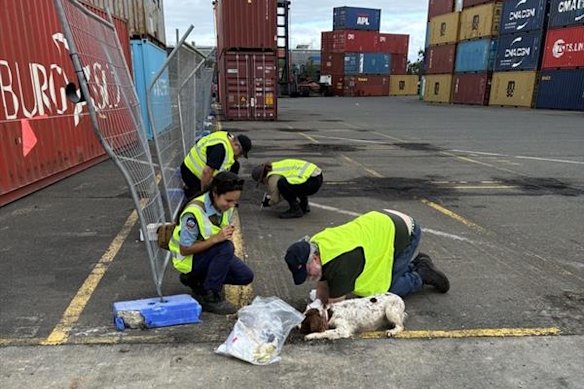
More than 400 calls from members of the public have been made to the government’s fire ant hotline, but no further signs of the deadly pest have been confirmed. A team of 60 officers and nine sniffer dogs have combed nearby parks, streets and schools and found no further nests.
Fire ants are one of the world’s worst invasive species and responsible for at least 80 deaths in the United States.
The painful bite can kill pets and native wildlife and can be deadly for humans sensitive to insect bites. The bite triggers a burning sensation for up to an hour and can create unsightly pustules on the skin.
Start the day with a summary of the day’s most important and interesting stories, analysis and insights. Sign up for our Morning Edition newsletter.
 Jessica McSweeney is a reporter at The Sydney Morning Herald covering state politics and urban affairs.Connect via email.
 Nick O’Malley is National Environment and Climate Editor for The Sydney Morning Herald and The Age. He is also a senior writer and a former US correspondent.Connect via email.
From our partners
Disclaimer : This story is auto aggregated by a computer programme and has not been created or edited by DOWNTHENEWS. Publisher: www.smh.com.au