TEHRAN— Iran has dismissed US assertions that maritime traffic through the Strait of Hormuz has returned to normal, saying Washington’s continued naval blockade and economic sanctions are incompatible with restoring security to the strategic waterway.
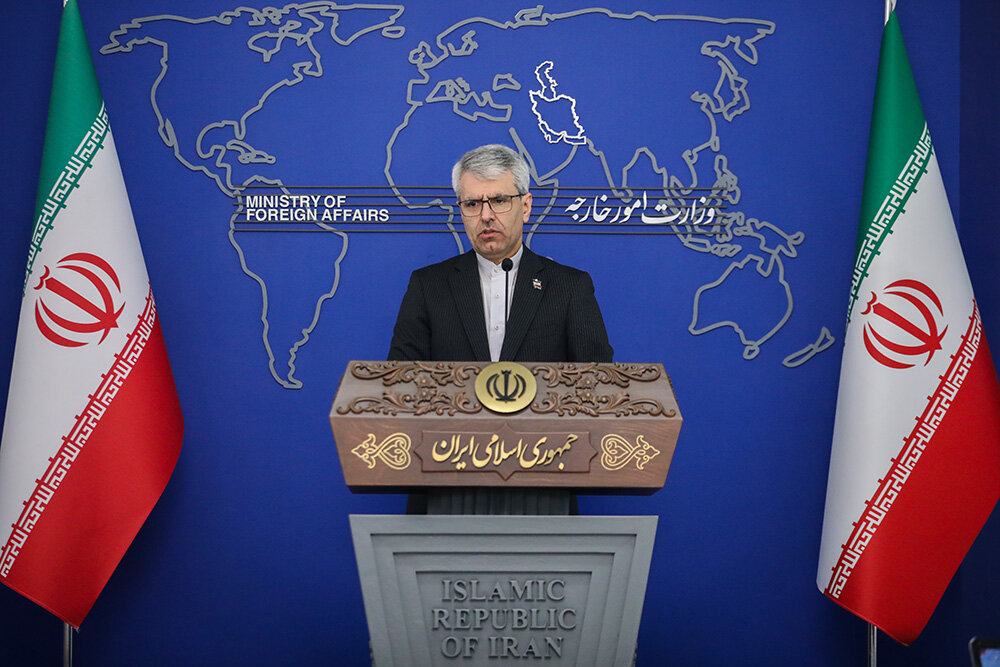
Foreign Ministry spokesperson Esmaeil Baqaei made the remarks at his weekly press conference in Tehran on Monday, addressing the situation in the strait, the latest exchanges between Tehran and Washington through mediators, US sanctions, regional tensions and remarks by US Secretary of State Marco Rubio invoking ancient Greek and Persian history.
Baqaei said the situation in the Strait of Hormuz was a direct consequence of the US-Israeli war against Iran, which began on February 28, and rejected assertions that Iran had lost its strategic leverage.
“The Americans’ claims do not match what we see on the ground,” he said. “They can continue to claim that the Strait of Hormuz no longer matters and that Iran has lost its leverage, but we will continue to do our job.”
He added that developments in international markets and efforts by countries to secure fuel supplies demonstrated the continuing importance of the waterway.
Hormuz security linked to an end to US pressure
Baqaei stressed that Iran had not introduced maritime controls to gain leverage over other countries, arguing that the measures taken in the strait were a response to the security circumstances created by the US-Israeli attacks.
“What we have been witnessing in this waterway since February 28 is the direct result of actions by the US and the Zionist regime in attacking Iran,” he said. The waterway, he added, had been used to launch attacks against Iran, prompting Tehran to adopt measures that it considers consistent with international law.
The spokesperson said security would not be restored while Washington continued its naval blockade and economic pressure against Iran. He described these measures as acts of aggression that had consequences extending beyond Iran to the wider region and international markets.
“We are not pleased with this situation, as the security of the Strait of Hormuz is necessary for us more than anything else,” Baqaei said. “However, the United States’ aggressive actions have caused trouble for itself, the region, and the world.”
The remarks also addressed Washington’s claims that the waterway was under US control. Baqaei said such assertions bore little resemblance to the situation on the ground and questioned why the United States would seek assistance from Russia to address its oil supply needs if, as Washington maintained, the situation in Hormuz had been resolved.
Responding to Russian President Vladimir Putin’s stated readiness to supply oil and petroleum products to international markets, including the United States, Baqaei said each country was entitled to make decisions according to its national interests. He nevertheless described Washington’s reported interest in Russian supplies as significant in light of its assertions about the strait.
Iran reviewing US response to seven-point proposal
Baqaei said Iran was still examining Washington’s response to Tehran’s seven-point proposal, with communications between the two sides continuing through intermediaries.
He said the proposal, discussed on the sidelines of the United Nations General Assembly, addressed Iran’s demands, including the lifting of the naval blockade, an end to the war on all fronts and the release of Iranian assets. According to the spokesperson, these issues were also covered by a memorandum of understanding previously agreed upon.
Iran would convey its position to the mediators once the review was complete, he said, adding that the new US sanctions imposed during the process must also be lifted.
Pakistan and Qatar, he said, remained the principal mediators between Tehran and Washington. Iran also welcomed the good offices of friendly countries, including Russia.
Addressing remarks that the US response had fallen short of Iran’s expectations, Baqaei indicated that Tehran was still assessing the points raised by Washington before communicating its position through the intermediaries.
Baqaei also addressed the nuclear issue, questioning Washington’s continued emphasis on Iran’s nuclear program after US officials had repeatedly asserted that it had been destroyed. He argued that attacks on peaceful nuclear facilities and the lack of an effective international response had prompted debate inside Iran about the benefits of continued membership in the Nuclear Non-Proliferation Treaty (NPT).
He said the international non-proliferation framework faced challenges in all three of its principal areas: nuclear disarmament, preventing the spread of nuclear weapons and ensuring countries’ access to peaceful nuclear technology.
Iran seeks dialogue to ease regional tensions
Turning to regional developments, Baqaei said Iran remained deeply concerned about escalating tensions between Saudi Arabia and Yemen and was ready to use its good offices to facilitate dialogue.
He said Tehran opposed continued conflict between two Muslim countries, arguing that further escalation would undermine regional stability and create opportunities for Israel to exploit divisions.
Iran had repeatedly supported the implementation of understandings previously reached between the parties, he said, urging them to return to dialogue and prevent further deterioration.
Baqaei also welcomed the prospect of stronger relations between Iraq and Saudi Arabia, reiterating Iran’s support for greater cooperation among regional countries. Tehran had previously proposed meetings involving Persian Gulf littoral states, including Iran and Iraq, and continued to support initiatives aimed at strengthening regional trust.
“Strengthening relations and trust among regional countries is the foundation and prerequisite for creating a secure region, free from the destructive interference of foreign actors,” he said.
On reports alleging that the United Arab Emirates was providing intelligence, financial or logistical support to terrorist groups operating in eastern Iran, Baqaei said Iranian security, military and law-enforcement agencies were monitoring such activities.
He described efforts to destabilize Iran’s borders as part of a US-Israeli plan, while emphasizing that Tehran was in continuous consultation with its land and maritime neighbors to prevent terrorist groups from exploiting the regional situation. He did not identify a specific neighboring country as responsible for supporting the groups.
Disclaimer : This story is auto aggregated by a computer programme and has not been created or edited by DOWNTHENEWS. Publisher: tehrantimes.com