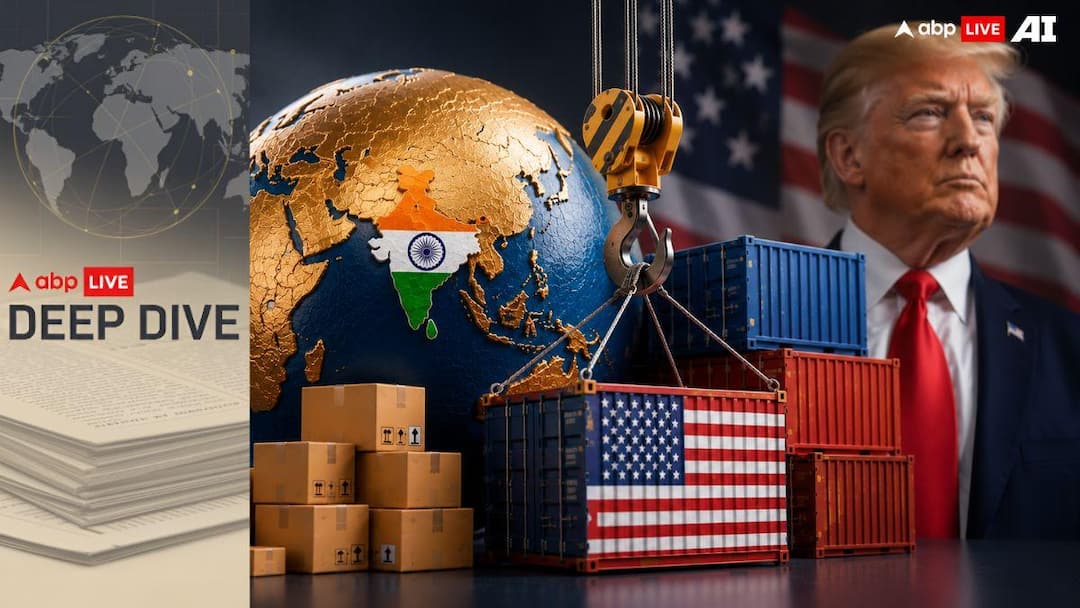
- US replaced temporary tariffs with open-ended Section 301 duties.
- India faces 10% tariff on imports due to forced labor.
- This new framework extends tariffs beyond prior time limits.
The United States has replaced its temporary tariff regime under Section 122 of the Trade Act of 1974 with a new framework under Section 301, ensuring that additional duties on many imports, including those from India, continue beyond July 24.
For India, the immediate impact on most exports is limited as the tariff remains at 10 per cent. However, the shift is significant because it replaces a temporary emergency provision with a legal mechanism that allows Washington to maintain tariffs for a much longer period.
The move follows the expiry of the 10 per cent tariff imposed under Section 122, which automatically lapsed after completing its statutory 150-day period. Instead of allowing those duties to end, the Office of the US Trade Representative (USTR) introduced fresh tariffs under Section 301 after concluding investigations into 60 economies over their handling of imports produced using forced labour.
India Gets Lower Tariff Than Most Countries
On July 23, the USTR, acting on President Donald Trump’s direction, announced the outcome of its investigations into imports allegedly produced with forced labour, reported Moneycontrol.
Under the final determination, India is among 17 economies that will face a 10 per cent tariff under Section 301, compared with the 12.5 per cent duty imposed on most of the investigated economies.
According to the USTR, India qualified for the lower tariff because it has introduced measures to restrict imports made using forced labour.
For Indian exporters, the practical impact is largely unchanged. The earlier 10 per cent surcharge under Section 122 has simply been replaced by a 10 per cent Section 301 tariff, which will continue to apply in addition to the normal US most-favoured-nation (MFN) duty.
Why The US Switched To Section 301
Section 122 allows the US President to impose temporary tariffs of up to 15 per cent to address balance-of-payments concerns, but only for a maximum of 150 days unless Congress approves an extension.
President Trump invoked the provision in February after the US Supreme Court ruled that reciprocal tariffs imposed under the International Emergency Economic Powers Act (IEEPA) lacked legal authority.
With the Section 122 tariffs expiring on July 24, Washington shifted to Section 301, which permits tariffs following formal trade investigations and does not carry the same statutory time limit.
Unlike the temporary emergency powers under Section 122, Section 301 provides the Trump administration with a longer-lasting legal basis to maintain tariffs.
Also Read : US Imposes 10% Tariff On Indian Imports Over Forced Labour Probe As Trade Deal Talks Continue
What Changes For Indian Exporters
Although the legal framework has changed, the tariff burden on most Indian exports remains broadly the same.
Affected goods will continue to attract a 10 per cent tariff in addition to the applicable MFN duty under World Trade Organisation (WTO) rules.
MFN duties vary across sectors. Pharmaceuticals, semiconductors and several electronic products generally attract low or zero tariffs, while textiles, garments, leather products and certain engineering goods continue to face higher baseline duties.
The USTR has also exempted several categories of imports, including raw materials critical to US supply chains, products likely to cause wider economic disruption if taxed, goods that are not readily available from US or alternative suppliers, and certain imports from countries including India aimed at encouraging stronger enforcement of forced labour restrictions.
The latest measures also leave Section 232 national security tariffs unchanged.
These products account for around 8 per cent of India’s exports to the United States and include steel, aluminium, certain copper products, automobiles and specified auto components.
According to Global Trade Research Initiative (GTRI), steel products continue to face total duties of 52.5 per cent, aluminium products 55 per cent and covered auto components 27.5 per cent.
More Tariff Risks Could Follow
The forced labour investigation represents only the first completed Section 301 probe.
According to the USTR, the review involved consultations with more than 45 governments, public hearings and over 3,700 public submissions before concluding that 60 economies had failed to effectively prevent imports produced using forced labour.
The final tariff structure includes:
10 per cent tariff: India, Canada, the United Kingdom, Mexico, Bangladesh, Pakistan, Malaysia, Indonesia and other economies that have enacted or committed to restrictions on forced labour imports.
10-12.5 per cent tariff: Selected products from the European Union, Japan, South Korea, Taiwan and Switzerland.
12.5 per cent tariff: Remaining investigated economies.
Separately, the USTR is conducting another Section 301 investigation into structural excess manufacturing capacity in around 15 economies, including India. If it concludes that government policies have distorted global trade through industrial overcapacity, additional tariffs could follow.
The tariff changes also come as India and the United States continue negotiating an interim trade agreement that could eventually expand into a broader Bilateral Trade Agreement (BTA).
According to GTRI, between August 27, 2025 and February 23, 2026, nearly 55 per cent of India’s exports to the US, including engineering goods, textiles, chemicals, machinery, plastics, leather products, gems and jewellery, were subject to the applicable MFN tariff along with an additional 50 per cent duty.
That included a 25 per cent reciprocal tariff and another 25 per cent surcharge linked to India’s purchases of Russian crude oil.
Another 37 per cent of exports, including smartphones, semiconductors, pharmaceuticals and energy products, remained outside the reciprocal tariff regime and continued to pay only the applicable MFN tariff.
Pharmaceutical Exports Face A Separate Challenge
The latest Section 301 tariffs do not directly affect India’s pharmaceutical exports. However, the sector faces a separate long-term challenge.
The Trump administration has proposed imposing a 100 per cent tariff on imported generic medicines from August 2028, rising to 200 per cent from August 2029, as part of efforts to boost pharmaceutical manufacturing in the United States.
India is the largest exporter of finished generic medicines to the US. Industry estimates based on US Food and Drug Administration (FDA) and trade data suggest Indian companies account for around 40-50 per cent of generic prescriptions dispensed there.
China, meanwhile, remains the world’s largest producer of active pharmaceutical ingredients (APIs), which are widely used in medicine manufacturing.
The proposal gives manufacturers a two-year window before duties begin but could have significant implications for Indian drugmakers that rely heavily on the US market.
The proposed tariffs on generic medicines are separate from earlier measures covering branded pharmaceutical products. In April, President Trump signed an executive order imposing 100 per cent tariffs on branded drug imports unless manufacturers agreed to government-backed pricing arrangements or committed to producing medicines within the US.
Several multinational pharmaceutical companies had already secured exemptions from those tariffs last year, and the latest proposal does not alter those arrangements.
Also Read : Centre Defends E20 Fuel In Parliament, Says No Verified Evidence Of Widespread Engine Failure
What It Means For India
For India, the immediate tariff impact is limited because most exports covered under the earlier Section 122 measure will continue to face a 10 per cent duty under Section 301.
The more significant change is that Washington now has a stronger legal framework to maintain these tariffs beyond the 150-day limit that applied under Section 122. With another Section 301 investigation already underway and proposed duties on generic medicines still under consideration, Indian exporters could continue to face evolving trade risks even as New Delhi and Washington pursue a broader bilateral trade agreement.
Disclaimer : This story is auto aggregated by a computer programme and has not been created or edited by DOWNTHENEWS. Publisher: abplive.com