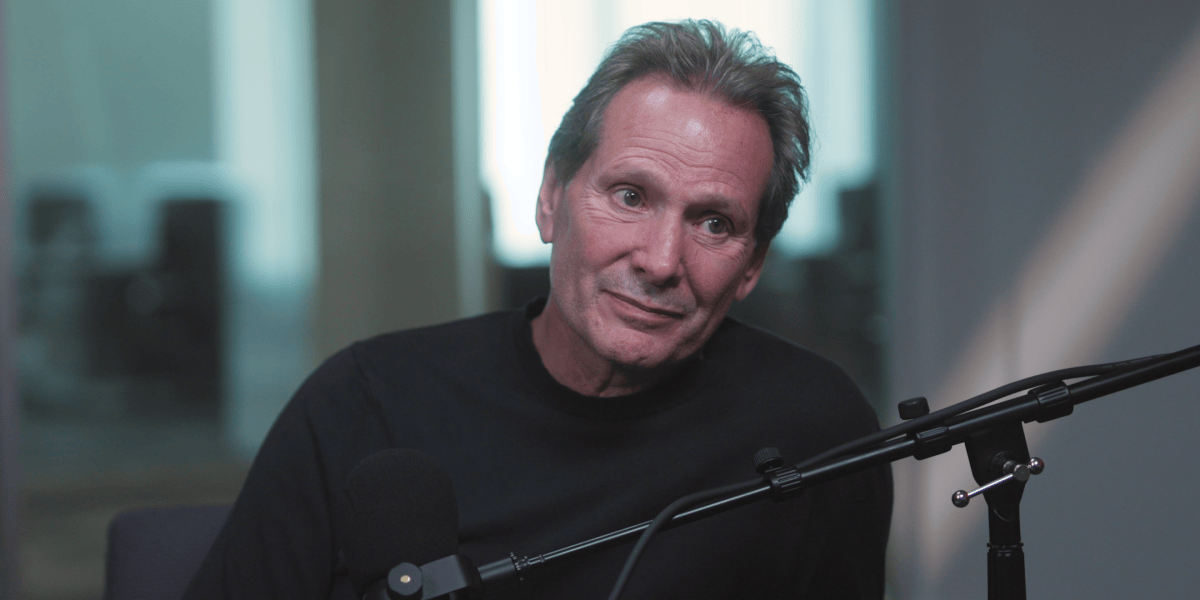
Dan Schulman thought he had traded the corner office for cowboy boots for good. After nearly a decade running digital payments giant PayPal, he was enjoying retirement on a Montana ranch with his wife, Summerly, and roughly 900 head of cattle. He was happy, in love, and had no desire to return to the grueling CEO schedule.
So when his fellow Verizon board members came calling for him to step in as CEO, he said no. Several times.
But the telecommunications giant was losing market share, falling behind competitors, and struggling with a bureaucracy. Eventually, a sense of obligation—and some convincing from his wife—brought him out of retirement to take the top job in October 2025.
“I came in with a little bit of a bad attitude,” Schulman told Fortune Editor-in-Chief Alyson Shontell in the latest episode of Fortune 500: Titans and Disruptors of Industry. A year later, he said, he’s “absolutely loving it and pretty hopeful about our future.”
The reluctant hire is now one year into a three-year turnaround plan for Verizon, a Fortune 500 company with $138 billion in revenue last year. The early numbers are moving his way.
A reluctant return to the corner office
The former PayPal chief had stepped down in 2023 and retirement gave him plenty of time to embrace his inner cowboy. The New Jersey native had been wearing cowboy boots since eighth grade, long before he had a ranch—or cattle—to go with them.
“I really didn’t want to come back into the CEO job,” he said. “These jobs are all-consuming. You’re putting in 10 to 14 hours a day.”
Verizon, as it turns out, knows a thing or two about making repeat calls. Although Schulman may have been ready to hang up on corporate life, it wasn’t ready to part ways with him just yet.
He had sat on Verizon’s board since 2018 and had been its lead independent director since December 2024. He knew the management team, understood the business, and had watched the company struggle to compete. He was already the board’s backup plan.
“I was the hit-by-the-bus scenario,” he said. If anything had happened to then-CEO Hans Vestberg, “I would go in temporarily.”
Verizon had been losing market share for roughly five years, Schulman said. Once first in its industry by market capitalization, it had fallen to last, and its longtime reputation for having a superior wireless network was no longer enough to keep customers from looking elsewhere.
“We had the lowest P/E, which is what the Street thinks of our future growth potential,” he said.
Schulman acknowledged the board probably should have acted sooner. It had developed a plan to address the company’s struggles, but the strategy didn’t deliver. Quoting his father, he put it this way: “People plan, God laughs.”
“We had a plan. It didn’t work out, so we had to go to Plan B, which was me, not Plan A,” he said.
Despite his reservations, Schulman believed Verizon still had the assets to turn things around, including what he estimated at 150 million customer lines. The board kept asking. In the end, it was Summerly who convinced him, reminding her husband that he could still make a difference.
“I felt an obligation,” he said.
Verizon’s CEO cut 35-signature approvals and 13,000 jobs
Once he accepted, Schulman wasn’t interested in easing into the job.
At his first all-employee meeting, he delivered a blunt assessment of the company’s problems without notes or slides. Verizon had become a “big, lumbering giant that had fallen behind,” he said, with a hierarchical culture, slow decision-making, and processes that required something like 35 signatures to move forward.
He also warned employees that layoffs were likely.
That warning became reality in November 2025, just weeks after he took over, when Verizon began cutting more than 13,000 jobs, the largest round of layoffs in its history. Verizon had cut 2,000 or 3,000 people, often through voluntary buyouts, every year, Schulman said. He wanted the cuts to free up money to reinvest in the business, and to show employees this turnaround was different.
“I needed to show this was different, that I was very serious about the change that was going to happen,” he said. “Playing to win is not just a slogan for me or a nice marketing thing.”
His strategy centers on replacing Verizon’s risk-averse culture with one willing to experiment, make decisions faster, and put customers ahead of internal processes. That means rethinking what Verizon has long put first.
The network is “foundational to everything we do,” Schulman said, but “it can’t be about the network. It has to be about the customer.”
Verizon’s early results are promising, with two years to go
The overhaul is beginning to show up in the numbers. In the third quarter of 2026, Verizon added a net 406,000 postpaid phone lines, up from 44,000 a year earlier. Its promotional costs to acquire customers fell 41%, and free cash flow rose 12% to $7.8 billion.
Part of the shift came from breaking an industry habit of luring customers with free phones and promotional offers.
“A free line is not really a net add from my perspective,” Schulman said.
Still, he knows the turnaround is far from over. He expects it to take three years, and the company has extended his contract through December 2028 to see it through.
The ranch will have to wait. Asked how he’ll judge his tenure when he eventually hands Verizon to a successor, Schulman pointed first to customer trust, then to pride inside a company many had written off as too big and too bureaucratic to change.
“We’re surprising a lot of people right now,” he said, “and it feels good when that happens.”
Disclaimer : This story is auto aggregated by a computer programme and has not been created or edited by DOWNTHENEWS. Publisher: fortune.com