
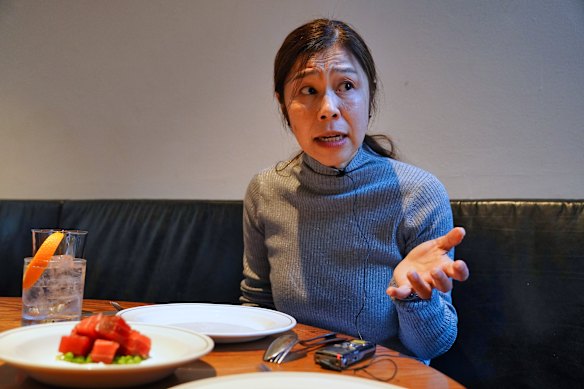
Japanese author Hiroko Yoda shares more than just her last name with the diminutive Grand Master from Star Wars. Small, wise and powerful, their strength lies in spirituality, mindfulness and inner peace.
For the real-life Yoda – author of bestseller Eight Million Ways to Happiness – it’s not been an easy journey. Her mother’s death was a tipping point that led her to examine Japanese spirituality, how it helped her find a path through her grief, and how significant a role it can play in bringing joy. Along the way, she also became attuned to nature’s restorative powers.
The process of her healing, as she describes it, led her to wonder if what she’d learnt could help others.
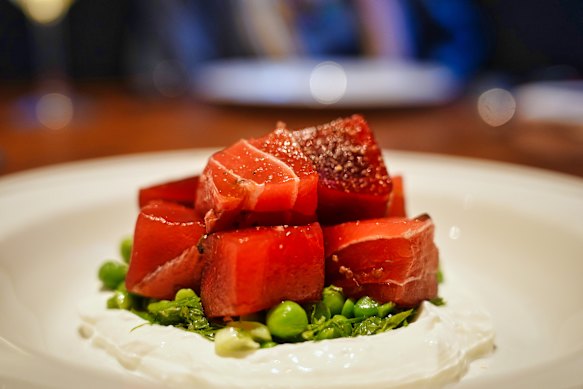
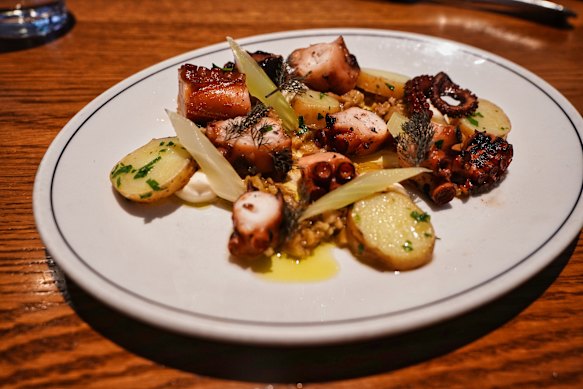
We’re dining at Cumulus Inc, Andrew McConnell’s institution in Flinders Lane, a perfect fit for her request to eat modern Australian. Dishes are designed to be shared, so Yoda suggests the Fremantle octopus and duck with persimmon, while I opt for the beans and the tuna tartare. The food is impressive, the restaurant is buzzing, and the staff make it all seem easy.
It’s her first international book tour – she’s at Melbourne Writers Festival the day after we meet, then west to Margaret River for the most picturesque literary festival in the country, and this weekend will appear at the Sydney Writers’ Festival.
This also happens to be Yoda’s first visit to Australia, so she’s thrilled to be travelling with her husband, American writer Matt Alt, who is also doing sessions at the Melbourne and Sydney festivals. His book Pure Invention: How Japan Made the Modern World tells the story of how Japan became a cultural superpower. Based in Tokyo, the couple met at university in the States in their 20s; they’ve written books together and run a translation and localisation agency that adapts Japanese entertainment – video games, manga, films and toys – for English-speaking audiences.
Having arrived in Melbourne two days before our lunch, they’ve spent a lot of time walking around the CBD. “We realised how bookstores are everywhere, and we’re very pleasantly shocked by it because the number of bookstores is decreasing in many countries, including Japan,” Yoda says. “But here it’s almost like one on every corner, nicely curated.
“When I came here and saw my books in the wild, I really started feeling like I am a writer with a capital W,” she says, with a laugh. “My head’s kind of exploding.”
Yoda laughs often, and over the course of lunch expresses gratitude for many things: the joy of travel; feedback from readers saying how much her book has helped them; her love of hiking; her family, especially her mother; and the sun shining on this autumn afternoon.
Born and raised in Tokyo, she is a certified cultural historian, a former Tokyo editor for CNN Go and a field producer for National Geographic TV. Having never considered writing a memoir, she was initially nervous when her publisher suggested the idea. Eight Million Ways tells her story, interwoven with ideas around how to find meaning and joy in life.
“As a writer, I wanted to reach people through this because this is like my avatar but still, at the same time, it’s scary,” she says.
“That’s the reason why I wrote my book in English, which is not my native language. I realised through my healing that there are so many things … that are not just limited to Japanese people. They’re actually relevant to anyone. One of the examples is Japanese spirituality, it’s radically inclusive.”
The “8 million” of the title is based on a Shinto concept that refers to the infinite number of spiritual beings, known as kami. But it’s much bigger than that, she says; it’s our foundation of culture and our world view.
“Japanese people in the past thought that everything had a spirit: the sun, the moon, water, rocks, even the words they spoke, and it’s still active today. It doesn’t mean that Japanese people think everything has a spirit in it, but it’s a worldview. So there’s no hierarchy, and we have an infinite number of spiritual beings.”
There are kami of bad things: of plague and poverty, eye disease and toothache. “It’s a quiet reminder that … those bad things do exist, so we have to deal with it.”
Yoda says she wants to be “crystal clear that there is a clear separation between church and state in Japan”, which she argues is critical.
In the book, she rarely uses the word religion. The Japanese word for religion, shukyo, was only coined at the end of the 19th century, and she says it basically refers to Christianity, with its strict hierarchy that places god – one single god – at the top. In Japanese culture, it’s totally different, she says, a horizontal structure with many, many spiritual beings.
The book explores traditions in Japanese culture, drawn from Shinto, Buddhism and the mountain mysticism of Shugendō.
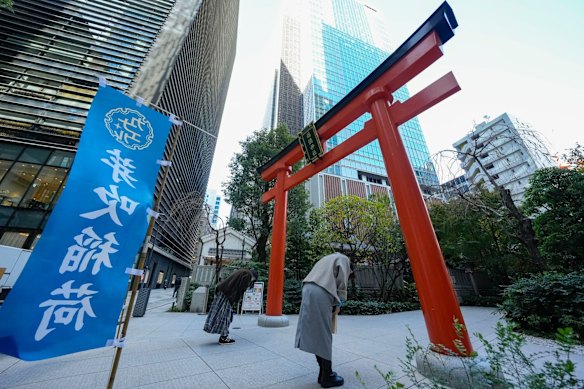
Spiritualism is embedded in life from an early age in Japan, Yoda says. In Japanese cities, convenience stores are on every corner, but she points out that there are three times as many shrines and temples. All of them are open to the public; anybody can go in, as long as they are respectful.
“We’re surrounded by such holy ground, spirituality and everything, but when people ask ‘do you believe in religion or do you think religion is important?’ we answer no,” she says.
To her mind, the question is wrong – because it uses the word religion. If Japanese people were asked “do you think spirituality is important in your life?” she argues, many people would say yes. “Our Japanese spirituality, it just comfortably lets you live in a grey zone; it lets you comfortably stay in the grey zone.”
“Sometimes black and white is fine, but life is complicated. A lot of questions cannot be simply answered in black and white, they are in the grey zone, especially spirituality. I call it a belief system instead of a religion.”
Yoda is not evangelistic, nor does she suggest her approach works for everyone. Sales suggest the book has struck a chord, a timely offering in a world that seems chaotic, when old rules are crumbling and people are looking for meaning.
It was simply walking that enabled her to start healing after her mother’s death. She began by going on short walks, after which she would come home and cry. With time, those walks became longer, and she started noticing details – the birds, or the light, or the smells. She also noticed that she was starting to feel better, not that she had stopped grieving the massive loss, but that she had been able to accept it.
Her next book expands on this love of the natural world and focuses on hiking, a hobby that she shares with her great-grandfather, who climbed serious mountains. She and her husband are in training to tackle those same peaks, the Japanese Alps.
An experience in her 20s (apart from meeting her husband) would inform the rest of Yoda’s life. After her college studies in Japan, she quit her job and went to study at the University of Maryland, where she was taught by an Israeli professor and a Palestinian professor. In 1995, she and another student were invited to visit Israel, just after the assassination of Israeli prime minister Yitzhak Rabin.

They went to Bethlehem University in the West Bank a few days a week and the Hebrew University in Jerusalem, a few days a week. While there, Yoda says she spoke to many people, students at the university, people at the market.
“I talked to a lot of mothers on both sides … Everybody’s worried about their own children, everybody worries about their own family members. Everyone has a really difficult time, and it shouldn’t be this way.
“Even though it was only a month, it taught me so much,” she says. “Of course, the religion wasn’t a part of my study … but [the experience] changed my life.”
When she returned to uni in the States, she “cried hard”. “I still remember the professors. ‘Everybody cries,’ they said. ‘Everybody cries.’”
That trip led her to study a master’s in international peace and conflict resolution, and those concepts of peace and conflict are always in her mind.
“Of course I can’t solve anything, but I can be a tiny part of the peace process or building a peaceful co-existence globally. If I can do even only tiny things, I would be very happy. My book is my personal thing [to do that],” she says.
“We can peacefully coexist, like this. I’m in Australia, meeting a lot of people, we are all different, but it’s all OK.”
Hiroko Yoda is at the Sydney Writers’ Festival on May 23 and 24. Eight Million Ways to Happiness is published by Bloomsbury.
Read more great conversations over lunch
Jacqueline Maley explores loss with Bob Carr: Bob Carr on marriage, grief and finally learning how to do a load of laundry
Stephen Brook asks Michael Rowland about his future: In the space of 14 months, Michael Rowland upended his ABC life. There’s more upheaval to come
Margot Saville laughs with Kathy Lette: Kathy Lette on ageing fabulously … and giving cheek to the King
David Wenham bares his scars to Louise Rugendyke: David Wenham on cancer, getting older and being lusted after
Start the day with a summary of the day’s most important and interesting stories, analysis and insights. Sign up for our Morning Edition newsletter.
Disclaimer : This story is auto aggregated by a computer programme and has not been created or edited by DOWNTHENEWS. Publisher: www.smh.com.au





