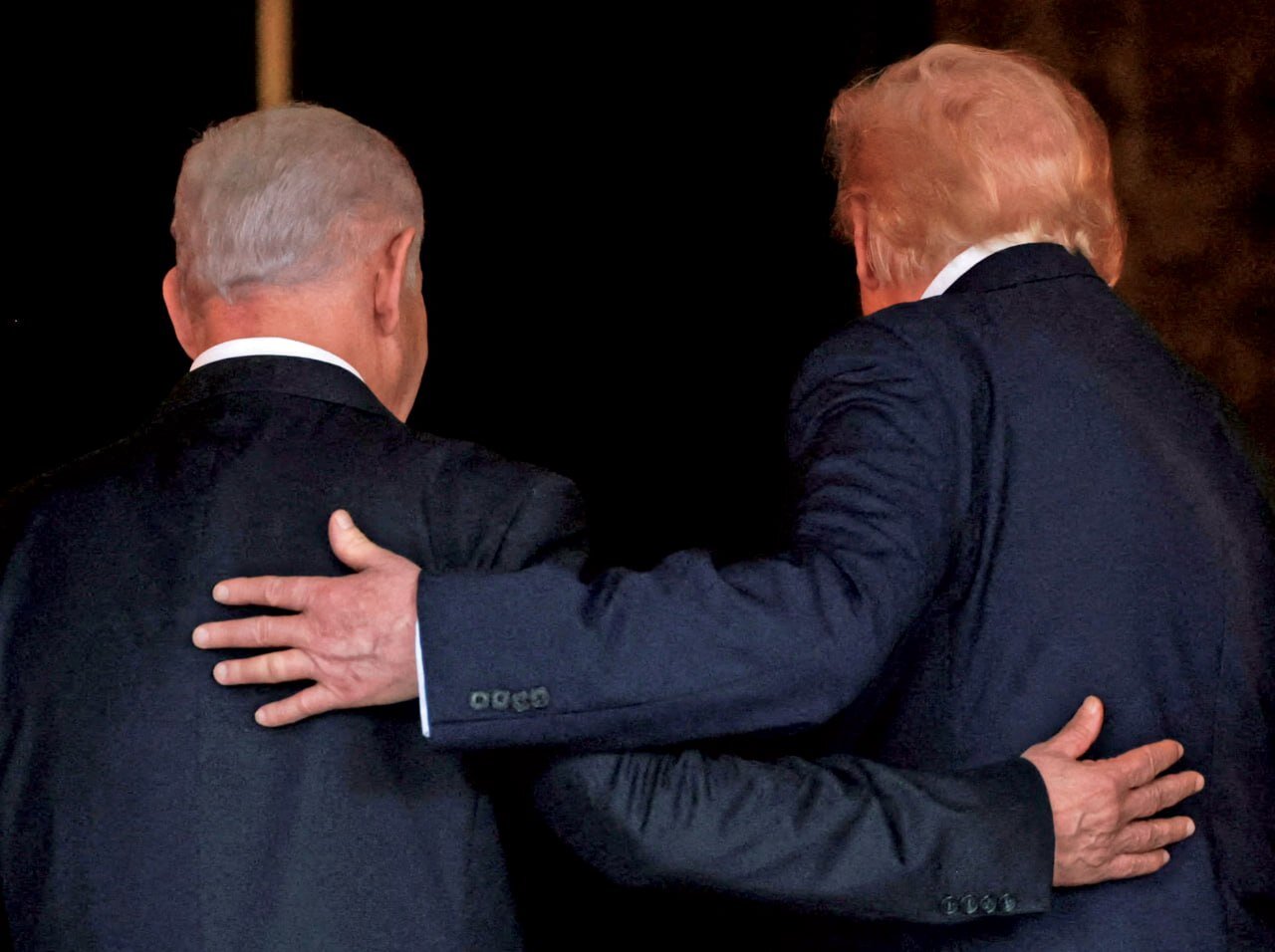
TEHRAN — A bipartisan revolt against unconditional support for Tel Aviv is emerging in Washington, as the Iran war and the midterm elections expose the political costs of the US-Israeli alliance.
For decades, Israel enjoyed a position in Washington that few American allies could imagine: support from both major political parties, billions of dollars in military assistance, diplomatic protection at the United Nations and a political establishment that treated the alliance as virtually untouchable. Criticism was almost possible, but challenging the fundamentals of the relationship often came at a considerable political price.
The results of the November 3 midterm elections suggest that this era may be approaching a turning point.
The sweeping Democratic victories have not simply weakened President Donald Trump and his Republican Party. They have also exposed a growing political backlash against Washington’s relationship with Israel, one that is increasingly visible on both sides of the American political divide.
What makes this moment particularly significant is that the questioning is no longer coming exclusively from progressive Democrats, pro-Palestinian activists or younger voters. It is also emerging from within the Republican Party and, remarkably, from the highest levels of the Trump administration itself.
The political earthquake has placed Israel in an increasingly uncomfortable position: an ally whose policies are becoming a domestic political liability for the very country that has traditionally provided it with its strongest international backing.
An alliance no longer beyond criticism
The most striking indication of this shift came from Vice President JD Vance, who, in the aftermath of the Republican defeat, openly called for a reconsideration of the American relationship with Israel.
In a lengthy social media statement, Vance identified four steps he believed Republicans needed to take to regain voters’ confidence: end the war against Iran, concentrate on inflation and the cost of living, put America first, and change the relationship with Israel.
The statement was remarkable not merely because of its content, but because of who delivered it. For decades, criticism of the strategic relationship with Israel was rarely heard from senior Republican figures. Vance’s intervention suggested that the debate had moved well beyond the traditional boundaries of American conservative politics.
Trump himself appeared to endorse the vice president’s remarks, describing them as acceptable and good. Even more significantly, the president announced that the United States intended to end approximately $4 billion in annual military assistance to Israel, reportedly beginning in 2027.
Although the practical and legal details of such a decision remain uncertain, the announcement alone represents a remarkable departure from the traditional political consensus in Washington.
For Israel, the message is difficult to ignore: even the most closely aligned Republican administration in recent memory is no longer treating military assistance as an issue immune to domestic political calculations.
The Iran war changes the equation
The immediate catalyst for this political reassessment has been the war against Iran.
Trump entered the confrontation alongside Israel with the expectation that American military superiority would produce a swift and decisive outcome. Instead, the conflict developed into an extensive confrontation with economic and strategic consequences that reached far beyond the battlefield.
The war also exposed a contradiction at the heart of Trump’s political identity. A president who had repeatedly promised to end America’s costly foreign entanglements had become involved in a major war in the West Asia, with American taxpayers and households bearing part of its consequences.
Rising energy costs, economic uncertainty and the perception that Washington had been drawn into another prolonged conflict became important liabilities for Republicans during the midterm campaign.
Trump has acknowledged that the war contributed to the party’s electoral defeat. Vance was even more direct, identifying the conflict and the relationship with Israel as among the reasons Republican voters turned away from their own party.
The implications are considerable. If an alliance that has traditionally been defended as an essential component of American national security begins to be perceived by significant sections of the electorate as a source of military and economic burdens, the political foundations of that alliance inevitably come under pressure.
The issue is no longer simply whether Washington supports Israel. It is increasingly about the price of that support, the policies it enables and whether those policies serve American interests.
Democrats are also changing
The shift is not confined to the Republican camp.
Democratic control of both chambers of Congress following the midterms has brought a number of politicians into positions of influence who have openly challenged American military assistance to Israel and called for a fundamental change in Washington’s approach to the Palestinian issue.
One of the most notable victories was that of Abdul El-Sayed in Michigan, who became the first Muslim elected to the US Senate. An outspoken critic of Israeli policies, El-Sayed campaigned on restricting military assistance and holding Israel accountable for its actions in Gaza.
His victory, despite substantial efforts by pro-Israel political interests to defeat him, illustrates how much the political environment has changed.
Other successful Democratic candidates also campaigned on limiting arms transfers, questioning the relationship with Israeli Prime Minister Benjamin Netanyahu and challenging the traditional assumption that support for Israel should transcend domestic political divisions.
The significance of these victories should not be overstated. Democrats remain divided over Israel, and many continue to support the traditional security partnership. But the political space for openly challenging Israeli government policies has expanded considerably.
A particularly important distinction is emerging between support for Israel’s security and unconditional support for the decisions of its government. More American politicians are arguing that the two should not be treated as interchangeable.
Netanyahu’s political problem is bigger than Netanyahu
In Israel, the immediate reaction has focused heavily on Benjamin Netanyahu and his increasingly strained relationship with Washington.
Critics of the prime minister argue that his close association with Trump, his conduct of the war in Gaza, settlement expansion in the occupied West Bank and the confrontation with Iran have damaged Israel’s standing among American voters.
Replacing Netanyahu, however, may not be enough to reverse the trend.
The objections being raised in Washington increasingly concern policies rather than personalities: military operations, civilian casualties, settlement expansion, treatment of Palestinians and the extent to which American military and diplomatic support should remain unconditional.
Even a different Israeli government would face pressure to address these issues if it hoped to restore confidence in the relationship.
The distinction matters because it suggests that the problem is no longer simply a disagreement between two political leaders. It is a deeper reassessment of the terms on which the United States is willing to maintain its relationship with Israel.
The end of a political blank cheque?
For Israel, the American relationship remains indispensable. Military cooperation, intelligence sharing, diplomatic protection and access to advanced American weapons have been central to its regional position for decades.
But the political environment sustaining these arrangements is changing.
The Republican Party is experiencing an increasingly visible divide between its traditional pro-Israel establishment and a growing America First constituency that questions the wisdom of committing American resources to foreign conflicts. Among Democrats, meanwhile, opposition to unconditional military assistance has become more prominent and politically consequential.
These developments do not mean that the United States is about to abandon Israel. The military, intelligence and institutional dimensions of the relationship remain substantial. Nor does a change in congressional control automatically translate into an immediate transformation of American foreign policy. Trump retains significant executive authority, including the power to veto legislation, while Congress continues to exercise considerable influence over funding and oversight.
Nevertheless, the political consensus that once protected the relationship from serious scrutiny is visibly weakening.
For decades, Israel could rely on Washington’s support regardless of which party controlled the White House or Congress. Today, that assumption is increasingly difficult to sustain.
The November elections may ultimately be remembered not only as a major defeat for Trump and the Republicans, but also as a moment when the American political establishment began confronting a question it had long avoided: whether an alliance, however historically significant, should remain exempt from scrutiny when its costs are increasingly felt by American citizens.
Israel’s traditional shield in Washington has not disappeared. But for the first time in many years, cracks are visible on both sides of the political aisle.
And the question confronting Israeli leaders is no longer simply how to preserve their relationship with the next American administration. It is how to respond to an American public and political class that are increasingly unwilling to accept that the relationship must remain unchanged.
Yet from Tehran’s perspective, the emerging tensions between Washington and Tel Aviv should not be mistaken for a fundamental rupture. Iran may recognize that the relationship is under unprecedented political pressure, that disagreements are becoming more visible and that unconditional American support for the Israeli government can no longer be taken for granted. But it remains fully aware that the United States and the Israeli regime are deeply intertwined in strategic, military, intelligence and political terms. Their interests may not coincide on every issue, and their leaders may disagree over tactics or the timing of particular decisions, but the two cannot be entirely separated in any serious assessment of the regional balance of power.
For Iran, therefore, the deterioration of relations between the two should be understood for what it is: a meaningful political development, but not evidence that Washington has ceased to be a central pillar of Israel’s regional position. The cracks in Israel’s American shield may be widening, but Tehran is unlikely to confuse those cracks with the disappearance of the shield itself.
Disclaimer : This story is auto aggregated by a computer programme and has not been created or edited by DOWNTHENEWS. Publisher: tehrantimes.com